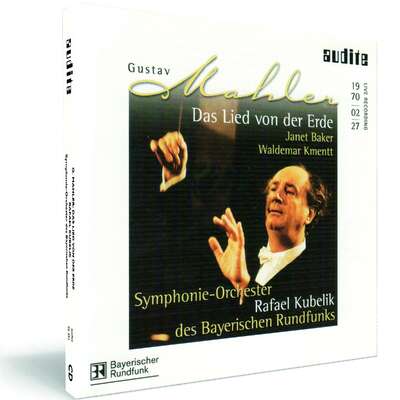



Add download to your cart
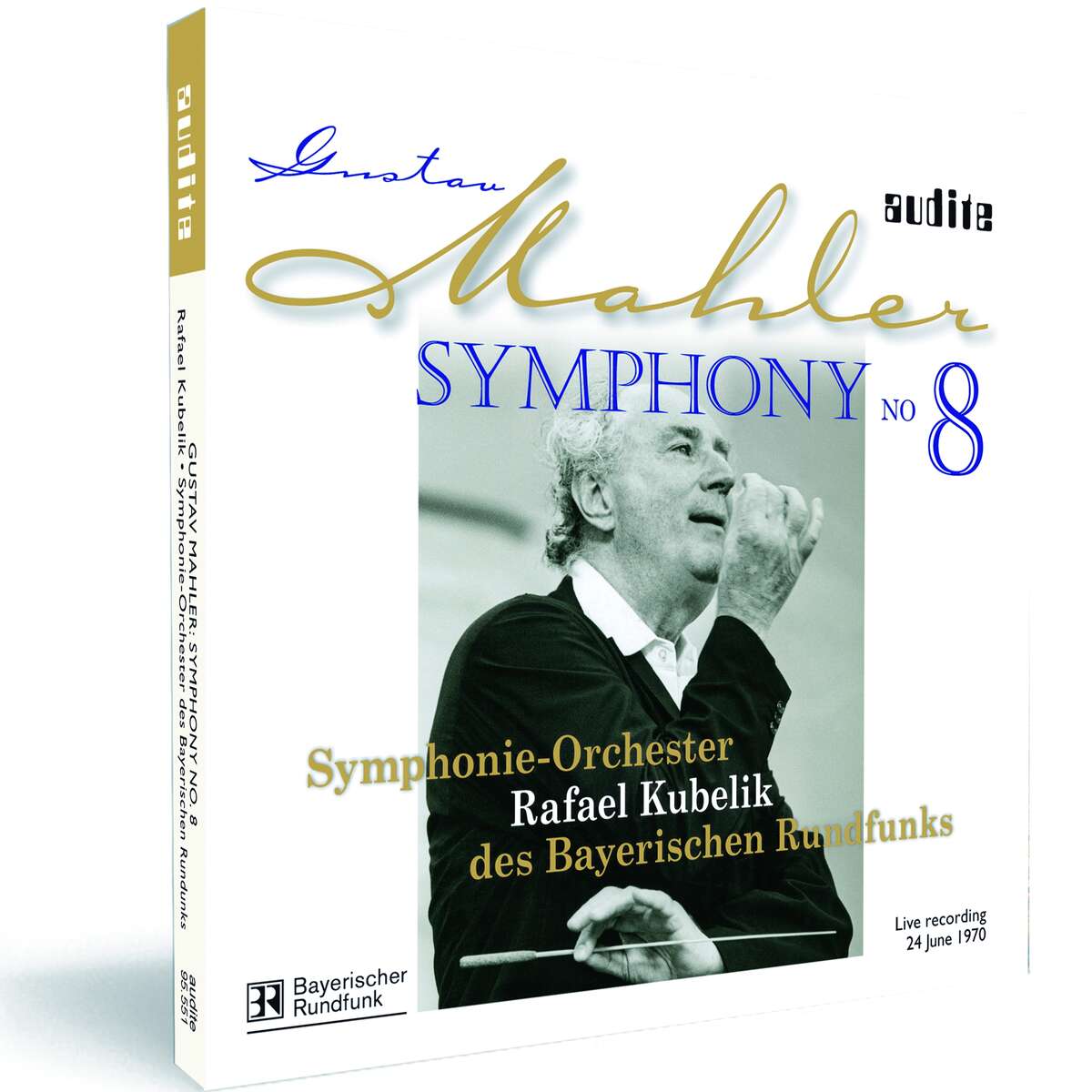
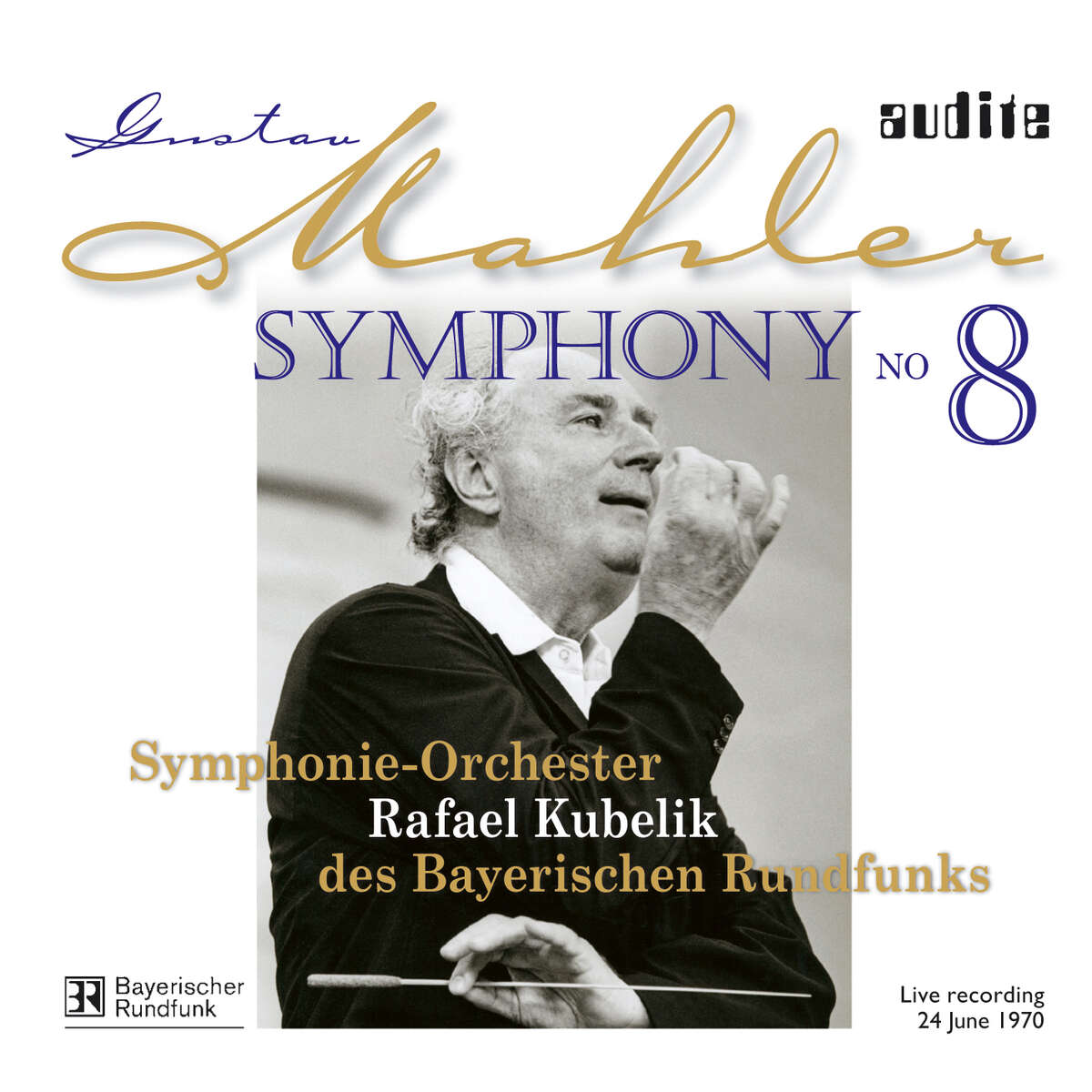
Symphony No. 8 is Mahler’s most monumental symphony, for it is itself a combination of two enormous choral cantatas; in it, Mahler brings together “Veni, creator spiritus”, the old Pentecostal hymn of Hrabanus Maurus, with Goethe’s Faust II. The two texts could hardly be more dissimilar,...more
Eberhard Kraus | Edith Mathis | Martina Arroyo | Erna Spoorenberg | Julia Hamari | Norma Procter | Donald Grobe | Dietrich Fischer-Dieskau | Franz Crass
Symphonieorchester des Bayerischen Rundfunks | Chor des Norddeutschen Rundfunks | Chor des Westdeutschen Rundfunks | Regensburger Domspatzen | Münchner MotettenChor
Rafael Kubelik
Gustav Mahler
Symphonieorchester des Bayerischen Rundfunks | Chor des Norddeutschen Rundfunks | Chor des Westdeutschen Rundfunks | Regensburger Domspatzen | Münchner MotettenChor
Rafael Kubelik


Symphony No. 8 is Mahler’s most monumental symphony, for it is itself a combination of two enormous choral cantatas; in it, Mahler brings together “Veni, creator spiritus”, the old Pentecostal hymn of Hrabanus Maurus, with Goethe’s Faust II. The two texts could hardly be more dissimilar,...


Track List
Gustav Mahler Symphony No. 8 ('Symphony of a Thousand') - I. Teil - Hymnus: Veni, creator spiritus (02:27:12) Eberhard Kraus | Edith Mathis | Martina Arroyo | Erna Spoorenberg | Julia Hamari | Norma Procter | Donald Grobe | Dietrich Fischer-Dieskau | Franz Crass | Symphonieorchester des Bayerischen Rundfunks | Chor des Norddeutschen Rundfunks | Chor des Westdeutschen Rundfunks | Regensburger Domspatzen | Münchner MotettenChor | Rafael Kubelik
Details
|
Gustav Mahler: Symphony No. 8
live recording of 24 June 1970 |
|
| article number: | 95.551 |
|---|---|
| EAN barcode: | 4022143955517 |
| price group: | BCB |
| release date: | 1. February 2010 |
| total time: | 73 min. |
Bonus Material
- "Listen & Compare" in Fono Forum 2/2005
- Franz Crass in Fono Forum 3/1962
- Rafael Kubelik in Fono Forum 6/1965
- Dietrich Fischer-Dieskau in Fono Forum 7/8/1957
- Dietrich Fischer-Dieskau in Fono Forum 6/1959
- Rafael Kubelik on the front cover of Fono Forum 7/1963
- Edith Mathis on the front cover of Fono Forum 6/1963
- Martina Arroyo in Fono Forum 3/1970
- Review in "CD maniac, classic 100CD"
Informationen
Symphony No. 8 is Mahler’s most monumental symphony, for it is itself a combination of two enormous choral cantatas; in it, Mahler brings together “Veni, creator spiritus”, the old Pentecostal hymn of Hrabanus Maurus, with Goethe’s Faust II. The two texts could hardly be more dissimilar, which is why the music also makes very different demands on the listener in the two respective parts. The first part of the Symphony is complete in itself; the ecstatic enthusiasm of the hymn alternates with intimate passages, then leading back to the opening hymn-like character at the end. The second part, a setting of the Faust text, is not only two-and-a-half times as long as the first but also far more complex. Goethe’s esoteric poetry allows Mahler to ascend into ever higher spheres. However, his music almost always does justice to Goethe’s words and the scenic description; Mahler’s celestial visions are manifested in this tremendous work. The ensemble, consisting of an eight-part double choir, a boys’ choir, 8 soloists and a huge orchestra including organ earned the Symphony its nickname “Symphony of a Thousand” before its premiere. Even if Mahler insisted on crossing out this subtitle on the announcement poster, it does indeed express the work’s monumental quality very well.
live recording of 24 June 1970 in the Kongreßsaal des Deutschen Museums in Munich.
Reviews

Fanfare | Issue 34:2 (Nov/Dec 2010) | Lynn René Bayley | November 1, 2010
It’s really a pity that this disc is just a reissue of a performance previously available in DGG’s set of complete Mahler symphonies conducted byMehr lesen
It’s really a pity that this disc is just a reissue of a performance previously available in DGG’s set of complete Mahler symphonies conducted by Kubelík, as there’s so much I’d like to say about it that’s probably already been said, so I shall reduce my comments to the minimum.
Being personally very fussy in regard to symphonies including singers, I’ll automatically reject performances with defective voices even if the conducting is considered to be the best ever. For this reason, I don’t own the otherwise fantastic performances by Jascha Horenstein and Klaus Tennstedt, and never will, just as I don’t own or even listen to most recordings of the Beethoven Ninth made after, say, 1980. Solti’s famous studio recording of this Mahler symphony had, perhaps, the best eight singers amassed in one place, but they were recorded separately from the orchestra, which created a flat, two-dimensional sound I find offensive. That being said, I am partial to the recordings by Leopold Stokowski (1950), Bernard Haitink (the earlier recording with Cotrubas, Harper, and Prey), and Antoni Wit, in which the defective voices are, to my ears, less annoying than in the others, and generally just one bad voice per ensemble.
The fact that Kubelík, who never pushed his name or fame and in fact retreated from a publicity machine, was able to entice these eight outstanding singers to Munich for this performance says a lot for how much he was respected as a musician. The one name not universally feted at the time was tenor Donald Grobe, and ironically he produces the finest singing of this very difficult music I’ve ever heard (James King with Solti notwithstanding). Kubelík also managed to get truly involved and exciting singing out of Martina Arroyo, and that in itself is a miracle. (He did the same with Gundula Janowitz in his studio recording of Die Meistersinger, though overall his conducting on that set, like most of his conducting in a studio environment, lacks the full power and emotional commitment of his live work). Sometimes the singers are a little off-mike, coming only out of the left or right speakers, but that’s a condition of the original microphone setup and can’t be changed.
Undoubtedly the most controversial aspect of this performance is its full-speed-ahead tempos, particularly in “Veni, Creator Spiritus,” which Kubelík dispatches in a mere 21 minutes. (Don’t believe the designation of 21:30 on the CD box; 25 seconds of that is silence with audience coughing before part II.) But, shockingly, it doesn’t sound terribly rushed most of the time, there are few dropped notes, and the whole thing has the ecstatic quality of a satori. If you happen to be allergic to fast tempos in Mahler, then, this recording is not for you, but if that’s not a problem you’ll find this the greatest Mahler Eighth ever issued. I’ve hereby retired the Haitink recording from my collection; good as it is, it doesn’t have Kubelík’s overwhelming emotional impact. Since not every performance in the Kubelík set is of equal quality (no conductor’s integral set is consistently great), I encourage you to add this disc to your collection. Audite’s 24-bit remastering brings out every detail of this performance with stunning warmth and clarity. I’d compare the sound favorably to any all-digital Eighth on the market.
Being personally very fussy in regard to symphonies including singers, I’ll automatically reject performances with defective voices even if the conducting is considered to be the best ever. For this reason, I don’t own the otherwise fantastic performances by Jascha Horenstein and Klaus Tennstedt, and never will, just as I don’t own or even listen to most recordings of the Beethoven Ninth made after, say, 1980. Solti’s famous studio recording of this Mahler symphony had, perhaps, the best eight singers amassed in one place, but they were recorded separately from the orchestra, which created a flat, two-dimensional sound I find offensive. That being said, I am partial to the recordings by Leopold Stokowski (1950), Bernard Haitink (the earlier recording with Cotrubas, Harper, and Prey), and Antoni Wit, in which the defective voices are, to my ears, less annoying than in the others, and generally just one bad voice per ensemble.
The fact that Kubelík, who never pushed his name or fame and in fact retreated from a publicity machine, was able to entice these eight outstanding singers to Munich for this performance says a lot for how much he was respected as a musician. The one name not universally feted at the time was tenor Donald Grobe, and ironically he produces the finest singing of this very difficult music I’ve ever heard (James King with Solti notwithstanding). Kubelík also managed to get truly involved and exciting singing out of Martina Arroyo, and that in itself is a miracle. (He did the same with Gundula Janowitz in his studio recording of Die Meistersinger, though overall his conducting on that set, like most of his conducting in a studio environment, lacks the full power and emotional commitment of his live work). Sometimes the singers are a little off-mike, coming only out of the left or right speakers, but that’s a condition of the original microphone setup and can’t be changed.
Undoubtedly the most controversial aspect of this performance is its full-speed-ahead tempos, particularly in “Veni, Creator Spiritus,” which Kubelík dispatches in a mere 21 minutes. (Don’t believe the designation of 21:30 on the CD box; 25 seconds of that is silence with audience coughing before part II.) But, shockingly, it doesn’t sound terribly rushed most of the time, there are few dropped notes, and the whole thing has the ecstatic quality of a satori. If you happen to be allergic to fast tempos in Mahler, then, this recording is not for you, but if that’s not a problem you’ll find this the greatest Mahler Eighth ever issued. I’ve hereby retired the Haitink recording from my collection; good as it is, it doesn’t have Kubelík’s overwhelming emotional impact. Since not every performance in the Kubelík set is of equal quality (no conductor’s integral set is consistently great), I encourage you to add this disc to your collection. Audite’s 24-bit remastering brings out every detail of this performance with stunning warmth and clarity. I’d compare the sound favorably to any all-digital Eighth on the market.
It’s really a pity that this disc is just a reissue of a performance previously available in DGG’s set of complete Mahler symphonies conducted by

Audiophile Audition | July 2, 2010 | Patrick P.L. Lam | July 2, 2010 Rafael Kubelik and the Bavarian Radio Symphony Orchestra attest to this Mahlerian vision through a combination of technical command and musical coherency.
“I have just completed my 8th – it is the greatest I’ve ever done.Mehr lesen
Aus urheberrechtlichen Gründen dürfen wir ihnen diese Rezension leider nicht zeigen!
“I have just completed my 8th – it is the greatest I’ve ever done.

Infodad.com | June 24, 2010 | June 24, 2010
With Mahler’s music now so popular – with a veritable flood ofMehr lesen
Aus urheberrechtlichen Gründen dürfen wir ihnen diese Rezension leider nicht zeigen!
With Mahler’s music now so popular – with a veritable flood of
Infodad.com | 01.06.2010 | June 1, 2010
With Mahler’s music now so popular – with a veritable flood ofMehr lesen
Aus urheberrechtlichen Gründen dürfen wir ihnen diese Rezension leider nicht zeigen!
With Mahler’s music now so popular – with a veritable flood of

www.allmusic.com | 01.12.2005 | Blair Sanderson | December 1, 2005
Rafael Kubelik made this live recording of Gustav Mahler's Symphony No. 8Mehr lesen
Aus urheberrechtlichen Gründen dürfen wir ihnen diese Rezension leider nicht zeigen!
Rafael Kubelik made this live recording of Gustav Mahler's Symphony No. 8

www.SA-CD.net | August 26, 2005 | Mark Wagner | August 6, 2005
Hmmmmm.....<br /> <br /> First, I will say that I have never heard a recording orMehr lesen
Aus urheberrechtlichen Gründen dürfen wir ihnen diese Rezension leider nicht zeigen!
Hmmmmm.....
First, I will say that I have never heard a recording or
First, I will say that I have never heard a recording or

www.ionarts.org | Friday, July 08, 2005 | July 8, 2005 Live Recordings of Mahler's Eighth
Speaking of such a performance, Rafael Kubelik's 8th on Audite was alsoMehr lesen
Aus urheberrechtlichen Gründen dürfen wir ihnen diese Rezension leider nicht zeigen!
Speaking of such a performance, Rafael Kubelik's 8th on Audite was also
www.SA-CD.net | June 9, 2005 | Oscar Gil | June 9, 2005
Kubelik is one of the truly great Mahler conductors. He focuses on the moreMehr lesen
Aus urheberrechtlichen Gründen dürfen wir ihnen diese Rezension leider nicht zeigen!
Kubelik is one of the truly great Mahler conductors. He focuses on the more

Le Monde de la Musique | Juin 2005 | Patrick Szersnovicz | June 1, 2005
Œuvre « officielle » chantant la joie de créer, vocale d'un bout à l'autre, la Huitième Symphonie « des Mille » (1906) est gagnée parMehr lesen
Œuvre « officielle » chantant la joie de créer, vocale d'un bout à l'autre, la Huitième Symphonie « des Mille » (1906) est gagnée par l'illusion que des sujets sublimes – l'hymne Veni Creator, la scène finale du Second Faust de Goethe – garantiront la sublimité du contenu. Mais la structure fermée de son premier mouvement – une stricte forme sonate – et sa polyphonie serrée sauvent l'hymne de son caractère platement édifiant.
Si toute interprétation doit venir en aide à l'insuffisance des œuvres, la Huitième Symphonie requiert une interprétation parfaite. Enregistré « live » le 24 juin 1970 à Munich, à la tête d'un orchestre et de chanteurs exemplaires, Rafael Kubelik offre une vision puissante, « moderniste » et très proche de sa – magnifique – version officielle réalisée pour DG à la même époque. Si l'on demeure assez loin de l'exaltation d'un Bernstein ou de l'enthousiasme d'un Ozawa, l'équilibre et la rapidité des tempos, l'absence de pathos donnent la priorité au tissu musical. Le chef souligne dans le « Veni Creator » tout l'acquis des symphonies instrumentales précédentes et évite, dans la « Scène de Faust », l'écueil d'une simple succession d'airs et de chœurs. La prise de son, malgré l'excellence du report, n'est pas parfaite, mais la qualité des solistes vocaux est unique dans la discographie.
Si toute interprétation doit venir en aide à l'insuffisance des œuvres, la Huitième Symphonie requiert une interprétation parfaite. Enregistré « live » le 24 juin 1970 à Munich, à la tête d'un orchestre et de chanteurs exemplaires, Rafael Kubelik offre une vision puissante, « moderniste » et très proche de sa – magnifique – version officielle réalisée pour DG à la même époque. Si l'on demeure assez loin de l'exaltation d'un Bernstein ou de l'enthousiasme d'un Ozawa, l'équilibre et la rapidité des tempos, l'absence de pathos donnent la priorité au tissu musical. Le chef souligne dans le « Veni Creator » tout l'acquis des symphonies instrumentales précédentes et évite, dans la « Scène de Faust », l'écueil d'une simple succession d'airs et de chœurs. La prise de son, malgré l'excellence du report, n'est pas parfaite, mais la qualité des solistes vocaux est unique dans la discographie.
Œuvre « officielle » chantant la joie de créer, vocale d'un bout à l'autre, la Huitième Symphonie « des Mille » (1906) est gagnée par

Classica-Répertoire | Juin 2005 | Stéphane Friédérich | June 1, 2005
Audite poursuit son intégrale live des symphonies de Mahler en nousMehr lesen
Aus urheberrechtlichen Gründen dürfen wir ihnen diese Rezension leider nicht zeigen!
Audite poursuit son intégrale live des symphonies de Mahler en nous

www.ClassicsToday.com | May 2005 | David Hurwitz | May 1, 2005
This live Mahler Symphony No. 8, made the same month as Rafael Kubelik'sMehr lesen
Aus urheberrechtlichen Gründen dürfen wir ihnen diese Rezension leider nicht zeigen!
This live Mahler Symphony No. 8, made the same month as Rafael Kubelik's

www.classicstodayfrance.com | Mai 2005 | Christophe Huss | May 1, 2005
Quel incroyable contraste avec la version Nagano qui paraît en mêmeMehr lesen
Aus urheberrechtlichen Gründen dürfen wir ihnen diese Rezension leider nicht zeigen!
Quel incroyable contraste avec la version Nagano qui paraît en même

Diapason | Mai 2005 | Jean-Charles Hoffele | May 1, 2005
Ce n'est pas la relative méforme de Norma Procter qui fragilisera le geste épique de Kubelik dans ce concert inédit, enregistré en même temps queMehr lesen
Ce n'est pas la relative méforme de Norma Procter qui fragilisera le geste épique de Kubelik dans ce concert inédit, enregistré en même temps que la fameuse gravure de studio pour DG (et avec exactement la même équipe). Les ingénieurs de la Radio bavaroise ont réalisé une prise de son exemplaire de réalisme, supérieure à celle, plus sèche, du disque DG, saisissante dès les premiers accords du Veni creator, emporté d'un seul souffle (vingt et une minutes !). Cette exaltation, seul Bernstein l'a fait entendre. Mais là où il marque les épisodes, Kubelik tient le tempo : l'avancée, inexorable, vers la jubilation de la coda gagne en puissance mesure après mesure, laissant éclater les polyphonies circulaires du chœur – la fameuse rotation des astres que Mahler voulait illustrer.
La Seconde scène de Faust est ici un opéra : les chanteurs incarnent les personnages idéaux voulus par Goethe avec un sens dramatique que certains trouveront trop prononcé. Lorsqu'on entend la coda soulevée par Kubelik, galvanisée, on comprend que la 8e est une symphonie sans ombre, un chant du cosmos radieux avec l'être humain en son centre. Elle célèbre les noces de la vie et de l'univers avant que ne revienne le peuple de fantômes qui n'a presque jamais quitté le compositeur.
La Seconde scène de Faust est ici un opéra : les chanteurs incarnent les personnages idéaux voulus par Goethe avec un sens dramatique que certains trouveront trop prononcé. Lorsqu'on entend la coda soulevée par Kubelik, galvanisée, on comprend que la 8e est une symphonie sans ombre, un chant du cosmos radieux avec l'être humain en son centre. Elle célèbre les noces de la vie et de l'univers avant que ne revienne le peuple de fantômes qui n'a presque jamais quitté le compositeur.
Ce n'est pas la relative méforme de Norma Procter qui fragilisera le geste épique de Kubelik dans ce concert inédit, enregistré en même temps que

Muzyka21 | maj 2005 | Michał Szulakowski | May 1, 2005
„Wszystkie moje wcześniejsze symfonie były tylko preludium do tejMehr lesen
Aus urheberrechtlichen Gründen dürfen wir ihnen diese Rezension leider nicht zeigen!
„Wszystkie moje wcześniejsze symfonie były tylko preludium do tej

klassik.com | April 2005 | Miquel Cabruja | April 18, 2005 Mehrkanaligkeit
In immer kürzeren Abständen wirft die Musikindustrie neue Formate auf denMehr lesen
Aus urheberrechtlichen Gründen dürfen wir ihnen diese Rezension leider nicht zeigen!
In immer kürzeren Abständen wirft die Musikindustrie neue Formate auf den

Pizzicato | 3/2005 | Rémy Franck | March 1, 2005
Am 25. & 26. Juni 1970 nahm Rafael Kubelik die Achte Mahler im Studio für die Deutsche Grammophon auf. Am 24 Juni entstand mit demselbenMehr lesen
Am 25. & 26. Juni 1970 nahm Rafael Kubelik die Achte Mahler im Studio für die Deutsche Grammophon auf. Am 24 Juni entstand mit demselben hochkarätigen Solistenensemble diese Live-Aufnahme: was an Perfektion fehlt, wird, wie immer bei Kubelik, durch die Spontaneität des Dirigierens mehr als nur wettgemacht. Und so hört man auf dieser Platte eine der zügigsten, lebendigsten pulsierendsten und kontrastreichsten Interpretationen dieser Symphonie, die ich kenne.
Am 25. & 26. Juni 1970 nahm Rafael Kubelik die Achte Mahler im Studio für die Deutsche Grammophon auf. Am 24 Juni entstand mit demselben

klassik-heute.com | Februar 2005 | Sixtus König | February 8, 2005
Die Aufführung von Gustav Mahlers achter Sinfonie im Juni 1970 bildeteMehr lesen
Aus urheberrechtlichen Gründen dürfen wir ihnen diese Rezension leider nicht zeigen!
Die Aufführung von Gustav Mahlers achter Sinfonie im Juni 1970 bildete

Wiener Zeitung | Samstag, 05. Februar 2005 | Edwin Baumgartner | February 5, 2005 Kubelik: Mahler-Symphonien 6, 7 und 8
Rafael Kubelik war der Prototyp des hochintelligenten und dabeiMehr lesen
Aus urheberrechtlichen Gründen dürfen wir ihnen diese Rezension leider nicht zeigen!
Rafael Kubelik war der Prototyp des hochintelligenten und dabei