




Add download to your cart
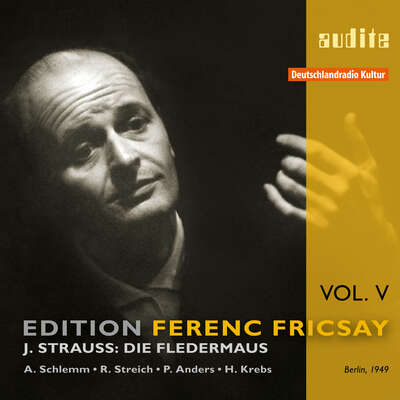
23411 - Edition Ferenc Fricsay (V) – J. Strauss: Die Fledermaus
aud 23.411
please choose the quality
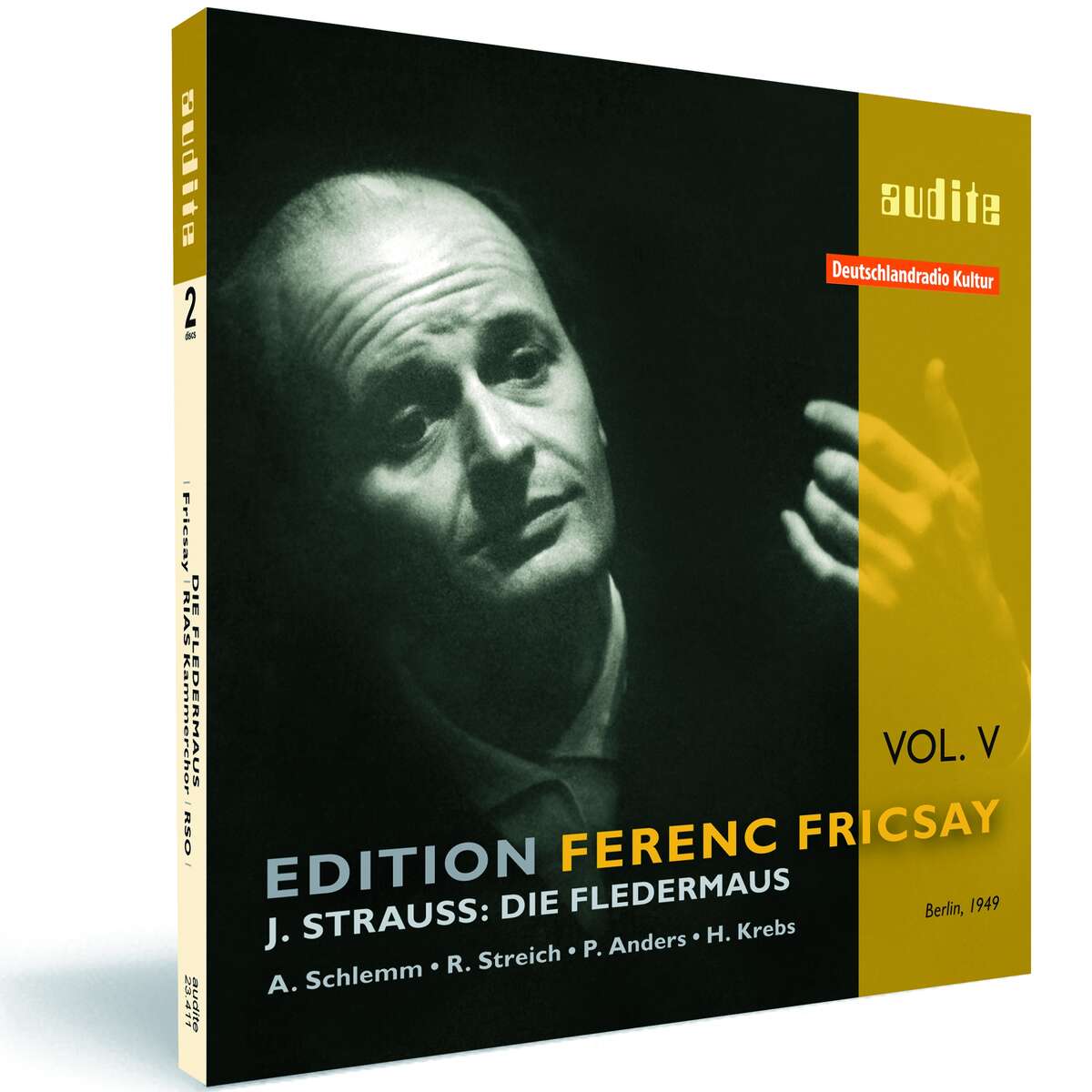
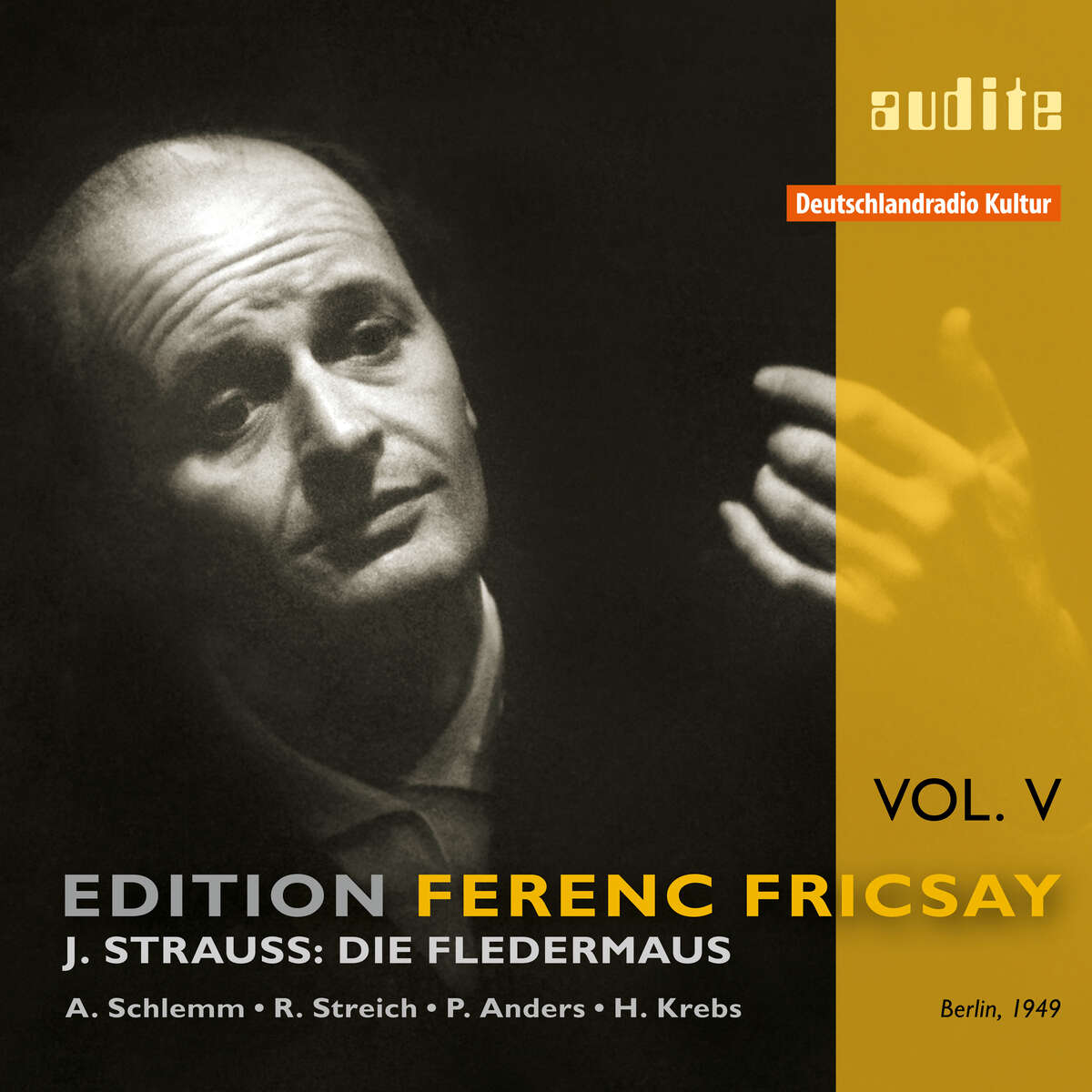
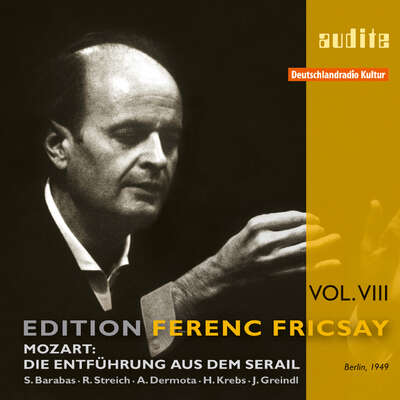
Ferenc Fricsay had been General Music Director of the Städtische Oper (today’s Deutsche Oper) and Chief Conductor of the RIAS Symphony Orchestra Berlin (today’s Deutsches Symphonie-Orchester Berlin) for only two months when he recorded this production of Die Fledermaus in eight days. Director...more
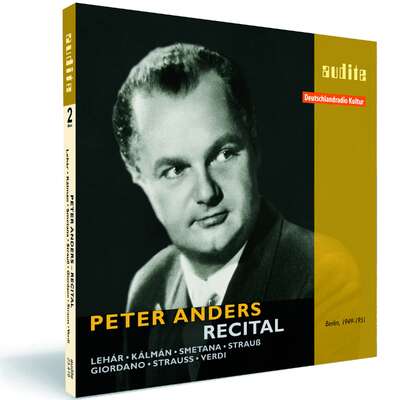
Helmut Krebs | Silvia Menz | Rita Streich | Fritz Hoppe | Hans Wocke | Heinz Tietjen | Herbert Brauer | Anny Schlemm | Anneliese Müller | Edwin Heyer | Peter Anders
RIAS-Symphonie-Orchester | RIAS Kammerchor
Ferenc Fricsay
Johann Strauss
RIAS-Symphonie-Orchester | RIAS Kammerchor
Ferenc Fricsay


"Splendid singing, outstanding conducting and lively action" (musicweb-international.com)


Track List
CD 1 von 2 (39:06)
Johann Strauss Die Fledermaus - Komische Oper in 3 Akten, Ouvertüre (08:41) RIAS-Symphonie-Orchester | Ferenc Fricsay
Johann Strauss Die Fledermaus - Komische Oper in 3 Akten, Akt I (30:25) Helmut Krebs | Anny Schlemm | Hans Wocke | Heinz Tietjen | Peter Anders | Herbert Brauer | Edwin Heyer | Rita Streich | RIAS-Symphonie-Orchester | Ferenc Fricsay
CD 2 von 2 (01:14:47)
Johann Strauss Die Fledermaus - Komische Oper in 3 Akten, Akt II (43:34) Silvia Menz | Peter Anders | Herbert Brauer | Anneliese Müller | Anny Schlemm | Hans Wocke | Rita Streich | Heinz Tietjen | Edwin Heyer | Helmut Krebs | Fritz Hoppe | RIAS-Symphonie-Orchester | RIAS Kammerchor | Ferenc Fricsay
Johann Strauss Die Fledermaus - Komische Oper in 3 Akten, Akt III (31:13) Heinz Tietjen | Anny Schlemm | Hans Wocke | Silvia Menz | Peter Anders | Helmut Krebs | Fritz Hoppe | Rita Streich | Herbert Brauer | Edwin Heyer | Anneliese Müller | RIAS-Symphonie-Orchester | RIAS Kammerchor | Ferenc Fricsay
Details
| Edition Ferenc Fricsay (V) – J. Strauss: Die Fledermaus | |
| article number: | 23.411 |
|---|---|
| EAN barcode: | 4022143234117 |
| price group: | BCA |
| release date: | 16. July 2008 |
| total time: | 113 min. |
Bonus Material
Informationen
Ferenc Fricsay had been General Music Director of the Städtische Oper (today’s Deutsche Oper) and Chief Conductor of the RIAS Symphony Orchestra Berlin (today’s Deutsches Symphonie-Orchester Berlin) for only two months when he recorded this production of Die Fledermaus in eight days. Director Heinz Tietjen worked out the dialogues in such a way that they fit the medium of the radio.
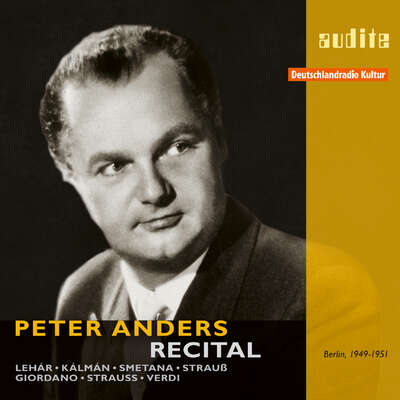
Fresh, elastic tempi, a homogenous, precise overall performance, first-rate soloists like Peter Anders (Gabriel von Eisenstein), Rita Streich (Adele) and Helmut Krebs (Alfred), dialogues as one would hear them in a radio play: Ferenc Fricsay’s radio production of Die Fledermaus is not simply a historical but also a musically inspiring document.
The historical publications at audite are based, without exception, on the original tapes from broadcasting archives. In general these are the original analogue tapes, which attain an astonishingly high quality, even measured by today‘s standards, with their tape speed of up to 76 cm/sec. The remastering – professionally competent and sensitively applied – also uncovers previously hidden details of the interpretations. Thus, a sound of superior quality results. CD publications based on private recordings from broadcasts cannot be compared with these.
There is a “Producer’s Comment” online from producer Ludger Böckenhoff about this production.
Reviews

ensuite Kulturmagazin | Mai 2016 | Francois Lilienfeld | May 1, 2016 Aufnahmen mit Ferenc Fricsay (2.Teil)
[…] Neben der Deutschen Grammophon gebührt auch der Firma audite ein großes Lob für ihre Bemühungen, Fricsay-Aufnahmen einem breiten Publikum zuMehr lesen
[…] Neben der Deutschen Grammophon gebührt auch der Firma audite ein großes Lob für ihre Bemühungen, Fricsay-Aufnahmen einem breiten Publikum zu vermitteln. Es handelt sich um Radio-Produktionen, die in den meisten Fällen bisher nicht zu haben waren. Die Tatsache, dass die Originalbänder für die Überspielungen benutzt wurden, hat eine oft stupende Aufnahmequalität zur Folge.
Audite 95.498 enthält zwei Konzertmitschnitte. Mit dem inzwischen in «Radio-Symphonie-Orchester Berlin» umbenannten RIAS-Orchester interpretiert Ferenc Fricsay Tschaikowskys Fünfte. Der Vergleich mit der DGG-Aufnahme von 1949 ist interessant: In beiden Aufführungen versteht es der Dirigent, die oft recht scharfen Kontraste zwischen Wildheit und lyrischen Stellen überzeugend darzubringen – und die Streicher des RIAS stehen den Berliner Philharmonikern in nichts nach: Beide Klangkörper sind grossartig. Die audite-Version ist jedoch besser durchdacht, konsequenter aufgebaut, insbesondere in den Mittelsätzen. Dies mag auch am Anlass liegen: Das Konzert vom 24. Januar 1957 fand zum zehnjährigen Jubiläum des Orchesters statt – ein besonders inspirierender Moment. Es ist schön, dass die CD auch die kurze Ansprache des Dirigenten enthält.
Mit dem anderen Dokument auf dieser Platte hat es eine besondere Bewandtnis: Es handelt sich um das Schumann-Klavierkonzert mit Alfred Cortot, 1951 mitgeschnitten. Eine brisante Geschichte, hatte doch Cortot während der deutschen Besatzung Frankreichs intensiv mit den Nazis und dem Vichy-Regime kollaboriert. Er nahm leitende Stellungen an und ignorierte zahlreiche Hilferufe bedrängter Künstler. Dies führte unter Anderem zum Bruch mit seinen früheren Trio-Kollegen und Freunden Jacques Thibaud und PabIo Casals. Doch etwas muss man ihm zugute halten (Das Folgende weiss ich dank den Memoiren von Casals): Im Gegensatz zu zahlreichen Kollegen, die sich mit Lügen und Rechtfertigungen durchschlängelten, oft sogar im Innersten Anhänger der Nazi-Ideologie blieben, zeigte Cortot Reue. Im Sommer 1945 besuchte er unangemeldet den großen Cellisten in Prades. «Es ist wahr, Pablo,» sagte er, «ich habe mit den Nazis gearbeitet, ich schäme mich, ich schäme mich furchtbar. Ich bin gekommen, um dich um Vergebung zu bitten.» So kann man denn die Tatsache, dass Cortot im Mai 1951 in Berlin spielte, auch als Geste der Versöhnung betrachten.
Soweit die zeitgeschichtlichen Hintergründe. Doch wie steht es mit der musikalischen Qualität? Da muss ich leider sagen, dass man diesen Mitschnitt besser hätte im Archiv schlummern lassen sollen. Auch ich bin kein Anhänger der Null-Fehler-Ästhetik (ein Ausdruck von Habakuk Traber im ausgezeichneten Beiheft). Zwei meiner Lieblingspianisten – Arthur Schnabel und Rudolf Serkin – passierten auch gelegentliche Schnitzer, aber eben: Sie geschahen gelegentlich und vermochten nicht, den gestalterischen Gestus zu stören. Bei Cortot jedoch hören wir regelmässig brutale Fehler, man hat dazu das Gefühl, dass Schumanns Partitur ihm gar nicht am Herzen liegt, so viele Willkürlichkeiten und Grobheiten erlaubt er sich.
Doch lassen sie sich nicht abhalten: Der Kauf der CD ist wegen der Tschaikowsky-Symphonie unbedingt empfehlenswert!
Auch in der audite-Serie finden wir Haydn- und Mozart-Symphonien. Leider sind es die gleichen, die schon bei DGG erschienen sind. Dies hängt wohl damit zusammen, dass Schallplattenaufnahmen oft im Anschluss an Radio-Produktionen stattfanden – und vergessen wir nicht, dass die Radio-Aufnahmen meist nicht zur Veröffentlichung bestimmt waren. Natürlich sind die Vergleiche interessant: Aber was gäben wir nicht dafür, statt zweimal KV 201 und KV 543 die «Linzer» und die «Prager» zu haben!
Bei den Haydn-Symphonien 44 und 98 spielt auf der audite Produktion zumindest ein anderes Orchester, nämlich das Kölner Rundfunk-Symphonie-Orchester. (audite 95.584)
Bei Mozart fällt die Unkonsequenz bei den Wiederholungen auf, die wohl oft mit der Sendezeit oder der Beschränkung einer Schallplattenseite zusammenhängt, wenn die Firma unbedingt eine ganze Symphonie auf eine Seite drängen wollte. In der A-dur-Symphonie KV 201 wiederholt Fricsay die Exposition des 1. Satzes bei DG, aber nicht bei audite. In der Es-dur-Symphonie KV 543 hält er es umgekehrt… Bei diesem Werk ist im Übrigen der Vergleich der beiden Fassungen des Trios im 3. Satz reizvoll: Hier die RIAS-Klarinetten mit ihrem samtweichen Ton, bei DG die Bläser der Wiener Symphoniker, die dem Wienerisch-Folkloristischen im Klang näher sind und etwas herber klingen. Die Qualität ist in beiden Fällen fabelhaft.
Die sehr kurze Exposition im g-moll-Werk wird immer wiederholt. (Symphonien Nrn 29, 39, 40: audite 95.596)
Eine absolute Sternstunde bietet audite mit der Einspielung von Donizettis «Lucia di Lammermoor» (audite 23.412). Diese Radio-Produktion von Januar 1954 wurde in deutscher Sprache aufgenommen, was damals eher der Normalfall war. Auch die vorgenommenen Kürzungen – 105 Minuten Spielzeit anstelle von gut anderthalb Stunden – entsprechen der Gewohnheit der Zeit; man musste noch lange auf komplette Aufführungen und Einspielungen warten. Dramaturgisch schwerwiegend ist vor allem das Fehlen der Begegnung zwischen Enrico und Edgardo am Anfang des dritten Aktes, wo sich die Gegenspieler zum Duell verabreden. Dadurch wirkt die letzte Szene – der Monolog Edgardos – nicht ganz folgerichtig. Dazu kommt das Problem, dass zwei gleich aufgebaute Szenen unmittelbar aufeinander folgen: erst Jubel, dann Umschwung ins Dramatisch-Tragische.
Auch die kurze Szene nach der Wahnsinnsarie, in der Enrico Reue zeigt, wäre für den dramatischen Ablauf wichtig: Ohne sie verschwindet diese Figur plötzlich im Nichts... Interessante Bemerkungen zu diesem Thema sind im Übrigen im ausgezeichneten Beiheft-Text von Habakuk Traber nachzulesen.
Doch, seien wir zufrieden mit dem, was wir haben: Denn die Aufführung ist schlicht und einfach überwältigend! Fricsay erweist sich einmal mehr als hochbegabter Dramatiker, RIAS-Orchester und -Chor (Einstudierung: Herbert Froitzheim) sind in Hochform. Zum Ereignis wird die Aufnahme jedoch durch Maria Staders Interpretation der Lucia. Gesangstechnisch und stimmlich kenne ich keine ebenbürtige Interpretin dieser Rolle, ausser Dame Joan Sutherland – und das ist aus meiner Feder ein Riesenkompliment! Maria Staders Porträt ist im Ansatz allerdings verschieden: Sie ist eine leidende Figur, eine Tragödin der leisen Töne. Den Wahnsinn stellt sie zurückhaltend, als Phantasma dar, nicht als dramatischen Gestus. Dass sie sich dabei genau an Donizetttis Notentext hält, ist ein weiterer Pluspunkt. Und der/die ungenannte Flötist(in) ergänzt den Gesang auf perfekte Weise. Ihr Partner, Ernst Haefliger, bewältigt die für ihn im Prinzip zu gewichtige Partie durch Intelligenz und perfektes technisches Können (ähnlich wie den Florestan im vor einem Monat besprochenen Fidelio). Wenn die beiden Künstler sich im Duett vereinigen, entsteht ein selten erreichter Wohlklang, ein perfektes Zusammengehen zweier zauberhaft schöner Stimmen; wahrlich, wir sind in der Welt des Belcanto!
Dietrich Fischer-Dieskaus Wutausbruch in der ersten Szene geschieht manchmal auf Kosten der Gesangslinie. Doch, ab dem Duett mit Lucia ist seine Interpretation des Enrico ein Modell an Gesang und Differenzierung. Auch die kürzeren Rollen sind sehr gut besetzt. Ein schottisches Sujet, von einem Italiener komponiert, auf deutsch aufgeführt: Wenn die Qualität stimmt, geht auch das!
Erwähnt sei noch, dass audite auf einer Doppel-CD die in der letzten Ensuite-Nummer hochgepriesene Aufnahme der «Fledermaus» als Einzelausgabe veröffentlicht hat (audite 23 411), mit einer hochinteressanten Dokumentation von Habakuk Traber im Beiheft.
Audite 95.498 enthält zwei Konzertmitschnitte. Mit dem inzwischen in «Radio-Symphonie-Orchester Berlin» umbenannten RIAS-Orchester interpretiert Ferenc Fricsay Tschaikowskys Fünfte. Der Vergleich mit der DGG-Aufnahme von 1949 ist interessant: In beiden Aufführungen versteht es der Dirigent, die oft recht scharfen Kontraste zwischen Wildheit und lyrischen Stellen überzeugend darzubringen – und die Streicher des RIAS stehen den Berliner Philharmonikern in nichts nach: Beide Klangkörper sind grossartig. Die audite-Version ist jedoch besser durchdacht, konsequenter aufgebaut, insbesondere in den Mittelsätzen. Dies mag auch am Anlass liegen: Das Konzert vom 24. Januar 1957 fand zum zehnjährigen Jubiläum des Orchesters statt – ein besonders inspirierender Moment. Es ist schön, dass die CD auch die kurze Ansprache des Dirigenten enthält.
Mit dem anderen Dokument auf dieser Platte hat es eine besondere Bewandtnis: Es handelt sich um das Schumann-Klavierkonzert mit Alfred Cortot, 1951 mitgeschnitten. Eine brisante Geschichte, hatte doch Cortot während der deutschen Besatzung Frankreichs intensiv mit den Nazis und dem Vichy-Regime kollaboriert. Er nahm leitende Stellungen an und ignorierte zahlreiche Hilferufe bedrängter Künstler. Dies führte unter Anderem zum Bruch mit seinen früheren Trio-Kollegen und Freunden Jacques Thibaud und PabIo Casals. Doch etwas muss man ihm zugute halten (Das Folgende weiss ich dank den Memoiren von Casals): Im Gegensatz zu zahlreichen Kollegen, die sich mit Lügen und Rechtfertigungen durchschlängelten, oft sogar im Innersten Anhänger der Nazi-Ideologie blieben, zeigte Cortot Reue. Im Sommer 1945 besuchte er unangemeldet den großen Cellisten in Prades. «Es ist wahr, Pablo,» sagte er, «ich habe mit den Nazis gearbeitet, ich schäme mich, ich schäme mich furchtbar. Ich bin gekommen, um dich um Vergebung zu bitten.» So kann man denn die Tatsache, dass Cortot im Mai 1951 in Berlin spielte, auch als Geste der Versöhnung betrachten.
Soweit die zeitgeschichtlichen Hintergründe. Doch wie steht es mit der musikalischen Qualität? Da muss ich leider sagen, dass man diesen Mitschnitt besser hätte im Archiv schlummern lassen sollen. Auch ich bin kein Anhänger der Null-Fehler-Ästhetik (ein Ausdruck von Habakuk Traber im ausgezeichneten Beiheft). Zwei meiner Lieblingspianisten – Arthur Schnabel und Rudolf Serkin – passierten auch gelegentliche Schnitzer, aber eben: Sie geschahen gelegentlich und vermochten nicht, den gestalterischen Gestus zu stören. Bei Cortot jedoch hören wir regelmässig brutale Fehler, man hat dazu das Gefühl, dass Schumanns Partitur ihm gar nicht am Herzen liegt, so viele Willkürlichkeiten und Grobheiten erlaubt er sich.
Doch lassen sie sich nicht abhalten: Der Kauf der CD ist wegen der Tschaikowsky-Symphonie unbedingt empfehlenswert!
Auch in der audite-Serie finden wir Haydn- und Mozart-Symphonien. Leider sind es die gleichen, die schon bei DGG erschienen sind. Dies hängt wohl damit zusammen, dass Schallplattenaufnahmen oft im Anschluss an Radio-Produktionen stattfanden – und vergessen wir nicht, dass die Radio-Aufnahmen meist nicht zur Veröffentlichung bestimmt waren. Natürlich sind die Vergleiche interessant: Aber was gäben wir nicht dafür, statt zweimal KV 201 und KV 543 die «Linzer» und die «Prager» zu haben!
Bei den Haydn-Symphonien 44 und 98 spielt auf der audite Produktion zumindest ein anderes Orchester, nämlich das Kölner Rundfunk-Symphonie-Orchester. (audite 95.584)
Bei Mozart fällt die Unkonsequenz bei den Wiederholungen auf, die wohl oft mit der Sendezeit oder der Beschränkung einer Schallplattenseite zusammenhängt, wenn die Firma unbedingt eine ganze Symphonie auf eine Seite drängen wollte. In der A-dur-Symphonie KV 201 wiederholt Fricsay die Exposition des 1. Satzes bei DG, aber nicht bei audite. In der Es-dur-Symphonie KV 543 hält er es umgekehrt… Bei diesem Werk ist im Übrigen der Vergleich der beiden Fassungen des Trios im 3. Satz reizvoll: Hier die RIAS-Klarinetten mit ihrem samtweichen Ton, bei DG die Bläser der Wiener Symphoniker, die dem Wienerisch-Folkloristischen im Klang näher sind und etwas herber klingen. Die Qualität ist in beiden Fällen fabelhaft.
Die sehr kurze Exposition im g-moll-Werk wird immer wiederholt. (Symphonien Nrn 29, 39, 40: audite 95.596)
Eine absolute Sternstunde bietet audite mit der Einspielung von Donizettis «Lucia di Lammermoor» (audite 23.412). Diese Radio-Produktion von Januar 1954 wurde in deutscher Sprache aufgenommen, was damals eher der Normalfall war. Auch die vorgenommenen Kürzungen – 105 Minuten Spielzeit anstelle von gut anderthalb Stunden – entsprechen der Gewohnheit der Zeit; man musste noch lange auf komplette Aufführungen und Einspielungen warten. Dramaturgisch schwerwiegend ist vor allem das Fehlen der Begegnung zwischen Enrico und Edgardo am Anfang des dritten Aktes, wo sich die Gegenspieler zum Duell verabreden. Dadurch wirkt die letzte Szene – der Monolog Edgardos – nicht ganz folgerichtig. Dazu kommt das Problem, dass zwei gleich aufgebaute Szenen unmittelbar aufeinander folgen: erst Jubel, dann Umschwung ins Dramatisch-Tragische.
Auch die kurze Szene nach der Wahnsinnsarie, in der Enrico Reue zeigt, wäre für den dramatischen Ablauf wichtig: Ohne sie verschwindet diese Figur plötzlich im Nichts... Interessante Bemerkungen zu diesem Thema sind im Übrigen im ausgezeichneten Beiheft-Text von Habakuk Traber nachzulesen.
Doch, seien wir zufrieden mit dem, was wir haben: Denn die Aufführung ist schlicht und einfach überwältigend! Fricsay erweist sich einmal mehr als hochbegabter Dramatiker, RIAS-Orchester und -Chor (Einstudierung: Herbert Froitzheim) sind in Hochform. Zum Ereignis wird die Aufnahme jedoch durch Maria Staders Interpretation der Lucia. Gesangstechnisch und stimmlich kenne ich keine ebenbürtige Interpretin dieser Rolle, ausser Dame Joan Sutherland – und das ist aus meiner Feder ein Riesenkompliment! Maria Staders Porträt ist im Ansatz allerdings verschieden: Sie ist eine leidende Figur, eine Tragödin der leisen Töne. Den Wahnsinn stellt sie zurückhaltend, als Phantasma dar, nicht als dramatischen Gestus. Dass sie sich dabei genau an Donizetttis Notentext hält, ist ein weiterer Pluspunkt. Und der/die ungenannte Flötist(in) ergänzt den Gesang auf perfekte Weise. Ihr Partner, Ernst Haefliger, bewältigt die für ihn im Prinzip zu gewichtige Partie durch Intelligenz und perfektes technisches Können (ähnlich wie den Florestan im vor einem Monat besprochenen Fidelio). Wenn die beiden Künstler sich im Duett vereinigen, entsteht ein selten erreichter Wohlklang, ein perfektes Zusammengehen zweier zauberhaft schöner Stimmen; wahrlich, wir sind in der Welt des Belcanto!
Dietrich Fischer-Dieskaus Wutausbruch in der ersten Szene geschieht manchmal auf Kosten der Gesangslinie. Doch, ab dem Duett mit Lucia ist seine Interpretation des Enrico ein Modell an Gesang und Differenzierung. Auch die kürzeren Rollen sind sehr gut besetzt. Ein schottisches Sujet, von einem Italiener komponiert, auf deutsch aufgeführt: Wenn die Qualität stimmt, geht auch das!
Erwähnt sei noch, dass audite auf einer Doppel-CD die in der letzten Ensuite-Nummer hochgepriesene Aufnahme der «Fledermaus» als Einzelausgabe veröffentlicht hat (audite 23 411), mit einer hochinteressanten Dokumentation von Habakuk Traber im Beiheft.
[…] Neben der Deutschen Grammophon gebührt auch der Firma audite ein großes Lob für ihre Bemühungen, Fricsay-Aufnahmen einem breiten Publikum zu
Die Tonkunst | Juli 2013 | Tobias Pfleger | July 1, 2013 Edition Ferenc Fricsay – Werke von Haydn, Mozart, Beethoven, Rossini, Bizet, Brahms, Strauß, Verdi, Bartók u. a.
Ferenc Fricsay gehörte zu den bedeutenden Dirigenten des mittleren 20.Mehr lesen
Aus urheberrechtlichen Gründen dürfen wir ihnen diese Rezension leider nicht zeigen!
Ferenc Fricsay gehörte zu den bedeutenden Dirigenten des mittleren 20.

Classic Collection | December 2010 | December 1, 2010
This radio take from 1949 brings us a Fledermaus for the ages. It is easyMehr lesen
Aus urheberrechtlichen Gründen dürfen wir ihnen diese Rezension leider nicht zeigen!
This radio take from 1949 brings us a Fledermaus for the ages. It is easy

Scherzo | deciembre 2009 | Enrique Pérez Adrián | December 1, 2009 Tesoros Radiofónicos
El sello alemán Audite (distribuidor: Diverdi) nos trae varios tesorosMehr lesen
Aus urheberrechtlichen Gründen dürfen wir ihnen diese Rezension leider nicht zeigen!
El sello alemán Audite (distribuidor: Diverdi) nos trae varios tesoros

American Record Guide | September/October 2009 | Traubner | September 1, 2009
I do tend to squirm when faced with yet another Fledermaus, but this 1949 Berlin radio broadcast grabbed me from the start and never let go. If everMehr lesen
I do tend to squirm when faced with yet another Fledermaus, but this 1949 Berlin radio broadcast grabbed me from the start and never let go. If ever you want proof that Die Fledermaus is, indeed, the summit of Viennese operetta, listen to this.
Mind you, this is not its first appearance on CD. It was released not that long ago in an excellent series of German radio broadcasts of operettas on Membran, and it has also appeared on Melodram 29001. But the sound here is excellent, beautifully remastered by Ludger Boeckenhoff.
The cast members are not just top notch and in the flower of youthful energy. Their acting is also on a far higher, fizzier level than is usual in studio recordings. There's none of that whispery reading of the lines tfiat so disfigures a number of EMI operettas. This is due to the libretto adaptation and radio direction by Heinz Tietjen, a theatrical figure of importance before, during, and after the Nazi era. One really has the sense of being in a theatre on a particularly good evening, and the whole performance is infused with a slightly inebriated quality – the fault of King Champagne, naturally.
Ferenc Fricsay's conducting has a well-thought-out deliberateness that is in piquant counterpoint with the dialog. "Schani" (Strauss) would have been pleased with Fricsay's results. There is also a Berlin buoyancy to the performance that spices up the Viennese lethargy one often settles for in a typical Fledermaus.
Anny Schlemm and Rita Streich are wonderfully vivacious as Rosalinde and Adele, acting out their numbers charmingly and pointedly. The handsome Peter Anders must have been a wonder to see and hear as (a tenor) Eisenstein – he sings robustly and openly. By contrast, the Alfred of Helmut Krebs sometimes ceases singing altogether and drops into a sort of parlando mannerism I found novel but not necessarily refreshing. But this is different from the usual ham opera-tenor characterization one gets from an Alfred. The Orlofsky of mezzo-soprano Anneliese Mueller is also quite rich, and the Dr Falke of Herbert Brauer sets a nice, fruity tone as the evening's sly compere.
The excellent notes by Habakuk Traber (in German and English) help unravel the complicated political situation in immediate postwar Germany. Indeed, this recording was made just at the time of the Berlin Blockade!
Mind you, this is not its first appearance on CD. It was released not that long ago in an excellent series of German radio broadcasts of operettas on Membran, and it has also appeared on Melodram 29001. But the sound here is excellent, beautifully remastered by Ludger Boeckenhoff.
The cast members are not just top notch and in the flower of youthful energy. Their acting is also on a far higher, fizzier level than is usual in studio recordings. There's none of that whispery reading of the lines tfiat so disfigures a number of EMI operettas. This is due to the libretto adaptation and radio direction by Heinz Tietjen, a theatrical figure of importance before, during, and after the Nazi era. One really has the sense of being in a theatre on a particularly good evening, and the whole performance is infused with a slightly inebriated quality – the fault of King Champagne, naturally.
Ferenc Fricsay's conducting has a well-thought-out deliberateness that is in piquant counterpoint with the dialog. "Schani" (Strauss) would have been pleased with Fricsay's results. There is also a Berlin buoyancy to the performance that spices up the Viennese lethargy one often settles for in a typical Fledermaus.
Anny Schlemm and Rita Streich are wonderfully vivacious as Rosalinde and Adele, acting out their numbers charmingly and pointedly. The handsome Peter Anders must have been a wonder to see and hear as (a tenor) Eisenstein – he sings robustly and openly. By contrast, the Alfred of Helmut Krebs sometimes ceases singing altogether and drops into a sort of parlando mannerism I found novel but not necessarily refreshing. But this is different from the usual ham opera-tenor characterization one gets from an Alfred. The Orlofsky of mezzo-soprano Anneliese Mueller is also quite rich, and the Dr Falke of Herbert Brauer sets a nice, fruity tone as the evening's sly compere.
The excellent notes by Habakuk Traber (in German and English) help unravel the complicated political situation in immediate postwar Germany. Indeed, this recording was made just at the time of the Berlin Blockade!
I do tend to squirm when faced with yet another Fledermaus, but this 1949 Berlin radio broadcast grabbed me from the start and never let go. If ever

Fanfare | Issue 32:6 (July/Aug 2009) | Christopher Williams | July 1, 2009
This radio take from 1949 brings us a Fledermaus for the ages. It is easy to forget the large number of significant recordings left by the greatMehr lesen
This radio take from 1949 brings us a Fledermaus for the ages. It is easy to forget the large number of significant recordings left by the great Hungarian conductor Ferenc Fricsay, who has become one of the forgotten, underestimated figures of his generation. But this recording is something new and significant. Never released on vinyl, it is also a document of a troubled time, the third operatic project of the young, 35-year-old conductor’s contract with the fledgling RIAS Symphony Orchestra, broadcast in Berlin during the blockade. Many of the numbers are cut or abridged for the purposes of the broadcast, but the essence of the work carries through with full resplendence.
The recording launches with a rhythmically crisp and briskly articulated overture, in which the slow sections are dramatically and dreamily set apart from the faster passages. Waltz melodies are consistently pointed with an anticipated second beat, marking fluent familiarity with Viennese performance practice. The first act bounces from strength to strength, beginning with Helmut Krebs, bell-toned, flexible, and vain tenor, a vocal match for Rita Streich’s pert and often stratospheric Adele. Particularly striking are the mock tragedy and the giddy acceleration of the trio “So muss allein ich bleiben” and the grotesque distortions by the instrumental soloists to undercut the pomp of Eisenstein’s march off to jail.
Act II opens at breakneck pace, chorus spitting out the text with staccato clarity. Anneliese Müller brings to Orlofsky a clear focus and purity of tone, with ringing chest voice, especially in “Chacun à son gout.” This model of elocution is followed by one of the most finely modulated renditions of Adele’s laughing song I have ever heard, Streich’s tight, warbly, and flutelike vibrato and matinee-idol presence recalling a long-vanished golden age of operetta singing. She finds her foil, naturally, in the rich-voiced but equally pert Rosalinde of Anny Schlemm, whose flexible and richly colored “Csárdas” compares with the best on disc. The velvet toned Herbert Brauer as Falke and ringing baritone of Peter Anders’s Eisenstein are also models of their kind. Incredibly, the “Brüderlein/Schwesterlein” ensemble that follows the string of famous act-II solo numbers seems to cap them all in a magically suspended animation, to which the lovingly shaped “gala” Blue Danube waltz that follows acts as a reviving antidote.
Throughout, the shaping power of Fricsay’s baton can be sensed, building ensembles with surprising yet inevitable-seeming crescendos and subtle tempo gradations. Though it errs, when it errs, on the fast side, this is work that compares favorably and impressively with the classic recordings by Karajan and Carlos Kleiber.
Sound quality is remarkably crisp and clear for a 1949 monaural recording; equally crisp is the diction of all the singers, preternaturally so. This is Strauss singing and playing at the highest, most idiomatic level. No libretto is included, but this should offer no obstacles for devotees of this warhorse. Urgently recommended for its obvious historical and performance values. Despite the plethora of classic recordings of the Waltz King’s greatest warhorse, I will still turn to this document frequently for its ideal representations of the work’s many memorable moments. In a way, I envy that 1949 radio audience who first heard the broadcast.
The recording launches with a rhythmically crisp and briskly articulated overture, in which the slow sections are dramatically and dreamily set apart from the faster passages. Waltz melodies are consistently pointed with an anticipated second beat, marking fluent familiarity with Viennese performance practice. The first act bounces from strength to strength, beginning with Helmut Krebs, bell-toned, flexible, and vain tenor, a vocal match for Rita Streich’s pert and often stratospheric Adele. Particularly striking are the mock tragedy and the giddy acceleration of the trio “So muss allein ich bleiben” and the grotesque distortions by the instrumental soloists to undercut the pomp of Eisenstein’s march off to jail.
Act II opens at breakneck pace, chorus spitting out the text with staccato clarity. Anneliese Müller brings to Orlofsky a clear focus and purity of tone, with ringing chest voice, especially in “Chacun à son gout.” This model of elocution is followed by one of the most finely modulated renditions of Adele’s laughing song I have ever heard, Streich’s tight, warbly, and flutelike vibrato and matinee-idol presence recalling a long-vanished golden age of operetta singing. She finds her foil, naturally, in the rich-voiced but equally pert Rosalinde of Anny Schlemm, whose flexible and richly colored “Csárdas” compares with the best on disc. The velvet toned Herbert Brauer as Falke and ringing baritone of Peter Anders’s Eisenstein are also models of their kind. Incredibly, the “Brüderlein/Schwesterlein” ensemble that follows the string of famous act-II solo numbers seems to cap them all in a magically suspended animation, to which the lovingly shaped “gala” Blue Danube waltz that follows acts as a reviving antidote.
Throughout, the shaping power of Fricsay’s baton can be sensed, building ensembles with surprising yet inevitable-seeming crescendos and subtle tempo gradations. Though it errs, when it errs, on the fast side, this is work that compares favorably and impressively with the classic recordings by Karajan and Carlos Kleiber.
Sound quality is remarkably crisp and clear for a 1949 monaural recording; equally crisp is the diction of all the singers, preternaturally so. This is Strauss singing and playing at the highest, most idiomatic level. No libretto is included, but this should offer no obstacles for devotees of this warhorse. Urgently recommended for its obvious historical and performance values. Despite the plethora of classic recordings of the Waltz King’s greatest warhorse, I will still turn to this document frequently for its ideal representations of the work’s many memorable moments. In a way, I envy that 1949 radio audience who first heard the broadcast.
This radio take from 1949 brings us a Fledermaus for the ages. It is easy to forget the large number of significant recordings left by the great

ouverture Das Klassik-Blog | Samstag, 27. Juni 2009 | reagenz | June 27, 2009
Diese Aufnahme stammt aus dem Jahre 1949 – und sie lässt schon bei derMehr lesen
Aus urheberrechtlichen Gründen dürfen wir ihnen diese Rezension leider nicht zeigen!
Diese Aufnahme stammt aus dem Jahre 1949 – und sie lässt schon bei der

klassik.com | Januar 2009 | Christian Gohlke | January 19, 2009 | source: http://magazin.k... Amüsement! Amüsement!
Als die ‘Fledermaus’ im April 1874 zum ersten Mal gespielt wurde, sahMehr lesen
Aus urheberrechtlichen Gründen dürfen wir ihnen diese Rezension leider nicht zeigen!
Als die ‘Fledermaus’ im April 1874 zum ersten Mal gespielt wurde, sah

Ópera Actual | enero 2009 | PN | January 1, 2009
Esta versión de Die Fledermaus se realizó para la radio en Berlín enMehr lesen
Aus urheberrechtlichen Gründen dürfen wir ihnen diese Rezension leider nicht zeigen!
Esta versión de Die Fledermaus se realizó para la radio en Berlín en

Pizzicato | 1/2009 | Alain Steffen | January 1, 2009 Abenteuer Musik
Wenn es derzeit einen Preis für die interessantesten Booklets geben würde, so wäre meine Wahl schnell gefallen. Anstatt die immergleichenMehr lesen
Wenn es derzeit einen Preis für die interessantesten Booklets geben würde, so wäre meine Wahl schnell gefallen. Anstatt die immergleichen langweiligen und theoretischen Werkeinführungen zu lesen, ist es eine reine Freude, dass uns die Firma Audite endlich mit musikhistorischem Hintergrundmaterial versorgt und so auf die Künstler, Orchester und Aufnahmebedingungen detailliert eingeht. Somit rückt Audite die Aufnahme selbst in den Mittelpunkt und reiht nicht nur eine historische Aufnahme an die andere. Demnach sind die Erklärungen zu den drei uns hier vorliegenden Fricsay-Einspielungen für den Liebhaber enorm interessant und lassen die Aufnahmen in einem ganz anderen Licht erscheinen. Die Gesamtaufnahmen von Mozarts Entführung und Johann Strauß Fledermaus, beide 1949 eingespielt, waren zwar schon bei anderen Firmen erhältlich, werden aber durch sorgfältige Aufbereitung der Audite-Produktionen weit übertroffen.
Fricsays ‚Entführung’ von 1949 ist der fünf Jahre späteren DGG-Aufnahme in meinen Augen leicht überlegen. Sie ist in erster Linie lebendiger und spontaner, berührt und amüsiert weitaus mehr als die etwas steril und kontrolliert anmutende Produktion von 1954. Sari Barabas ist eine leichte und sehr lyrische Konstanze, Anton Dermota ein geschmeidiger und stilvollendeter Belmonte, Rita Streich gibt die wohl beste Blondchen der Schallplattengeschichte während Helmut Krebs als Pedrillo keine Wünsche offen lässt. Josef Greindl ist als Osmin einfach köstlich, allein seine stimmgewandte Interpretation ist die Anschaffung dieser Doppel-CD wert.
Fricsays Fledermaus stand immer etwas im Schatten von den beiden Wiener Produktionen unter Clemens Krauss und Herbert von Karajan. Eigentlich zu unrecht, wie man leicht feststellen kann. Die Dialogregie von Heinz Tietjen, der sich ebenfalls für die Dialoge bei der Entführung verantwortlich zeigte, ist vorzüglich, der Gesang besitzt allerhöchstes Niveau, wenn auch der Einstein von Peter Anders (wie auch der von Patzack unter Krauss) Geschmackssache bleibt. Fricsay distanziert sich in seinem virtuosen Dirigat von der typisch wienerischen Operette und zeigt, dass man mit straffen Tempi und markanten Akzenten diese Oper erst gar nicht in die Nähe des Kitsches bringen muss.
Auch die Aufnahmen von Mozarts Symphonien Nr. 29, 39 und 40 sind historische Perlen. Fricsay stellte bereits Anfang der Fünfzigerjahre die Weichen für ein neues Mozart-Verständnis, das sich durch extreme Klarheit, einen dramatischen Ablauf und einen konsequenten Ablauf definiert. Kein Gefühl von Lieblichkeit mag da aufkommen, er strafft die Musik, verzichtet auf Nettigkeit und zeigt Mozart unverblümt und ehrlich als einen modernen, ernsthaften und kritischen Komponisten. Ein Mozart-Bild, das sicherlich nicht von seinen Kollegen Furtwängler, Walter und Karajan geteilt wurde. Nur Otto Klemperer hatte vor Harnoncourt und Co. den gleichen Mut, Mozart von dieser Schiene der Gefälligkeit abzubringen.
Demnach sind alle drei Produktionen wichtige musikhistorische Dokumente, die wir heute als richtungsweisend erkennen und aus denen wir auch jetzt noch lernen können. Die drei Mozart-Symphonien und die Entführung besitzen darüber hinaus einen wirklichen Referenzcharakter. Und dank eines an sich hervorragenden Klanges kann man sich diese Aufnahmen mit allergrößtem Vergnügen anhören. Eine Firma wie Audite kann man nur ermutigen, so weiter zu machen und dem Musikliebhaber weitere Schätze zugänglich zu machen.
Fricsays ‚Entführung’ von 1949 ist der fünf Jahre späteren DGG-Aufnahme in meinen Augen leicht überlegen. Sie ist in erster Linie lebendiger und spontaner, berührt und amüsiert weitaus mehr als die etwas steril und kontrolliert anmutende Produktion von 1954. Sari Barabas ist eine leichte und sehr lyrische Konstanze, Anton Dermota ein geschmeidiger und stilvollendeter Belmonte, Rita Streich gibt die wohl beste Blondchen der Schallplattengeschichte während Helmut Krebs als Pedrillo keine Wünsche offen lässt. Josef Greindl ist als Osmin einfach köstlich, allein seine stimmgewandte Interpretation ist die Anschaffung dieser Doppel-CD wert.
Fricsays Fledermaus stand immer etwas im Schatten von den beiden Wiener Produktionen unter Clemens Krauss und Herbert von Karajan. Eigentlich zu unrecht, wie man leicht feststellen kann. Die Dialogregie von Heinz Tietjen, der sich ebenfalls für die Dialoge bei der Entführung verantwortlich zeigte, ist vorzüglich, der Gesang besitzt allerhöchstes Niveau, wenn auch der Einstein von Peter Anders (wie auch der von Patzack unter Krauss) Geschmackssache bleibt. Fricsay distanziert sich in seinem virtuosen Dirigat von der typisch wienerischen Operette und zeigt, dass man mit straffen Tempi und markanten Akzenten diese Oper erst gar nicht in die Nähe des Kitsches bringen muss.
Auch die Aufnahmen von Mozarts Symphonien Nr. 29, 39 und 40 sind historische Perlen. Fricsay stellte bereits Anfang der Fünfzigerjahre die Weichen für ein neues Mozart-Verständnis, das sich durch extreme Klarheit, einen dramatischen Ablauf und einen konsequenten Ablauf definiert. Kein Gefühl von Lieblichkeit mag da aufkommen, er strafft die Musik, verzichtet auf Nettigkeit und zeigt Mozart unverblümt und ehrlich als einen modernen, ernsthaften und kritischen Komponisten. Ein Mozart-Bild, das sicherlich nicht von seinen Kollegen Furtwängler, Walter und Karajan geteilt wurde. Nur Otto Klemperer hatte vor Harnoncourt und Co. den gleichen Mut, Mozart von dieser Schiene der Gefälligkeit abzubringen.
Demnach sind alle drei Produktionen wichtige musikhistorische Dokumente, die wir heute als richtungsweisend erkennen und aus denen wir auch jetzt noch lernen können. Die drei Mozart-Symphonien und die Entführung besitzen darüber hinaus einen wirklichen Referenzcharakter. Und dank eines an sich hervorragenden Klanges kann man sich diese Aufnahmen mit allergrößtem Vergnügen anhören. Eine Firma wie Audite kann man nur ermutigen, so weiter zu machen und dem Musikliebhaber weitere Schätze zugänglich zu machen.
Wenn es derzeit einen Preis für die interessantesten Booklets geben würde, so wäre meine Wahl schnell gefallen. Anstatt die immergleichen

??? | George Dorris | November 30, 2008 Music on Disc
Only three of Johann Strauss's fifteen operettas achieved real success, while even The Gypsy Baron and A Night in Venice lag behind the popularity ofMehr lesen
Only three of Johann Strauss's fifteen operettas achieved real success, while even The Gypsy Baron and A Night in Venice lag behind the popularity of Die Fledermaus. But the others are surely worth more than an occasional hearing, so I welcome this chance to discover two more: Das Spitzentuch der Königin: (1880), his seventh, and Fürstin Ninetta (1893), his twelfth. The former, which achieved its greatest success in the United States as The Queen's Lace Handkerchie, has another of his too-frequent weak librettos, but as expected it's packed with melody and high spirits, especially in the joyous second act, only some of which turn up in the glorious waltz "Roses from the South," taken from this work.
The plot concerns a young king (a "trouser role") whose neglected queen persuades him to dismiss his autocratic minister after many tangles involving Cervantes! The performance is good, although the king's piquant song praising truffles gets a mannered reading. The notes are trilingual, but no texts. My only other complaint is that by cutting out the snippets of dialogue it would just fit on one CD.
Princess Ninetta also brims with melody, expert orchestration, and charm. The weakness of its book – the usual amorous tangles and confused identities, here set in an Italian hotel – vanishes on records as songs, ensembles, waltzes, and polkas blend into another score full of delights. The dialogue has been omitted in this performance by a stylish Swedish cast, getting it onto one disc, while the libretto is available online. Another delightful Strauss rarity is Simplicius from 1887, in a fine Zurich recording of, on EMI Classics 557009 2. Let's hope for more of these revivals, starting with The Merry War and his only opera, Ritter Pásmán, with its elaborate ballet sequence.
Die Fledermaus can also be heard in a strong performance from a Berlin 1949 broadcast. With Ferenc Fricsay leading an experienced cast including Peter Anders and the young Rita Streich, it captures the verve and melodic richness of Strauss' s irresistible score, with enough dialogue to carry the plot and "The Blue Danube" serving as the act 2 dance music. The sound is inevitably dated, but these artists indeed have the style in their veins and I'd rank this just after the classic recordings of Clement Krauss and Karajan. The notes focus on Fricsay and the occasion.
Die Blau Mazur (1920), the nineteenth of Lehár's twenty-seven operettas (not counting nine major reworkings), is set around Vienna, although the titular blue mazurka is Polish, the last dance of a ball as dawn breaks. Here the complications start with a wedding ceremony and the usual nonsense ensues, with room for as much musical variety as possible, until the couple are reunited at the end of act 3. The score is vintage Lehár, if lacking the kind of instantly recognizable number that made The Merry Widow and The Land of Smiles lasting successes, but it has its charms and its own share of Lehár delights passed around the large cast before that final dance. All this is well handled by these forces from Frankfurt-an-der-Oder, along with substantial dialogue. The notes are also good, but no libretto.
The plot concerns a young king (a "trouser role") whose neglected queen persuades him to dismiss his autocratic minister after many tangles involving Cervantes! The performance is good, although the king's piquant song praising truffles gets a mannered reading. The notes are trilingual, but no texts. My only other complaint is that by cutting out the snippets of dialogue it would just fit on one CD.
Princess Ninetta also brims with melody, expert orchestration, and charm. The weakness of its book – the usual amorous tangles and confused identities, here set in an Italian hotel – vanishes on records as songs, ensembles, waltzes, and polkas blend into another score full of delights. The dialogue has been omitted in this performance by a stylish Swedish cast, getting it onto one disc, while the libretto is available online. Another delightful Strauss rarity is Simplicius from 1887, in a fine Zurich recording of, on EMI Classics 557009 2. Let's hope for more of these revivals, starting with The Merry War and his only opera, Ritter Pásmán, with its elaborate ballet sequence.
Die Fledermaus can also be heard in a strong performance from a Berlin 1949 broadcast. With Ferenc Fricsay leading an experienced cast including Peter Anders and the young Rita Streich, it captures the verve and melodic richness of Strauss' s irresistible score, with enough dialogue to carry the plot and "The Blue Danube" serving as the act 2 dance music. The sound is inevitably dated, but these artists indeed have the style in their veins and I'd rank this just after the classic recordings of Clement Krauss and Karajan. The notes focus on Fricsay and the occasion.
Die Blau Mazur (1920), the nineteenth of Lehár's twenty-seven operettas (not counting nine major reworkings), is set around Vienna, although the titular blue mazurka is Polish, the last dance of a ball as dawn breaks. Here the complications start with a wedding ceremony and the usual nonsense ensues, with room for as much musical variety as possible, until the couple are reunited at the end of act 3. The score is vintage Lehár, if lacking the kind of instantly recognizable number that made The Merry Widow and The Land of Smiles lasting successes, but it has its charms and its own share of Lehár delights passed around the large cast before that final dance. All this is well handled by these forces from Frankfurt-an-der-Oder, along with substantial dialogue. The notes are also good, but no libretto.
Only three of Johann Strauss's fifteen operettas achieved real success, while even The Gypsy Baron and A Night in Venice lag behind the popularity of

www.musicweb-international.com | December 2008 | Göran Forsling | December 17, 2008
Splendid singing, outstanding conducting and lively action ...<br /> <br /> Hard on the heels of the old Decca recording under Clemens Krauss appeared this evenMehr lesen
Splendid singing, outstanding conducting and lively action ...
Hard on the heels of the old Decca recording under Clemens Krauss appeared this even older version from German Radio. Recorded in 1949 the sound is quite stunning. The clarity makes every detail fully audible and there is a sheen on the strings that leaves the Decca far behind. It is mono of course but of such remarkable quality that I rarely miss the stereo definition. There is a fair amount of distortion, mainly in duets and ensembles, which is irritating but possible to live with. Contrary to the Krauss issue there is dialogue included and it is delivered with theatrical flair and in high spirits. With no texts enclosed one needs to be fluent in German, but those who are not will almost certainly appreciate the atmosphere and the tangible enjoyment from the artists.
Hungarian Ferenc Fricsay was an excellent advocate of Johann Strauss’s music – documented on DG recordings – and his conducting is no less idiomatic than Clemens Krauss’s. Even a real sourpuss must be cheered up by the playing of the overture and when the imaginary curtain rises the plucked strings and harp, preceding Alfred’s serenading, will almost certainly produce shivers down the spine. And it is the conducting and the playing that time and again will make the listener sit up and prick up the ears. The Waltz of Waltzes, An der schönen blauen Donau, is played as ballet insert near the end of act II and this reading can be compared with the greatest of the many versions that have amassed in my collection.
A Fledermaus without good singers is, however, just a half Fledermaus and the Berlin based cast Fricsay had gathered can compare favourably with any of the commercial sets. Two of the singers here were to appear half a decade later on Karajan’s Columbia recording (see review); Helmut Krebs as a clear-voiced and honeyed Alfred and the young Rita Streich as a delicious Adele. As Gabriel Eisenstein we hear Peter Anders, whose 100th anniversary is celebrated this year. He was sadly killed in a car accident in 1954, aged only 46, and this recording is as good an example as any of his capacity. He is a dramatic and more aggressive Eisenstein than most others but he has charm and his singing is glorious – and sensitive. This recording is a worthy tribute to his memory. His Rosalinde is sung by a 22-year-old Anny Schlemm, who sounds more mature than her age and is absolutely splendid in Klänge der Heimat. Herbert Brauer, whose recorded legacy doesn’t seem to be too comprehensive, is an excellent Falke and the minor roles are also well taken with an extra plus for Anneliese Müller’s ‘visual’ Orlofsky.
The recording was for a while available on CD (Deutsche Grammophon) some fifteen years ago. I didn’t hear it then but I’m happy to have had the opportunity now. Considering the age and some technical shortcomings it will hardly be a first choice for a library recording but as a complement to one of the classic sets it is highly attractive. The two Karajan recordings, Boskovsky’s early 1970s version – for long my favourite version but I tend to waver sometimes – Böhm (without dialogue) and Carlos Kleiber (DG) are the cream; for a splendid DVD version there is Domingo’s Covent Garden set with Prey, Te Kanawa and Luxon and for the most Viennese of all the Krauss recording is more than worth the money. Real aficionados will need them all.
Hard on the heels of the old Decca recording under Clemens Krauss appeared this even older version from German Radio. Recorded in 1949 the sound is quite stunning. The clarity makes every detail fully audible and there is a sheen on the strings that leaves the Decca far behind. It is mono of course but of such remarkable quality that I rarely miss the stereo definition. There is a fair amount of distortion, mainly in duets and ensembles, which is irritating but possible to live with. Contrary to the Krauss issue there is dialogue included and it is delivered with theatrical flair and in high spirits. With no texts enclosed one needs to be fluent in German, but those who are not will almost certainly appreciate the atmosphere and the tangible enjoyment from the artists.
Hungarian Ferenc Fricsay was an excellent advocate of Johann Strauss’s music – documented on DG recordings – and his conducting is no less idiomatic than Clemens Krauss’s. Even a real sourpuss must be cheered up by the playing of the overture and when the imaginary curtain rises the plucked strings and harp, preceding Alfred’s serenading, will almost certainly produce shivers down the spine. And it is the conducting and the playing that time and again will make the listener sit up and prick up the ears. The Waltz of Waltzes, An der schönen blauen Donau, is played as ballet insert near the end of act II and this reading can be compared with the greatest of the many versions that have amassed in my collection.
A Fledermaus without good singers is, however, just a half Fledermaus and the Berlin based cast Fricsay had gathered can compare favourably with any of the commercial sets. Two of the singers here were to appear half a decade later on Karajan’s Columbia recording (see review); Helmut Krebs as a clear-voiced and honeyed Alfred and the young Rita Streich as a delicious Adele. As Gabriel Eisenstein we hear Peter Anders, whose 100th anniversary is celebrated this year. He was sadly killed in a car accident in 1954, aged only 46, and this recording is as good an example as any of his capacity. He is a dramatic and more aggressive Eisenstein than most others but he has charm and his singing is glorious – and sensitive. This recording is a worthy tribute to his memory. His Rosalinde is sung by a 22-year-old Anny Schlemm, who sounds more mature than her age and is absolutely splendid in Klänge der Heimat. Herbert Brauer, whose recorded legacy doesn’t seem to be too comprehensive, is an excellent Falke and the minor roles are also well taken with an extra plus for Anneliese Müller’s ‘visual’ Orlofsky.
The recording was for a while available on CD (Deutsche Grammophon) some fifteen years ago. I didn’t hear it then but I’m happy to have had the opportunity now. Considering the age and some technical shortcomings it will hardly be a first choice for a library recording but as a complement to one of the classic sets it is highly attractive. The two Karajan recordings, Boskovsky’s early 1970s version – for long my favourite version but I tend to waver sometimes – Böhm (without dialogue) and Carlos Kleiber (DG) are the cream; for a splendid DVD version there is Domingo’s Covent Garden set with Prey, Te Kanawa and Luxon and for the most Viennese of all the Krauss recording is more than worth the money. Real aficionados will need them all.
Splendid singing, outstanding conducting and lively action ...
Hard on the heels of the old Decca recording under Clemens Krauss appeared this even
Hard on the heels of the old Decca recording under Clemens Krauss appeared this even

Gramophone | December 2008 | Andrew Lamb | December 1, 2008 Superb soloists and sense of ensemble – Fricsay’s Fledermaus truly takes flight
The history of complete Fledermaus recordings post-WW2 is generally considered to begin with the 1950 Decca recording with Clemens Krauss conductingMehr lesen
The history of complete Fledermaus recordings post-WW2 is generally considered to begin with the 1950 Decca recording with Clemens Krauss conducting the VPO. This Fricsay version, though, predates it, having been recorded for West Berlin Radio at the Titania Palast in November 1949. It emerged from radio vaults onto CD in 1995 under the DG imprint. It has latterly appeared also in Membran's operetta series, and it now appears in this new transfer in Audite's Ferenc Fricsay Edition.
Its currency is fully deserved. Fricsay was a fine (and prolific) conductor of Johann Strauss, and his roots were, after all, as much on the Danube as Krauss's. If his Fledermaus Overture opens more soberly than some other versions, that serves merely to emphasise the excitement of the final accelerando. Throughout, the inflections that are so essential to a truly idiomatic Fledermaus come utterly naturally.
Though it will rule out the recording as a first choice for today, the sound quality is a good deal fuller than that of the Krauss version. There's the advantage of dialogue and sound effects too. Certainly the recording is a must for admirers not only of Fricsay but also of great vocalists of the past. It comes, moreover, from an era when singers knew their place. By contrast with today's recordings featuring international singers jetting in from around the world, this is essentially an ensemble production, showcasing leading Berlin singers of the time as much as the Krauss recording does Vienna singers. Peter Anders was a lyric tenor of immense grace, his career tragically cut short by a car accident in 1954. His Rosalinde is the young Anny Schlemm – only 22 years old, still a soprano, and wonderfully fresh-voiced. There's the elegant Helmut Krebs, too, as Alfred. Best of all, perhaps, is Rita Streich, as sprightly an Adele as one could expect to find.
Even for those already blessed with a collection of Fledermäuse, this is not a version to be ignored. The expert remastering is by Ludger Böckenhoff, who also offers online at www.audite.de a fascinating commentary on the recording.
Its currency is fully deserved. Fricsay was a fine (and prolific) conductor of Johann Strauss, and his roots were, after all, as much on the Danube as Krauss's. If his Fledermaus Overture opens more soberly than some other versions, that serves merely to emphasise the excitement of the final accelerando. Throughout, the inflections that are so essential to a truly idiomatic Fledermaus come utterly naturally.
Though it will rule out the recording as a first choice for today, the sound quality is a good deal fuller than that of the Krauss version. There's the advantage of dialogue and sound effects too. Certainly the recording is a must for admirers not only of Fricsay but also of great vocalists of the past. It comes, moreover, from an era when singers knew their place. By contrast with today's recordings featuring international singers jetting in from around the world, this is essentially an ensemble production, showcasing leading Berlin singers of the time as much as the Krauss recording does Vienna singers. Peter Anders was a lyric tenor of immense grace, his career tragically cut short by a car accident in 1954. His Rosalinde is the young Anny Schlemm – only 22 years old, still a soprano, and wonderfully fresh-voiced. There's the elegant Helmut Krebs, too, as Alfred. Best of all, perhaps, is Rita Streich, as sprightly an Adele as one could expect to find.
Even for those already blessed with a collection of Fledermäuse, this is not a version to be ignored. The expert remastering is by Ludger Böckenhoff, who also offers online at www.audite.de a fascinating commentary on the recording.
The history of complete Fledermaus recordings post-WW2 is generally considered to begin with the 1950 Decca recording with Clemens Krauss conducting

www.classicstodayfrance.com | Octobre 2008 | Christophe Huss | October 1, 2008
Audite édite avec un soin optimal la Chauve-souris de 1949 enregistrée àMehr lesen
Aus urheberrechtlichen Gründen dürfen wir ihnen diese Rezension leider nicht zeigen!
Audite édite avec un soin optimal la Chauve-souris de 1949 enregistrée à

Universitas | September 2008, Nummer 747 | Adelbert Reif | September 4, 2008
Der Dirigent Ferenc Fricsay ist heute eine Legende. Im europäischenMehr lesen
Aus urheberrechtlichen Gründen dürfen wir ihnen diese Rezension leider nicht zeigen!
Der Dirigent Ferenc Fricsay ist heute eine Legende. Im europäischen

Concerti – Das Hamburger Musikleben | September 2008 | September 1, 2008 Fledermaus mit Peter Anders
Heinz Tietjen, mächtigster Theaterintendant aller Zeiten, zudem RegisseurMehr lesen
Aus urheberrechtlichen Gründen dürfen wir ihnen diese Rezension leider nicht zeigen!
Heinz Tietjen, mächtigster Theaterintendant aller Zeiten, zudem Regisseur

Neue Zürcher Zeitung am Sonntag | 03. August 2008 | Franz Cavigelli | August 3, 2008 Fricsay im Land der Operette
Dass Ferenc Fricsay 1914 noch als Kind der k. u. k. Monarchie zur Welt kam,Mehr lesen
Aus urheberrechtlichen Gründen dürfen wir ihnen diese Rezension leider nicht zeigen!
Dass Ferenc Fricsay 1914 noch als Kind der k. u. k. Monarchie zur Welt kam,

Diverdi Magazin | n°172 (julio-agosto 2008) | Arturo Reverter | July 1, 2008
Finura y sentido rítmico
AUDITE rescata un Murciélago con Ferenc Fricsay, Peter Anders y Rita Streich
Ferenc Fricsay tenía fama de severo, de infatigable trabajador, de constructor eficiente. Sin duda su preparación musical lo avalaba para elevarMehr lesen
Ferenc Fricsay tenía fama de severo, de infatigable trabajador, de constructor eficiente. Sin duda su preparación musical lo avalaba para elevar edificios sinfónicos de límpidas estructuras y para dotar del máxiImo equilibrio a las más intrincadas producciones operísticas. A poco de iniciar su actividad con la Orquesta RIAS de Berlín, que desempeñó un tiempo en paralelo con su rectoría de la Ópera del Estado, realizó la grabación de Die Fledermaus que determina esta crónica. Un logro que, extrañamente, ha permanecido oscurecido durante muchos años; hasta ahora.
Es una suerte que Audite lo haya recuperado, porque estamos, sin duda, ante una de las más jugosas y transparentes versiones fonográficas de esta magistral opereta. El director húngaro estaba en el secreto no ya de la precisión, de la exactitud del ataque -que lo convertía en un formidable intérprete de Bartók-, sino del balanceo. Sabía como pocos marcar un tempo férreo, animado con frecuencia, y, a la vez, jugar brillantemente con el rubato y manejar primorosamente el rallentando; lo que observamos en la esplendorosa obertura. El sonido, bien reprocesado, es el característico del músico: un punto agresivo, restallante en los acordes, ácido en los timbres. El fraseo es minucioso, rápido, de una urgencia que imprime al discurso movilidad, amenidad y comunicatividad. Realmente chispeante. En los diálogos, las réplicas son veloces, sin respiro; en una línea vitalista que envuelve a la narración en una fustigante proyección hacia un final acelerado.
Sin el encanto vienés de un Boskowsky, sin la sensualidad de un Karajan, sin el sello señorial de un Krauss y sin la espumosidad y fantasía de un Carlos Kleiber, este Murciélago es, sin embargo, una buena muestra de presteza, finura y sentido del ritmo. El reparto funciona bien, aunque hay que reconocer que no rodas las voces son de primera; ni están en las partes adecuadas. Así, el tenor ligero Helmut Krebs no nos parece el idóneo para vestir al cantante italiano. Las bazas fuertes están en la Adele de Rita Streich, que nos admira por su vibrato eléctrico y su precisión, y en el von Eisenstein del gran Peter Anders, papel que sirve con sobrados recursos y autoridad.
Es una suerte que Audite lo haya recuperado, porque estamos, sin duda, ante una de las más jugosas y transparentes versiones fonográficas de esta magistral opereta. El director húngaro estaba en el secreto no ya de la precisión, de la exactitud del ataque -que lo convertía en un formidable intérprete de Bartók-, sino del balanceo. Sabía como pocos marcar un tempo férreo, animado con frecuencia, y, a la vez, jugar brillantemente con el rubato y manejar primorosamente el rallentando; lo que observamos en la esplendorosa obertura. El sonido, bien reprocesado, es el característico del músico: un punto agresivo, restallante en los acordes, ácido en los timbres. El fraseo es minucioso, rápido, de una urgencia que imprime al discurso movilidad, amenidad y comunicatividad. Realmente chispeante. En los diálogos, las réplicas son veloces, sin respiro; en una línea vitalista que envuelve a la narración en una fustigante proyección hacia un final acelerado.
Sin el encanto vienés de un Boskowsky, sin la sensualidad de un Karajan, sin el sello señorial de un Krauss y sin la espumosidad y fantasía de un Carlos Kleiber, este Murciélago es, sin embargo, una buena muestra de presteza, finura y sentido del ritmo. El reparto funciona bien, aunque hay que reconocer que no rodas las voces son de primera; ni están en las partes adecuadas. Así, el tenor ligero Helmut Krebs no nos parece el idóneo para vestir al cantante italiano. Las bazas fuertes están en la Adele de Rita Streich, que nos admira por su vibrato eléctrico y su precisión, y en el von Eisenstein del gran Peter Anders, papel que sirve con sobrados recursos y autoridad.
Ferenc Fricsay tenía fama de severo, de infatigable trabajador, de constructor eficiente. Sin duda su preparación musical lo avalaba para elevar