



Add download to your cart
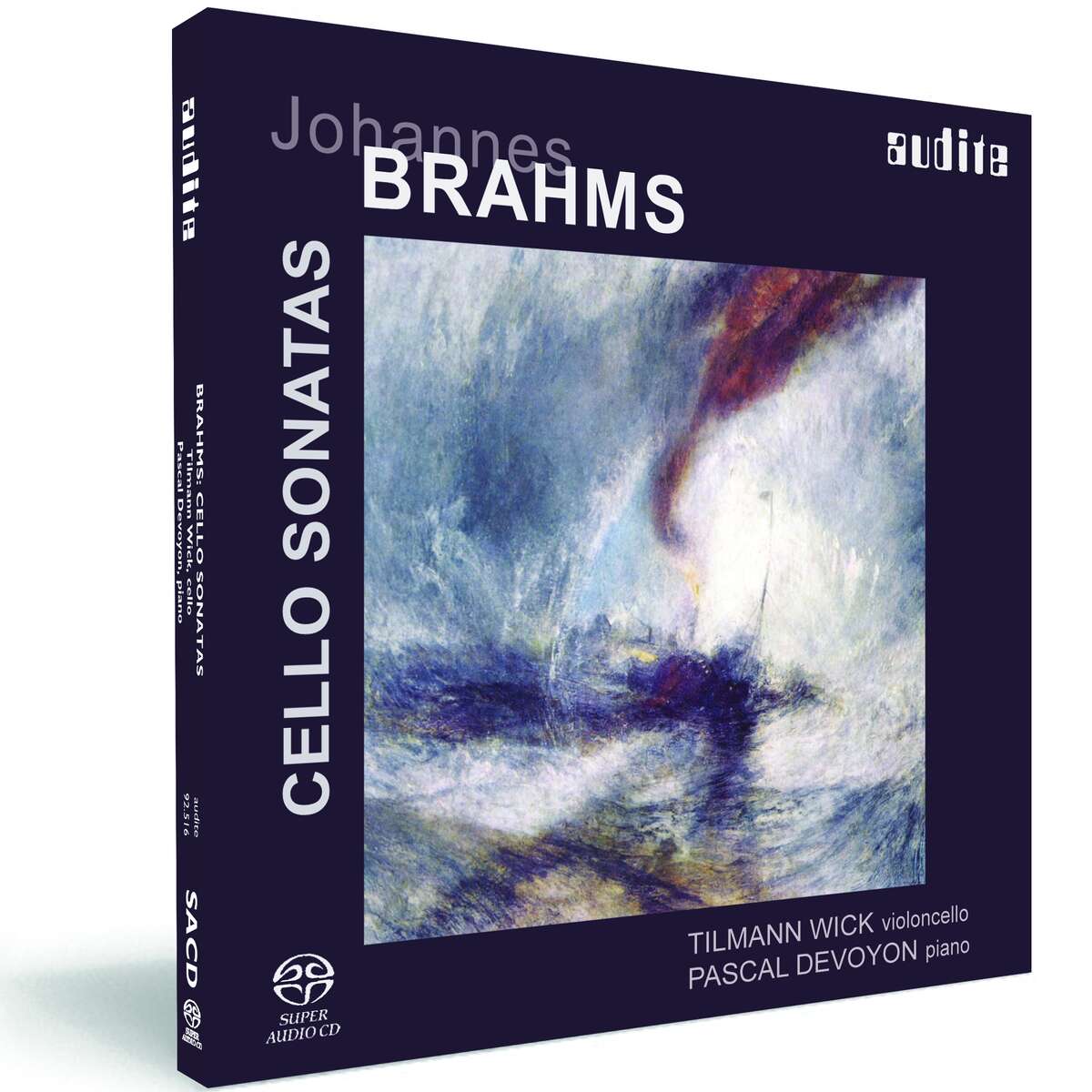
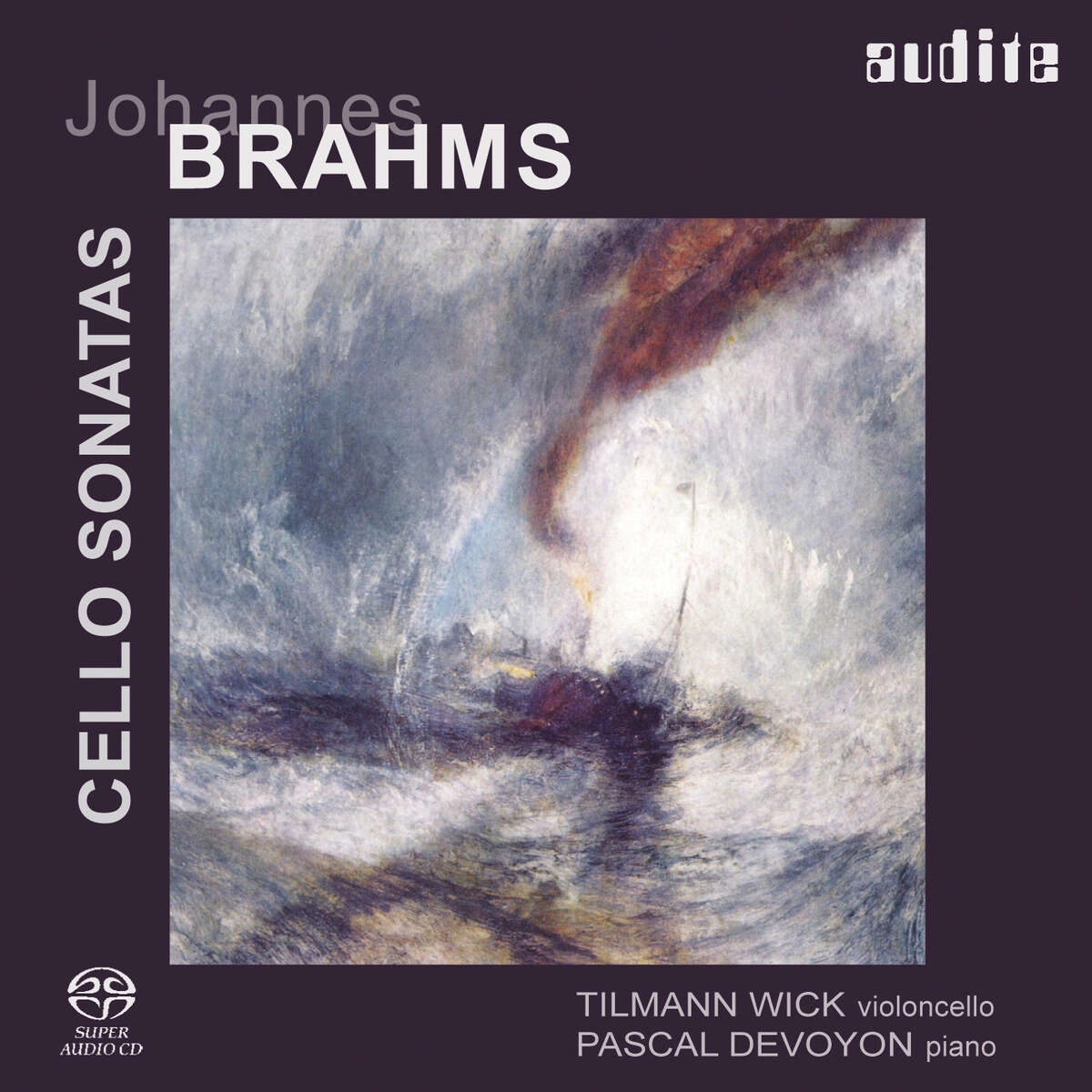
Both of the Sonatas for Piano and Violoncello of Johannes Brahms are milestones in his stylistic development, from the first formation of an unmistakable identity to the composer\'s late autumnal style. The completion of the Sonata No. 1 in E minor in 1865 took place during a phase in...more
Johannes Brahms

"A la fougue et l’expressivité volontiers extravertie de Wick répond la modération de Devoyon. Le résultat est une somme d’individualités, avec de magnifiques passages chantées." (Classica-Répertoire)


Track List
Details
| Johannes Brahms: Cello Sonatas | |
| article number: | 92.516 |
|---|---|
| EAN barcode: | 4022143925169 |
| price group: | ACX |
| release date: | 1. July 2004 |
| total time: | 54 min. |
Informationen
Both of the Sonatas for Piano and Violoncello of Johannes Brahms are milestones in his stylistic development, from the first formation of an unmistakable identity to the composer\'s late autumnal style.
The completion of the Sonata No. 1 in E minor in 1865 took place during a phase in Brahms\'s life during which he discovered Vienna as a place conducive to his creativity, finally leading to his appointment with the Vienna Singakademie. He was especially concerned here with the revival of baroque choral works. The E minor Sonata also reflects Brahms\'s attraction to the baroque tradition - the final movement consists of a dry-sounding fugal exposition based on the Contrapunctus 13 of J.S. Bach. Combined with a songlike second theme, Brahms integrates fugal technique into the sonata form with great mastery. Originally cast in four movements, the Sonata was nonetheless, unusually, published as only a three-movement work. The Adagio, lost today, was withheld from publication by the composer himself.
Brahms wrote the Sonata No. 2 in F major in 1886, over twenty years later. Crucial years in his life lie between the two sonatas. Although he was very popular as a composer and conductor on an international scale at this time, his Second Cello Sonata was long considered unpalatable by cellists. This is unimaginable today, since the work is completely convincing from the very outset in its spirited opening, its Adagio full of feeling and its Finale in rondo form. The later Brahms continually returned to the classical legacy, but with his own unmistakable style and without a trace of anything derivative.
Tilmann Wick, international prize winner and Professor at the Academy of Music and Theatre in Hanover, performs regularly at home and abroad and is an instructor at international master courses. Pascal Devoyon, also a prize winner at international competitions, including second prize at the 1978 Tchaikovsky Competition, is a Professor at the Berlin Academy of the Arts. He regularly accepts invitations to participate as a musician and instructor at numerous international festivals. He himself directs the Festival MusicAlp in Courchevel, France.
Reviews

Pforzheimer Zeitung | 24. Mai 2005 | Thomas Weiss | May 24, 2005 Zwei Wege zu Brahms
Zwei unterschiedliche Wege zu Werken für Cello und Klavier schlagen derMehr lesen
Aus urheberrechtlichen Gründen dürfen wir ihnen diese Rezension leider nicht zeigen!
Zwei unterschiedliche Wege zu Werken für Cello und Klavier schlagen der

Scherzo | N° 196 - Abril 2005 | C.V.N. | April 1, 2005
Esta nueva aproximación a las dos sonatas para chelo y piano de Brahms aMehr lesen
Aus urheberrechtlichen Gründen dürfen wir ihnen diese Rezension leider nicht zeigen!
Esta nueva aproximación a las dos sonatas para chelo y piano de Brahms a

Pizzicato | 2/2005 | Guy Wagner | February 1, 2005
Eine leidenschaftlich engagierte, musikalisch hochwertige Deutung der beiden Cellosonaten (1865 und 1886) von Johannes Brahms, in denen der KomponistMehr lesen
Eine leidenschaftlich engagierte, musikalisch hochwertige Deutung der beiden Cellosonaten (1865 und 1886) von Johannes Brahms, in denen der Komponist so viel von sich verraten hat. Die Interpreten gehen diese Musik auf gleicher Wellenlänge an und lotsen sie aus, ohne aber an die profunden Visionen von Starker-Katchen, du Pré-Barenboim, Perényi-Kocsis oder auch Rama Jucker-Werner Giger heranzureichen. Mit dem aufgebauschten Multikanal-Klangbild dieser SACD komme ich einfach nicht zurecht.
Eine leidenschaftlich engagierte, musikalisch hochwertige Deutung der beiden Cellosonaten (1865 und 1886) von Johannes Brahms, in denen der Komponist

American Record Guide | January/February 2005 | David Moore | January 1, 2005
This is impressive. The performances are forward-moving and dramatic, and the recording is bright and resonant, with hints of surrounding upperMehr lesen
This is impressive. The performances are forward-moving and dramatic, and the recording is bright and resonant, with hints of surrounding upper partials that contribute to the interest of both cello and piano sound. I shouldn’t know this, since I have no capability in my system for tasting the presumed glories of multichannel sound or SACD. This recording makes me happy with what I have, two fine speakers with the clarity and resonance to appreciate good recorded sound when they are presented with it. I hope this is not one of those over-expensive SACD discs, since it is short in timing and sounds perfectly fine in straight stereo.
When it comes to Brahms, I have so many preconceived notions as to how he ought to sound, based on old records and performances I have heard and done – any new recording is likely to bring out odd reactions. Wick and Devoyon have a passionate approach to the music. The only hesitation I have is that their passion is so perfect in its expression that it tends to sound planned. Wick’s vibrato is a bit unvaried, though his actual phrasing is excellent. Devoyon is a model pianist with a fine sense of balance and interesting tone color. To sum up, I have heard a few more consistently exciting readings of these pieces, but few that show more effective organization and are as richly recorded.
When it comes to Brahms, I have so many preconceived notions as to how he ought to sound, based on old records and performances I have heard and done – any new recording is likely to bring out odd reactions. Wick and Devoyon have a passionate approach to the music. The only hesitation I have is that their passion is so perfect in its expression that it tends to sound planned. Wick’s vibrato is a bit unvaried, though his actual phrasing is excellent. Devoyon is a model pianist with a fine sense of balance and interesting tone color. To sum up, I have heard a few more consistently exciting readings of these pieces, but few that show more effective organization and are as richly recorded.
This is impressive. The performances are forward-moving and dramatic, and the recording is bright and resonant, with hints of surrounding upper

Ensemble - Magazin für Kammermusik | 6/2004 | Robert Nemecek | December 1, 2004 Brahms mit sattem Cello
Diese Neueinspielung der beiden Cellosonaten von Brahms fällt durch zweiMehr lesen
Aus urheberrechtlichen Gründen dürfen wir ihnen diese Rezension leider nicht zeigen!
Diese Neueinspielung der beiden Cellosonaten von Brahms fällt durch zwei

klassik-heute.com | Novemeber 2004 | Robert Spoula | November 5, 2004
Brahms ging nicht nur als einer der konsequentesten, sondern auchMehr lesen
Aus urheberrechtlichen Gründen dürfen wir ihnen diese Rezension leider nicht zeigen!
Brahms ging nicht nur als einer der konsequentesten, sondern auch

Musica | Novembre 2004 | Piero Rattalino | November 1, 2004
L’unico difetto di questo disco risiede nella sua durata.Vero è cheMehr lesen
Aus urheberrechtlichen Gründen dürfen wir ihnen diese Rezension leider nicht zeigen!
L’unico difetto di questo disco risiede nella sua durata.Vero è che

Diapason | Novembre 2004 | Jean Cabourg | November 1, 2004
L’amour de ces œuvres inspire-t-il und adhésion sans retenue à leurs interprètes ? En cédant au charisme de Tilmann Wick, nous ne faisonsMehr lesen
L’amour de ces œuvres inspire-t-il und adhésion sans retenue à leurs interprètes ? En cédant au charisme de Tilmann Wick, nous ne faisons pourtant que mettre nos pas dans ceux des Sawallisch, Zimmermann ou Abbado qui ont associé leur nom a celui d’un artiste fêté à New York comme à Moscou, à Paris comme à Salzbourg, Berlin ou Zurich. Sa rencontre avec un pianiste émérite, de filiation française mais prolongée par une idylle schubertienne, nous vaut un récital ébouriffant. Récital, tant cette captation de studio semble respirer le grand air du live, ses aléas aussi bien, sa spontanéité toujours.
Un Brahms abordé col ouvert, avec une fougue et un abandon au plaisir de chanter qui font taire toute critique vétilleuse. Vibrato enivrant, flottements harmoniques du piano, la brume brahmsienne se teinte d’intenses rougeoiements. Sans pour autant que l’ardeur ne vire à la géniale hystérie d’une Gutman ; sans que l’on atteigne, non plus, à l’équilibre des plus grands, Du Pré – Barenboim en tête (récemment réédités en série Emi « Groc », dans un transfert hélas ! bien inférieur au précédent). La connivence de ces derniers était pour beaucoup dans leur réussite. Pascal Devoyon joue ici le jeu de romantisme déboutonné en y inscrivant ses propres délicatesses de toucher. Séparées par vingt années de maturation spirituelle et musicale, les deux sonates convergent dans une même exultation sonore. Que nous avons eu la faiblesse de partager !
Un Brahms abordé col ouvert, avec une fougue et un abandon au plaisir de chanter qui font taire toute critique vétilleuse. Vibrato enivrant, flottements harmoniques du piano, la brume brahmsienne se teinte d’intenses rougeoiements. Sans pour autant que l’ardeur ne vire à la géniale hystérie d’une Gutman ; sans que l’on atteigne, non plus, à l’équilibre des plus grands, Du Pré – Barenboim en tête (récemment réédités en série Emi « Groc », dans un transfert hélas ! bien inférieur au précédent). La connivence de ces derniers était pour beaucoup dans leur réussite. Pascal Devoyon joue ici le jeu de romantisme déboutonné en y inscrivant ses propres délicatesses de toucher. Séparées par vingt années de maturation spirituelle et musicale, les deux sonates convergent dans une même exultation sonore. Que nous avons eu la faiblesse de partager !
L’amour de ces œuvres inspire-t-il und adhésion sans retenue à leurs interprètes ? En cédant au charisme de Tilmann Wick, nous ne faisons

Classica-Répertoire | Novembre 2004 | Philippe van den Bosch | November 1, 2004 Les meilleures prises de son
Nous vous présentons sous cette rubrique des disques critiqués dans notreMehr lesen
Aus urheberrechtlichen Gründen dürfen wir ihnen diese Rezension leider nicht zeigen!
Nous vous présentons sous cette rubrique des disques critiqués dans notre

Audiophile Audition | November 2004 | John Sunier | November 1, 2004
Brahms’ two cello sonatas were created about 20 years apart. In theseMehr lesen
Aus urheberrechtlichen Gründen dürfen wir ihnen diese Rezension leider nicht zeigen!
Brahms’ two cello sonatas were created about 20 years apart. In these
Classica-Répertoire | N° 66, Octobre 2004 | Xavier Rey | October 1, 2004
Brahms a composé deux sonates qui font le bonheur des violoncellistes, àMehr lesen
Aus urheberrechtlichen Gründen dürfen wir ihnen diese Rezension leider nicht zeigen!
Brahms a composé deux sonates qui font le bonheur des violoncellistes, à
Ensemble - Magazin für Kammermusik | 5/2004 | Jürgen Otten | October 1, 2004
Gemeinhin gilt der spätere Brahms als edelerhaben in der Wahl seinerMehr lesen
Aus urheberrechtlichen Gründen dürfen wir ihnen diese Rezension leider nicht zeigen!
Gemeinhin gilt der spätere Brahms als edelerhaben in der Wahl seiner

www.classicstodayfrance.com | 11.08.2004 | Christophe Huss | August 11, 2004
Le très sympathique label allemand Audite a encore quelques sérieuxMehr lesen
Aus urheberrechtlichen Gründen dürfen wir ihnen diese Rezension leider nicht zeigen!
Le très sympathique label allemand Audite a encore quelques sérieux

CD Compact | Maribel Carracedo
Las dos sonatas para violoncelo y piano se completaron en 1865 y en 1886, yMehr lesen
Aus urheberrechtlichen Gründen dürfen wir ihnen diese Rezension leider nicht zeigen!
Las dos sonatas para violoncelo y piano se completaron en 1865 y en 1886, y