



Add download to your cart
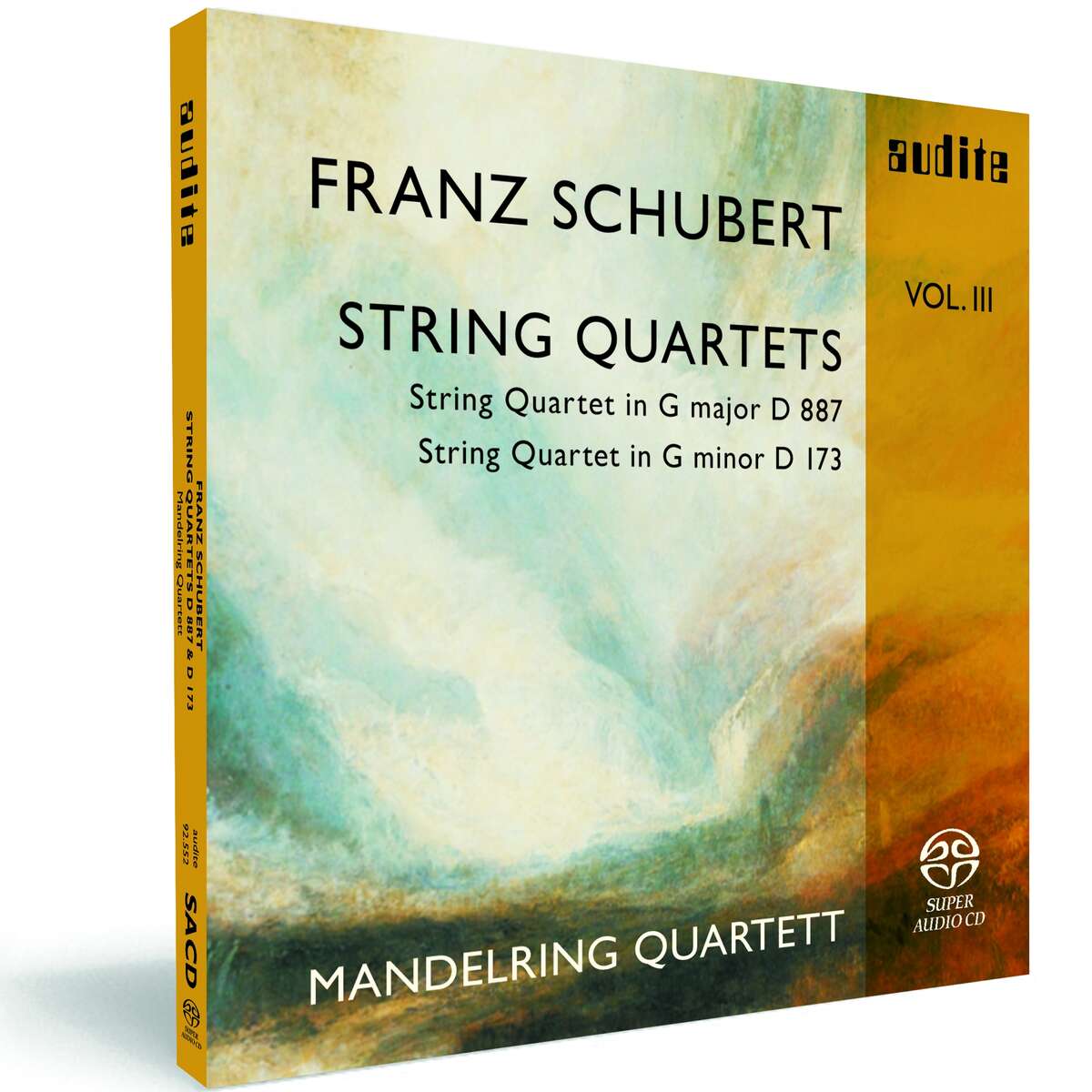
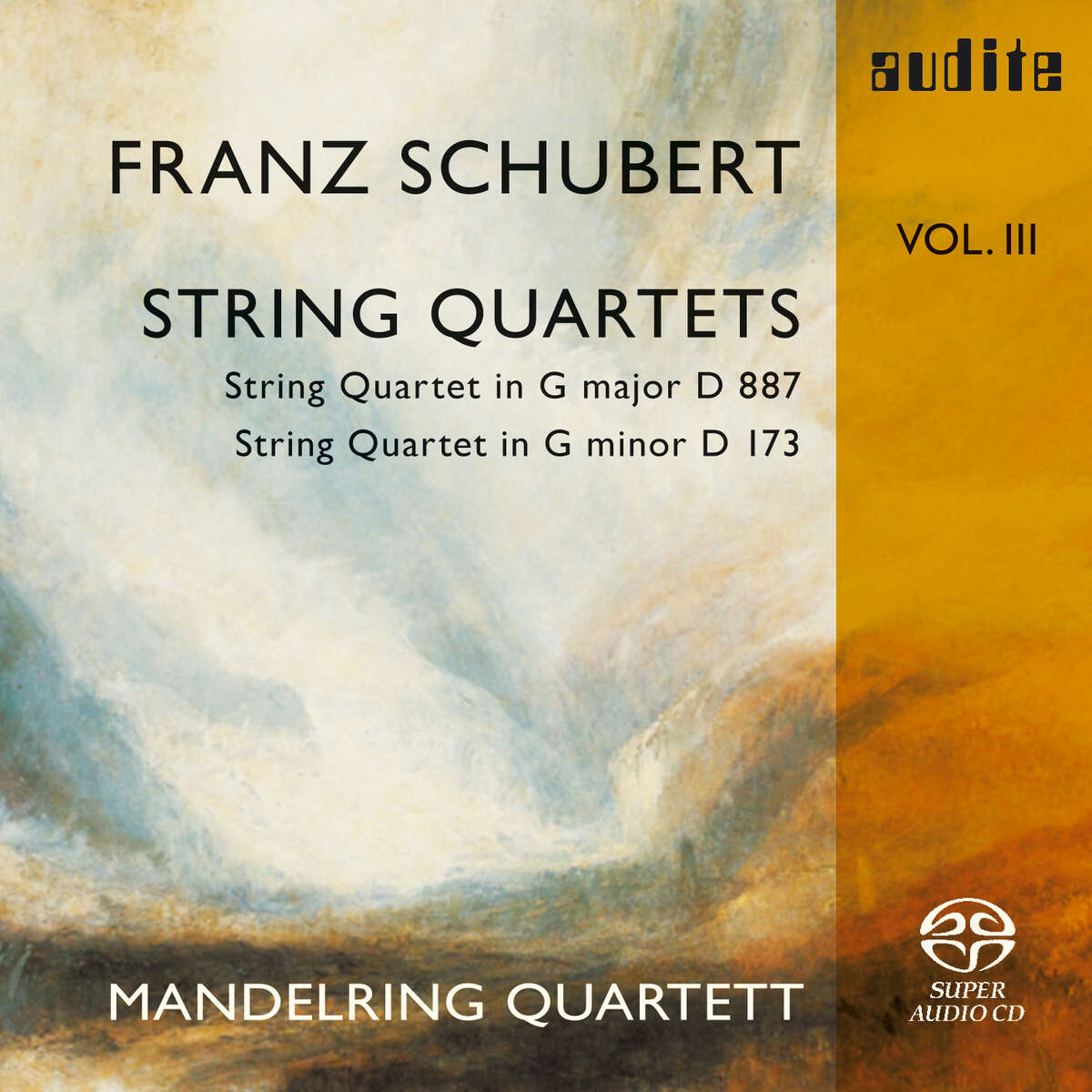
Following the outstanding success of Volumes I and II of the Schubert String Quartet series, the Mandelring Quartet now present Vol. III. Once again an early work has been coupled with a late one. Eleven years lie between the eighteen-year-old composer’s early Quartet in G minor and the...more
Franz Schubert

"Die analytisch-transparenten Interpretationen des famosen Mandelring-Quartetts auf der einen und ein hellwaches Aufnahme-Team auf der anderen Seite kommen zu einer geradezu beglückenden Symbiose: Die kammermusikalische Vielschichtigkeit der Schubertschen Streichquartettkunst lässt sich quasi mit der akustischen Lupe bis in ihre letzten Verästelungen verfolgen." (Fono Forum)


Track List
Details
| Franz Schubert: String Quartets Vol. III | |
| article number: | 92.552 |
|---|---|
| EAN barcode: | 4022143925527 |
| price group: | ACX |
| release date: | 1. July 2006 |
| total time: | 72 min. |
Bonus Material
Informationen
Following the outstanding success of Volumes I and II of the Schubert String Quartet series, the Mandelring Quartet now present Vol. III. Once again an early work has been coupled with a late one. Eleven years lie between the eighteen-year-old composer’s early Quartet in G minor and the Quartet in G major written when he was twenty-nine. The present combination of works illustrates the compositional development covered by Schubert during these years. If, despite his imaginative way of dealing with tradition, he still felt rather bound to it during his early creative years, during the later years it was at most a backdrop through which only a glimmer of formal norms can be perceived.
Schubert was hardly rewarded for such originality; not one of his string quartets was published during his lifetime and none of the later quartets were publicly performed. They were, at any rate, far too technically difficult to be managed by anything less than a professional quartet, the only exception being the “Rosamunde” Quartet (Vol. II).
The G-major Quartet, in its length of 50 minutes alone, already goes beyond the customary scope of the chamber works of its time. The musical means, too, including tremoli, large-scale developments and huge curves of intensifi cation have orchestral character; the movements’ structures are unusual and independent.
Schubert composed the G-minor Quartet, on the other hand, for the domestic family string quartet. Although this Quartet is a good deal more strongly orientated on the traditions of its time, it is also clear here that Schubert’s phase of assimilation and imitation of musical models was gradually drawing to a close.
The Mandelring Quartet have succeeded in developing a musical vision with the highest level of interpretative expertise. The drama hidden in these quartets is exposed and revealed to the listener in an organic manner through all ups and downs, thanks also to the excellent recording technique.
Reviews

Der Reinbeker | 17. Mai 2010, Nr. 9 | Peter Steder | May 17, 2010 Jazz und Klassik
„Chesky Records“ gehört unbestritten zu den führenden audiophilenMehr lesen
Aus urheberrechtlichen Gründen dürfen wir ihnen diese Rezension leider nicht zeigen!
„Chesky Records“ gehört unbestritten zu den führenden audiophilen

Pforzheimer Zeitung | 3. September 2009 | Thomas Weiss | September 3, 2009 Bedeutende Streichquartette
Das Mandelring-Quartett hat sich einerseits mit Franz Schubert befasst, vonMehr lesen
Aus urheberrechtlichen Gründen dürfen wir ihnen diese Rezension leider nicht zeigen!
Das Mandelring-Quartett hat sich einerseits mit Franz Schubert befasst, von

www.SA-CD.net | June 2008 | Polly Nomial | June 17, 2008
This, the third volume of the Mandelring's exploration of Schubert'sMehr lesen
Aus urheberrechtlichen Gründen dürfen wir ihnen diese Rezension leider nicht zeigen!
This, the third volume of the Mandelring's exploration of Schubert's
www.SA-CD.net | August 2007 | Andrew B | August 7, 2007
The fascinating and long first movement allegro of this, Schubert’s lastMehr lesen
Aus urheberrechtlichen Gründen dürfen wir ihnen diese Rezension leider nicht zeigen!
The fascinating and long first movement allegro of this, Schubert’s last

www.ClassicsToday.com | July 2007 | Victor Carr | July 1, 2007
The Mandelring Quartet initially raises high hopes in the first movement ofMehr lesen
Aus urheberrechtlichen Gründen dürfen wir ihnen diese Rezension leider nicht zeigen!
The Mandelring Quartet initially raises high hopes in the first movement of

The Strad | June 2007 | Joanne Talbot | June 1, 2007
What Schubert achieved in his brief life never ceases to amaze, yet evenMehr lesen
Aus urheberrechtlichen Gründen dürfen wir ihnen diese Rezension leider nicht zeigen!
What Schubert achieved in his brief life never ceases to amaze, yet even

Scherzo | Mayo 2007 | Alfredo Brotons Muñoz | May 1, 2007
La tercera entrega de la integral de cuartetos de Schubert a cargo delMehr lesen
Aus urheberrechtlichen Gründen dürfen wir ihnen diese Rezension leider nicht zeigen!
La tercera entrega de la integral de cuartetos de Schubert a cargo del

Neue Zürcher Zeitung | 27. April 2007 | flh | April 27, 2007 Später Schubert
Es gibt viele Interpretationen von Schuberts grossem letztem G-Dur-QuartettMehr lesen
Aus urheberrechtlichen Gründen dürfen wir ihnen diese Rezension leider nicht zeigen!
Es gibt viele Interpretationen von Schuberts grossem letztem G-Dur-Quartett

Fanfare | March/April 2007 | Peter J. Rabinowitz | March 1, 2007
The Mandelring Quartet, three siblings and a friend, are renowned for their exceptional coordination—a virtue evident on this, the third volume ofMehr lesen
The Mandelring Quartet, three siblings and a friend, are renowned for their exceptional coordination—a virtue evident on this, the third volume of their Schubert cycle for Audite. They’re not a hyperkinetic group in the manner of the early Juilliard—nor do they offer the intellectual focus of the Pacifica, much less the conversational heat of the Vermeer. But they compensate with an enviable balance—both in terms of their vertical sensitivity and in terms of their emotional stability. I found the first installment of their Shostakovich series too temperate and underinflected for the repertoire; but their poise is better suited to Schubert.
Granted, their occasional tendency to focus on details at the expense of line and their intermittent lack of spring (try the finale of the G Major) gives their performances an expansive atmosphere, making the tempos seem slower than they are. Especially given their inclusion of first-movement exposition repeats, this is not the group to disguise Schubert’s sometimes-garrulous nature. Nor is it the group to disguise the sense of rhythmic redundancy that can infect his music. But listeners with the requisite patience will find a great deal to appreciate here: in the magical shading of the tremolos toward the beginning of the G Major, in the aplomb of the Andantino of the G Minor, in the clarity and sense of control throughout. And while the emotional temperature tends to be low, there’s a fair amount of Schubertian grit where required (try, for instance, the more dynamic passages in the first movement of the G Major).
In sum, hardly the last word in these scores, especially the familiar G Major. But those attracted to the interpretive vision should find this a welcome release, especially given the solid engineering.
Granted, their occasional tendency to focus on details at the expense of line and their intermittent lack of spring (try the finale of the G Major) gives their performances an expansive atmosphere, making the tempos seem slower than they are. Especially given their inclusion of first-movement exposition repeats, this is not the group to disguise Schubert’s sometimes-garrulous nature. Nor is it the group to disguise the sense of rhythmic redundancy that can infect his music. But listeners with the requisite patience will find a great deal to appreciate here: in the magical shading of the tremolos toward the beginning of the G Major, in the aplomb of the Andantino of the G Minor, in the clarity and sense of control throughout. And while the emotional temperature tends to be low, there’s a fair amount of Schubertian grit where required (try, for instance, the more dynamic passages in the first movement of the G Major).
In sum, hardly the last word in these scores, especially the familiar G Major. But those attracted to the interpretive vision should find this a welcome release, especially given the solid engineering.
The Mandelring Quartet, three siblings and a friend, are renowned for their exceptional coordination—a virtue evident on this, the third volume of

Classica-Répertoire | février 2007 | Antoine Mignon | February 1, 2007
On retrouve avec un grand bonheur le Quatuor Mandelring dans la poursuiteMehr lesen
Aus urheberrechtlichen Gründen dürfen wir ihnen diese Rezension leider nicht zeigen!
On retrouve avec un grand bonheur le Quatuor Mandelring dans la poursuite

Pizzicato | N° 170 - 2/2007 | Guy Wagner | February 1, 2007
Faszinierende Alternative<br /> <br /> In dieser Einspielung setzen die vier Musiker sich mit dem großen letzten Meisterwerk Schuberts in SachenMehr lesen
Faszinierende Alternative
In dieser Einspielung setzen die vier Musiker sich mit dem großen letzten Meisterwerk Schuberts in Sachen Streichquartett, dem Quartett in G-Dur D.887, auseinander. Das über 50minütige Werk, das der Meister in knapp zehn Tagen (vom 20. bis 30. Juni 1826) schrieb, als die 'Krankheit', die unheimliche und unheilbare Syphilis, ihm wieder seine 'Endlichkeit' deutlich machte, verlangt ein Engagement, das an die Grenzen der Aussagekraft geht, denn schon das einleitende symphonische Allegro molto moderato hat eine Komplexität, die viele Interpreten ratlos macht.
Nicht so die Mandelring-Musiker. Da sie die Problematik erkannt haben, vollziehen sie einen Rückzug aufs rein Musikalische, wie bereits ihre vorherige CD verdeutlichte, und für dieses gigantische Werk verweigern sie eine Haltung, die als Vorzeichen kommenden Unheils gedeutet werden könnte. Sie setzen sich vielmehr mit dem Geist der Musik auseinander, und der fußt nun einmal im Kammermusikalischen. Dabei lassen sie die ganze Schönheit und Kohärenz ihres Zusammenspiels deutlich werden, und so 'singt' die Musik wie nur bei wenigen Quartettformationen.
Damit bleiben sie allerdings hinter der phänomenalen Dramatik der Musik zurück. Dies wird auch zum Problem im Andante, dem es nun evident an Kontrast fehlt, so dass die innere Unruhe nicht zu jenem gequälten Aufschrei führt, der Schuberts Ausdruck der Verzweiflung ist,... ein Aufschrei, der sich übrigens im Scherzo und im Finale fortsetzt. Dafür kommt hier das Melodische, der reine Gesang, optimal zur Geltung, so als hätte man es mit einem großen Lied, einer Ballade, zu tun, eher denn als mit der großen Klage des großen Franz Schubert.
Das andere, frühe, weit weniger problematische Quartett in D-Dur von 1815, D.173, kommt durch die Annäherung des Mandelring-Quartetts viel besser weg. Sie spielen genauso konzentriert, so musikantisch wie immer, und die Musik atmet ganz wunderbar. Nur im Menuett verliert sich der Esprit des Ländlers zugunsten des Leichten und Gelösten, das im Finale zur Befreiung wird.
Ich muss demnach feststellen, dass das Quartett zwar noch immer meine völlige Bewunderung verdient, dass die von ihm nun endgültig - wie es scheint - eingeschlagene Richtung in Sachen Franz Schubert aber immer weniger meine ist. Das sollte mich dennoch nicht davon abhalten, sie als großartige Musiker und ihre Schubert-Deutung als faszinierende Alternative anzusehen.
In dieser Einspielung setzen die vier Musiker sich mit dem großen letzten Meisterwerk Schuberts in Sachen Streichquartett, dem Quartett in G-Dur D.887, auseinander. Das über 50minütige Werk, das der Meister in knapp zehn Tagen (vom 20. bis 30. Juni 1826) schrieb, als die 'Krankheit', die unheimliche und unheilbare Syphilis, ihm wieder seine 'Endlichkeit' deutlich machte, verlangt ein Engagement, das an die Grenzen der Aussagekraft geht, denn schon das einleitende symphonische Allegro molto moderato hat eine Komplexität, die viele Interpreten ratlos macht.
Nicht so die Mandelring-Musiker. Da sie die Problematik erkannt haben, vollziehen sie einen Rückzug aufs rein Musikalische, wie bereits ihre vorherige CD verdeutlichte, und für dieses gigantische Werk verweigern sie eine Haltung, die als Vorzeichen kommenden Unheils gedeutet werden könnte. Sie setzen sich vielmehr mit dem Geist der Musik auseinander, und der fußt nun einmal im Kammermusikalischen. Dabei lassen sie die ganze Schönheit und Kohärenz ihres Zusammenspiels deutlich werden, und so 'singt' die Musik wie nur bei wenigen Quartettformationen.
Damit bleiben sie allerdings hinter der phänomenalen Dramatik der Musik zurück. Dies wird auch zum Problem im Andante, dem es nun evident an Kontrast fehlt, so dass die innere Unruhe nicht zu jenem gequälten Aufschrei führt, der Schuberts Ausdruck der Verzweiflung ist,... ein Aufschrei, der sich übrigens im Scherzo und im Finale fortsetzt. Dafür kommt hier das Melodische, der reine Gesang, optimal zur Geltung, so als hätte man es mit einem großen Lied, einer Ballade, zu tun, eher denn als mit der großen Klage des großen Franz Schubert.
Das andere, frühe, weit weniger problematische Quartett in D-Dur von 1815, D.173, kommt durch die Annäherung des Mandelring-Quartetts viel besser weg. Sie spielen genauso konzentriert, so musikantisch wie immer, und die Musik atmet ganz wunderbar. Nur im Menuett verliert sich der Esprit des Ländlers zugunsten des Leichten und Gelösten, das im Finale zur Befreiung wird.
Ich muss demnach feststellen, dass das Quartett zwar noch immer meine völlige Bewunderung verdient, dass die von ihm nun endgültig - wie es scheint - eingeschlagene Richtung in Sachen Franz Schubert aber immer weniger meine ist. Das sollte mich dennoch nicht davon abhalten, sie als großartige Musiker und ihre Schubert-Deutung als faszinierende Alternative anzusehen.
Faszinierende Alternative
In dieser Einspielung setzen die vier Musiker sich mit dem großen letzten Meisterwerk Schuberts in Sachen
In dieser Einspielung setzen die vier Musiker sich mit dem großen letzten Meisterwerk Schuberts in Sachen

Le Monde de la Musique | Janvier 2007 | Patrick Szernsovicz | January 1, 2007
C’est une chance pour Schubert de parvenir a maturite avant que ne puissent l’influencer les dernières compositions de Beethoven d’autant queMehr lesen
C’est une chance pour Schubert de parvenir a maturite avant que ne puissent l’influencer les dernières compositions de Beethoven d’autant que les quatuors a cordes sont un domaine ou il entre en pleine possession de ses moyens plus tard que dans ses lieder ou dans son œuvre pianistique. S’il s’inspire encore de Mozart et du Beethoven de l’Opus 18 dans son Neuvième Quatuor en sol mineur D173 (1815) sa conception de la séquence a grande échelle dans l’ultime Quinzième Quatuor en sol majeur D 887 (1826) n’est issue qu’en une infime partie de Beethoven L’œuvre grandiose et aventureuse approfondit l’expression des deux quatuors précédents (Rosamunde et La Jeune Fille et la Mort) L'écriture de ce Quatuor en sol a donne une forte impression d’avant garde jusqu’a l’extrême fin du XIXe siècle.
Les meilleurs interprètes du Quatuor en sol (Quatuors Alban Berg Amadeus Cherubini Juilhard de Tokyo Gidon Kremer et ses amis) en soulignent avant tout la recherche d’unité le combat intérieur la sonorité fruitée et la subtitle des nuances. C est ce que fait dans une certaine mesure l’excellent Quatuor Mandelring – ou seul l’altiste n’est pas de la famille Schmidt – mais le jeu d’ensemble malgré d’eminentes qualités accuse un certain manque de souffle. Dans la filiation du Quatuor Melos de Stuttgart et du Quatuor de Leipzig les Mandelring défendent une esthétique décapante mais d'une conception un peu trop « germanique ».
Les meilleurs interprètes du Quatuor en sol (Quatuors Alban Berg Amadeus Cherubini Juilhard de Tokyo Gidon Kremer et ses amis) en soulignent avant tout la recherche d’unité le combat intérieur la sonorité fruitée et la subtitle des nuances. C est ce que fait dans une certaine mesure l’excellent Quatuor Mandelring – ou seul l’altiste n’est pas de la famille Schmidt – mais le jeu d’ensemble malgré d’eminentes qualités accuse un certain manque de souffle. Dans la filiation du Quatuor Melos de Stuttgart et du Quatuor de Leipzig les Mandelring défendent une esthétique décapante mais d'une conception un peu trop « germanique ».
C’est une chance pour Schubert de parvenir a maturite avant que ne puissent l’influencer les dernières compositions de Beethoven d’autant que

Fono Forum | 1/2007 | Holger Arnold | January 1, 2007 Analytisch
Wie bei den beiden Vorgängerinnen vereint auch diese dritte Folge des 2003 begonnenen Schubert-Zyklus ein frühes und ein spätes Quartett alsMehr lesen
Wie bei den beiden Vorgängerinnen vereint auch diese dritte Folge des 2003 begonnenen Schubert-Zyklus ein frühes und ein spätes Quartett als spannende Zeitreise. Die analytisch-transparenten Interpretationen des famosen Mandelring-Quartetts auf der einen und ein hellwaches Aufnahme-Team auf der anderen Seite kommen zu einer geradezu beglückenden Symbiose: Die kammermusikalische Vielschichtigkeit der Schubertschen Streichquartettkunst lässt sich quasi mit der akustischen Lupe bis in ihre letzten Verästelungen verfolgen. Aber auch der in den oberen Lagen gelegentlich angestrengt wirkende Ton des Primarius wird nicht kaschiert. Die vorbildliche Räumlichkeit der Aufnahmen kommt sowohl bei der Zweikanal- als auch bei der Mehrkanalversion voll zur Geltung.
Wie bei den beiden Vorgängerinnen vereint auch diese dritte Folge des 2003 begonnenen Schubert-Zyklus ein frühes und ein spätes Quartett als

Muzyka21 | styczeń 2007, 1 (78) | Stanisław Lubliński | January 1, 2007
Arcydzieła Schuberta zespół wykonuje z ogromnym liryzmem i niezwykłąMehr lesen
Aus urheberrechtlichen Gründen dürfen wir ihnen diese Rezension leider nicht zeigen!
Arcydzieła Schuberta zespół wykonuje z ogromnym liryzmem i niezwykłą

www.ResMusica.com | Décembre 2006 | Patrick Georges Montaigu | November 30, 2006
Poursuivant son intégrale Schubert après deux premiers volumes consacrésMehr lesen
Aus urheberrechtlichen Gründen dürfen wir ihnen diese Rezension leider nicht zeigen!
Poursuivant son intégrale Schubert après deux premiers volumes consacrés

opushd.net - opus haute définition e-magazine | Numéro 18 | Jean-Jacques Millo | November 13, 2006
Troisième volume de l’intégrale des Quatuors à cordes de FranzMehr lesen
Aus urheberrechtlichen Gründen dürfen wir ihnen diese Rezension leider nicht zeigen!
Troisième volume de l’intégrale des Quatuors à cordes de Franz

www.classicstodayfrance.com | Novembre 2006 | Christophe Huss | November 2, 2006
Après La Jeune fille et la mort dans le volume 1 et Rosamunde dans leMehr lesen
Aus urheberrechtlichen Gründen dürfen wir ihnen diese Rezension leider nicht zeigen!
Après La Jeune fille et la mort dans le volume 1 et Rosamunde dans le

Ensemble - Magazin für Kammermusik | Oktober/November 2006 | Detlev Bork | October 1, 2006 Erfolgsserie 3. Teil
Wieder kombiniert das Mandelring Quartett ein frühes Werk Franz SchubertsMehr lesen
Aus urheberrechtlichen Gründen dürfen wir ihnen diese Rezension leider nicht zeigen!
Wieder kombiniert das Mandelring Quartett ein frühes Werk Franz Schuberts

Stereo | 9/2006 | Egon Bezold | September 1, 2006
Aus Schuberts letztem Quartett spricht der große Tragiker, der sich dieMehr lesen
Aus urheberrechtlichen Gründen dürfen wir ihnen diese Rezension leider nicht zeigen!
Aus Schuberts letztem Quartett spricht der große Tragiker, der sich die

Mannheimer Morgen - Morgen Magazin | Freitag, 18. August 2006 | hub | August 18, 2006
Zunächst ist man verblüfft. So rasch und präzise, so artikulationssicherMehr lesen
Aus urheberrechtlichen Gründen dürfen wir ihnen diese Rezension leider nicht zeigen!
Zunächst ist man verblüfft. So rasch und präzise, so artikulationssicher

DeutschlandRadio Kultur - Radiofeuilleton | 31. Juli 2006 | Carola Malter | July 31, 2006
„Quartett spielen – unser Traumberuf“ ... viele Musiker wünschen sich das. Doch nicht alle können diesen Traum auch leben. DasMehr lesen
„Quartett spielen – unser Traumberuf“ ... viele Musiker wünschen sich das. Doch nicht alle können diesen Traum auch leben. Das Mandelring-Quartett aber kann es. Seit über 10 Jahren spielen die Pfälzer in der obersten Quartett-Liga. Wir stellen Ihnen ihre aktuelle CD mit Streichquartetten von Franz Schubert vor.
[Allegro molto moderato (1.Satz) aus: Streichquartett G-dur, D 887; K.: Franz Schubert;
39“]
Mandelring – Weinkenner denken dabei sofort an die traumhafte Lage des Mandelring-Gutes in der sonnenverwöhnten Pfalz und an vollmundige, edle Tropfen. Musikfreunde denken wohl eher an das Mandelring-Quartett (das natürlich genau aus dieser Weingegend kommt). Und mit den Jahren wie ein alter Wein immer besser zu werden scheint. Hören kann man das auf der neuen CD. Mit zwei Streichquartetten von Franz Schubert. Hier das Allegro molto moderato aus dem berühmten letzten Streichquartett in G-Dur.
[Allegro molto moderato (1.Satz) aus: Streichquartett G-dur, D 887; K.: Franz Schubert; Mandelring-Quartett; Ausschnitt, bis 2’40 (Ende geblendet)]
Aus dem großen G-Dur-Streichquartett von Franz Schubert hörten Sie den Anfang des ersten Satzes. Es spielte das Mandelring-Quartett.
In den Klassik-Charts findet man ihre CDs nicht. Zu klein ist ihr feines Label audite. Zu groß das Getümmel junger Quartette. Zu wenig ‚mainstream’ ihr Programm. Doch die drei Schmidt-Geschwister (und der Bratscher Roland Glassl) kommen aus einer Weingegend und wissen nur zu gut, dass der wirkliche Genuss im Leben nicht nur mit Kursen und Renditen zu tun hat.
Das Mandelring-Quartett gehört nach mehr als 10 Jahren und nach über einem Dutzend Platten längst zu jenen Ensembles, die mit nicht alltäglichen Werkkombinationen überraschen; Seele und Geist immer wieder neu herausfordern. Für den Hörer ist das ein wahres Vergnügen.
Auf ihrer aktuellen CD – der dritten in einer kleinen Schubert-Reihe – konfrontieren sie uns auch diesmal mit einem ganz frühen Streichquartett (in g-Moll) und einem späten (dem allerletzten in G-dur).
Wir hören also den 18 jährigen und den 29 jährigen Franz Schubert. Zwei Welten tun sich auf. Dem Heißsporn steht ein ausgebrannter Komponist gegenüber. Die Entwicklung vom heimischen Familienquartett zum großen fast sinfonischen Quartett ist phänomenal. Wir erleben eine rasant wachsende Eigenmächtigkeit eines Komponisten, von der wir längst wissen, das sie bestraft wurde: denn keines der Quartette von Schubert wurde zu Lebzeiten verlegt. Die Wiener waren einfach zu konservativ. Sie hatten keinen Sinn für diese Quartettexperimente, bei denen die Tradition nur noch als dünne Folie durchschimmerte.
Und die Musiker fanden diesen Schubert schlicht zu schwer. Über 20 Jahre schlummerte so das letzte Quartett im Nachlass des Bruders Ferdinand, um dann erst entdeckt, gespielt und gefeiert zu werden.
Was für ein Glück, mag man denken, dass wenigsten die frühen Quartette gespielt wurden. Wenn auch nur privat. In einer Woche brachte Schubert das g-Moll-Quartett im Frühjahr 1815 zu Papier. Noch hat er hier viel bei Beethoven geschaut, auch bei Haydn und Mozart. Doch so manche freche Regelwidrigkeit hat sich schon eingeschlichen.
[Andantino aus: Streichquartett g-moll D 173; K.: Franz Schubert; 6’19 (Auf Zeit fahren)]
Das Mandelring-Quartett spielt Franz Schubert: meisterlich mit kraftvollen Farben und überraschenden Brüchen. Eine CD-Empfehlung für lange erfrischende Sommerabende.
[Allegro molto moderato (1.Satz) aus: Streichquartett G-dur, D 887; K.: Franz Schubert;
39“]
Mandelring – Weinkenner denken dabei sofort an die traumhafte Lage des Mandelring-Gutes in der sonnenverwöhnten Pfalz und an vollmundige, edle Tropfen. Musikfreunde denken wohl eher an das Mandelring-Quartett (das natürlich genau aus dieser Weingegend kommt). Und mit den Jahren wie ein alter Wein immer besser zu werden scheint. Hören kann man das auf der neuen CD. Mit zwei Streichquartetten von Franz Schubert. Hier das Allegro molto moderato aus dem berühmten letzten Streichquartett in G-Dur.
[Allegro molto moderato (1.Satz) aus: Streichquartett G-dur, D 887; K.: Franz Schubert; Mandelring-Quartett; Ausschnitt, bis 2’40 (Ende geblendet)]
Aus dem großen G-Dur-Streichquartett von Franz Schubert hörten Sie den Anfang des ersten Satzes. Es spielte das Mandelring-Quartett.
In den Klassik-Charts findet man ihre CDs nicht. Zu klein ist ihr feines Label audite. Zu groß das Getümmel junger Quartette. Zu wenig ‚mainstream’ ihr Programm. Doch die drei Schmidt-Geschwister (und der Bratscher Roland Glassl) kommen aus einer Weingegend und wissen nur zu gut, dass der wirkliche Genuss im Leben nicht nur mit Kursen und Renditen zu tun hat.
Das Mandelring-Quartett gehört nach mehr als 10 Jahren und nach über einem Dutzend Platten längst zu jenen Ensembles, die mit nicht alltäglichen Werkkombinationen überraschen; Seele und Geist immer wieder neu herausfordern. Für den Hörer ist das ein wahres Vergnügen.
Auf ihrer aktuellen CD – der dritten in einer kleinen Schubert-Reihe – konfrontieren sie uns auch diesmal mit einem ganz frühen Streichquartett (in g-Moll) und einem späten (dem allerletzten in G-dur).
Wir hören also den 18 jährigen und den 29 jährigen Franz Schubert. Zwei Welten tun sich auf. Dem Heißsporn steht ein ausgebrannter Komponist gegenüber. Die Entwicklung vom heimischen Familienquartett zum großen fast sinfonischen Quartett ist phänomenal. Wir erleben eine rasant wachsende Eigenmächtigkeit eines Komponisten, von der wir längst wissen, das sie bestraft wurde: denn keines der Quartette von Schubert wurde zu Lebzeiten verlegt. Die Wiener waren einfach zu konservativ. Sie hatten keinen Sinn für diese Quartettexperimente, bei denen die Tradition nur noch als dünne Folie durchschimmerte.
Und die Musiker fanden diesen Schubert schlicht zu schwer. Über 20 Jahre schlummerte so das letzte Quartett im Nachlass des Bruders Ferdinand, um dann erst entdeckt, gespielt und gefeiert zu werden.
Was für ein Glück, mag man denken, dass wenigsten die frühen Quartette gespielt wurden. Wenn auch nur privat. In einer Woche brachte Schubert das g-Moll-Quartett im Frühjahr 1815 zu Papier. Noch hat er hier viel bei Beethoven geschaut, auch bei Haydn und Mozart. Doch so manche freche Regelwidrigkeit hat sich schon eingeschlichen.
[Andantino aus: Streichquartett g-moll D 173; K.: Franz Schubert; 6’19 (Auf Zeit fahren)]
Das Mandelring-Quartett spielt Franz Schubert: meisterlich mit kraftvollen Farben und überraschenden Brüchen. Eine CD-Empfehlung für lange erfrischende Sommerabende.
„Quartett spielen – unser Traumberuf“ ... viele Musiker wünschen sich das. Doch nicht alle können diesen Traum auch leben. Das