



Add download to your cart
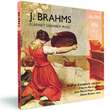
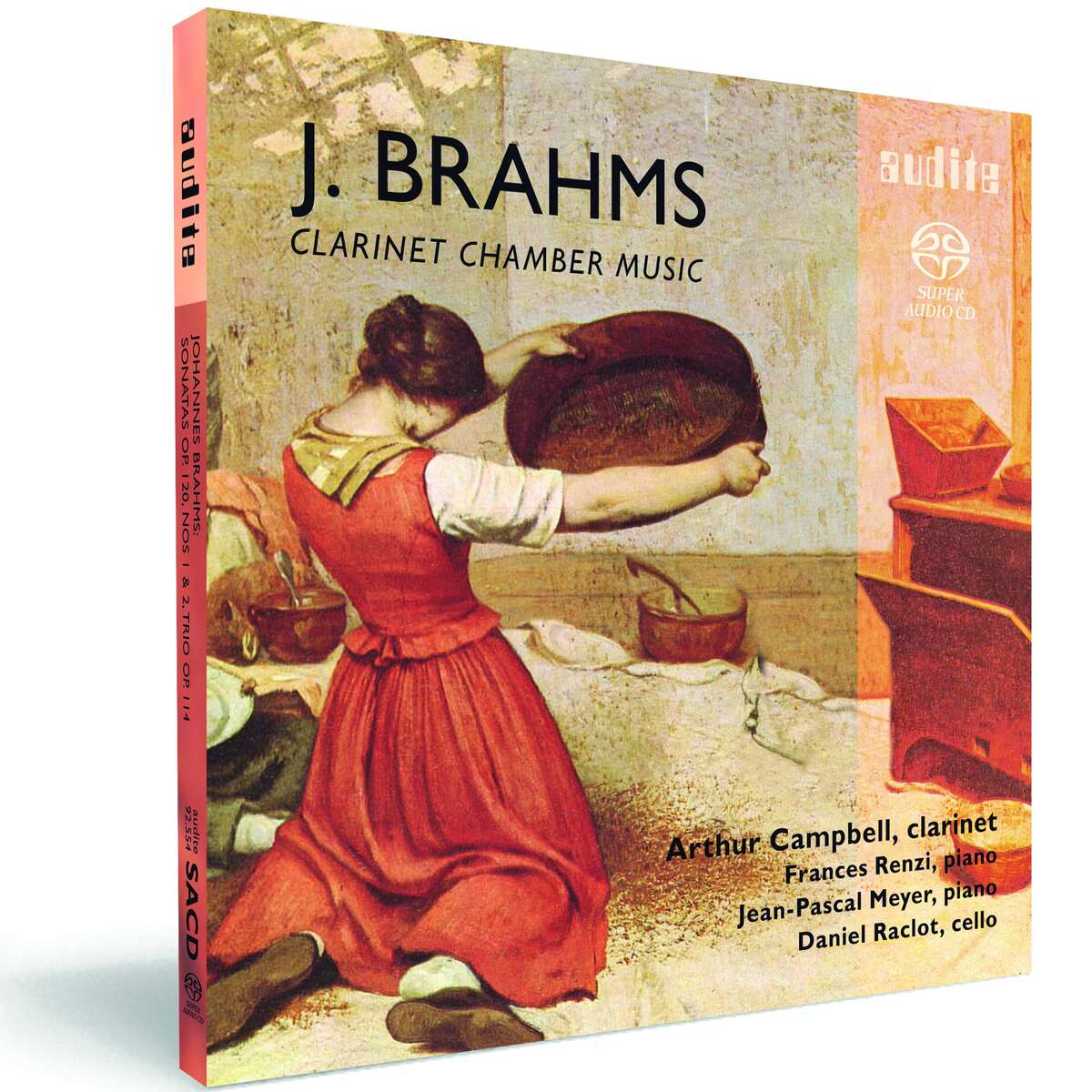
At the end of his career, when he had already made his will, Johannes Brahms (1833-1897) was enthused by an instrument which had been known to the composer for decades, mainly as a member of the orchestra: the clarinet . Richard Mühlfeld, the gifted chamber music virtuoso of the Meiningen court...more
Johannes Brahms

"For ambiance, intimacy, and audiophile presence in your Brahms library, you need only acquire this fine disc." (www.audaud.com)


Track List
Johannes Brahms Trio A minor Op. 114 for clarinet, cello and piano (23:38) Arthur Campbell | Jean-Pascal Meyer | Daniel Raclot
Johannes Brahms Sonata F minor Op. 120 No. 1 for clarinet and piano (23:24) Arthur Campbell | Frances Renzi
Johannes Brahms Sonata E-flat major Op. 120 No. 2 for clarinet and piano (22:34) Arthur Campbell | Frances Renzi
Details
| Johannes Brahms: Clarinet Chamber Music | |
| article number: | 92.554 |
|---|---|
| EAN barcode: | 4022143925541 |
| price group: | ACX |
| release date: | 1. October 2006 |
| total time: | 69 min. |
Bonus Material
Informationen
At the end of his career, when he had already made his will, Johannes Brahms (1833-1897) was enthused by an instrument which had been known to the composer for decades, mainly as a member of the orchestra: the clarinet. Richard Mühlfeld, the gifted chamber music virtuoso of the Meiningen court orchestra, was the muse for the four late chamber music works with clarinet of 1891 and 1894 of which the Trio op. 114 and the two Clarinet Sonatas op. 120 were recorded for this disc. The North German composer with a melancholy disposition reveals a preference for the middle, noble register and the expressively “speaking” tone of the clarinet which he demands extensively in all three works. Whereas the Trio op. 114 with piano and cello has always been considered a subtly crafted work for connoisseurs, the two Clarinet Sonatas op. 120, passionately romantic and vigorous at the same time, became popular immediately. Clarinettists gratefully added the works to their repertoire, whilst they triggered with composers a veritable “renaissance” of the clarinet in chamber music.
Arthur Campbell has won national and international competitions. He has performed and toured extensively throughout the U.S., Canada, Europe and Asia and followed invitations to present master classes at leading universities, conservatories and conventions throughout the world. Arthur Campbell has been recruited to the Artist-Faculty of Grand Valley State University in Michigan.
An experienced teacher as well as performer, Frances Renzi is Professor Emerita at the University of Toledo where she taught for 27 years. She has appeared as soloist and extraordinary chamber player throughout North America.
Daniel Raclot won international Cello- and Chamber Music Competitions. He has been solo cellist of the Orchestre Philharmonique de Radio-France since 1978.
Jean Pascal Meyer, too, won international Piano Competitions. Concert tours have led him not only through France and Europe but also to Asia and North- and South-America.
Reviews

Pizzicato | N° 225 - 9/2012 | Alain Steffen | September 1, 2012 Klanglich hervorragender Brahms
Johannes Brahms hat wunderbare Kammermusik für Klarinette geschrieben. Diese klanglich hervorragende SACD von Audite mit dem Trio a-moll fürMehr lesen
Johannes Brahms hat wunderbare Kammermusik für Klarinette geschrieben. Diese klanglich hervorragende SACD von Audite mit dem Trio a-moll für Klarinette, Cello und Klavier op. 114 und den beiden Sonaten für Klarinette und Klavier f-moll op. 120/1 und Es-dur op. 120/2 bietet diese drei Werke in sehr guten Interpretationen an. Hier wird konsequent und hochrangig musiziert, und wenn es auch ein bisschen an Fantasie fehlt, so bleiben die Interpretationen durch die enorme Präsenz der Musiker und durch die Aufnahmetechnik hörenswert.
Johannes Brahms hat wunderbare Kammermusik für Klarinette geschrieben. Diese klanglich hervorragende SACD von Audite mit dem Trio a-moll für

www.musicweb-international.com | December 2007 | Tim Perry | December 13, 2007
This hybrid SACD brings together three of the four masterpieces Brahms wrote for Richard Mühfeld, the self-taught virtuoso clarinettist who inspiredMehr lesen
This hybrid SACD brings together three of the four masterpieces Brahms wrote for Richard Mühfeld, the self-taught virtuoso clarinettist who inspired the composer to come out of compositional retirement. The missing piece, the gorgeous Clarinet Quintet Op.114, is frequently coupled with the Clarinet Trio, its immediate predecessor in Brahms oeuvre. Here it is replaced with the two sonatas for clarinet and piano which date from three years later.
American clarinettist Arthur Campbell turns in polished performances of the sonatas, with Frances Renzi a sympathetic associate artist. Their accounts emphasise the dreamy beauty of Brahms' writing, and Campbell's variation of tone is quite beguiling in and of itself. The performance of the first sonata is perhaps more successful. Here Campbell and Renzi find more ardour in the first movement than they manage to project in the second movement of the second sonata, both of which are marked "allegro appassionato". They also turn in a lovingly detailed accounts of the first sonata's allegretto grazioso third movement and dancing vivace finale.
For the trio Campbell is joined by a pair of French musicians, both of whom raise the intensity somewhat without erasing the lyricism of Brahms' conception. Together the three musicians deliver a fine performance of this piece. The beauty of Campbell's tone is compromised a little in the upper extremes of his register in the first movement, but elsewhere it remains warm and mellifluous. My only serious reservation here concerns the balancing of the sound, which favours the piano and clarinet but obscures Raclot's cello. Perhaps this problem is unique to the CD stereo layer of the disc, and is not repeated in the SACD layers, which I have not heard. Certainly the sound is otherwise excellent, closely recorded perhaps but lacking nothing in warmth.
The booklet notes, in both German and English, are helpful, even if the picture of Brahms selected to adorn Michael Struck-Schloen's essay depicts the composer in his youth rather than the gentleman of late middle age who penned these works.
If you prize the autumnal beauty of these pieces above their latent passion, these accounts will give you pleasure.
American clarinettist Arthur Campbell turns in polished performances of the sonatas, with Frances Renzi a sympathetic associate artist. Their accounts emphasise the dreamy beauty of Brahms' writing, and Campbell's variation of tone is quite beguiling in and of itself. The performance of the first sonata is perhaps more successful. Here Campbell and Renzi find more ardour in the first movement than they manage to project in the second movement of the second sonata, both of which are marked "allegro appassionato". They also turn in a lovingly detailed accounts of the first sonata's allegretto grazioso third movement and dancing vivace finale.
For the trio Campbell is joined by a pair of French musicians, both of whom raise the intensity somewhat without erasing the lyricism of Brahms' conception. Together the three musicians deliver a fine performance of this piece. The beauty of Campbell's tone is compromised a little in the upper extremes of his register in the first movement, but elsewhere it remains warm and mellifluous. My only serious reservation here concerns the balancing of the sound, which favours the piano and clarinet but obscures Raclot's cello. Perhaps this problem is unique to the CD stereo layer of the disc, and is not repeated in the SACD layers, which I have not heard. Certainly the sound is otherwise excellent, closely recorded perhaps but lacking nothing in warmth.
The booklet notes, in both German and English, are helpful, even if the picture of Brahms selected to adorn Michael Struck-Schloen's essay depicts the composer in his youth rather than the gentleman of late middle age who penned these works.
If you prize the autumnal beauty of these pieces above their latent passion, these accounts will give you pleasure.
This hybrid SACD brings together three of the four masterpieces Brahms wrote for Richard Mühfeld, the self-taught virtuoso clarinettist who inspired

The Clarinet | December 2007 | Justin O'Dell | December 1, 2007
Arthur Campbell has released a new compact disc with three of the four chamber music works with clarinet by Johannes Brahms. The Trio in A Minor,Mehr lesen
Arthur Campbell has released a new compact disc with three of the four chamber music works with clarinet by Johannes Brahms. The Trio in A Minor, opus 114, and both clarinet sonatas are beautifully captured in this hybrid Super Audio CD in surround sound format. This type of recording can be used in any CD player, but when played by equipment especially designed for it, the listener is rewarded with a depth of sound and range of dynamics much wider than available on ordinary CDs. When you have an SACD player, proper amplification, and five speakers, the result is truer to a live performance.
Arthur Campbell, according to the biographical notes accompanying the CD, was one of only three doctoral students of Robert Marcellus at Northwestern University in Illinois. A native of Canada, Dr. Campbell won the ICA’s International Clarinet Recording Competition in 1996 and the top clarinet prize in the National Music Festival of Canada (1988). Campbell chose first-rate musicians with whom to collaborate on this recording. Daniel Raclot, principal cellist with the Orchestre Phiharmonique de Radio-France, pianist Jean Pascal Meyer (in the trio), and wonderful pianist Frances Renzi (sonatas) all generously contribute their developed artistic personalities to these masterworks.
The Trio is the opening work on the disc. Mr. Raclot roots out just the right expression with his solo at the beginning. Too often, cellists miss the opportunity to convey the poetry and poignancy of this opening. Raclot’s version radiates a melancholic wistfulness, and one imagines Brahms’ tentative first scribbles as he emerged from retirement to pen this sublime work for its dedicatee, Richard Mühlfeld. I especially enjoyed the taut, composed character set up by pianist J.P. Meyer in the first half of the transition. He holds back slightly and he sets up a terrific push forward just when the clarinet joins the transition. Now the tempo carries enough momentum to welcome the second theme. Raclot penetrates beautifully with a searing, full sound here. Later in the movement, when it is the clarinetist’s duty to call in the recapitulation, Campbell phrases it purely, instead of evoking longing. His attractive, lengthy phrases and clear sound are free of sentimentality, allowing the music to speak without interference. Campbell shines in the opening of the slow movement. He relishes the chance to show off his silky, soft sound. The third movement is also very well played, but it would benefit from a little more collective contrast from the group. The main tempo, while slow, could have been more effective if the trio section had a little more Teutonic rollick. The approach is thoroughly elegant and unhurried, but sometimes I thought of a pavane more than of a Ländler. The definition of character set up by Raclot is confident and chiseled in the opening of the last movement, however. He pilots a strong and powerful primary theme. The movement is full of fire and excitement. This trio performs expertly together, and one senses they are enjoying the music to the fullest.
Both of the opus 120 sonatas are played very well. Frances Renzi’s contributions as both pianist and duo partner are commendable. Renzi has a beguiling sound, marked by clear textures and judicious use of pedaling. She supports Campbell so he can sing freely, but at the same time she succeeds as a full and sensitive chamber music participant. Campbell takes his opportunities to full advantage in the sonatas. His expression recalls that of his great master teacher, Marcellus. The phrasing is straightforward and within beats, and he rarely strays from what the composer asks. There are occasional touches of boldness, which add to the personality of the artist. Listen to the climax of the development of the second sonata, for example. For me, I found the slow movement of the F minor sonata particularly satisfying. Campbell’s lucid tone and spot-on intonation make for a performance that is easy to listen to. He takes it beyond the workmanlike, with some of the tenderest playing one could wish for. Renzi superbly performs the last movement of the first sonata. She at once conveys the neo-classicist in Brahms’ opening refrain, but she adeptly unleashes all the requisite power called for in the second episode.
All in all, this new Brahms release is an appealing newcomer to a bookshelf crowded with Brahms’ sonatas. The use of advanced recording technology lends it further interest.
Arthur Campbell, according to the biographical notes accompanying the CD, was one of only three doctoral students of Robert Marcellus at Northwestern University in Illinois. A native of Canada, Dr. Campbell won the ICA’s International Clarinet Recording Competition in 1996 and the top clarinet prize in the National Music Festival of Canada (1988). Campbell chose first-rate musicians with whom to collaborate on this recording. Daniel Raclot, principal cellist with the Orchestre Phiharmonique de Radio-France, pianist Jean Pascal Meyer (in the trio), and wonderful pianist Frances Renzi (sonatas) all generously contribute their developed artistic personalities to these masterworks.
The Trio is the opening work on the disc. Mr. Raclot roots out just the right expression with his solo at the beginning. Too often, cellists miss the opportunity to convey the poetry and poignancy of this opening. Raclot’s version radiates a melancholic wistfulness, and one imagines Brahms’ tentative first scribbles as he emerged from retirement to pen this sublime work for its dedicatee, Richard Mühlfeld. I especially enjoyed the taut, composed character set up by pianist J.P. Meyer in the first half of the transition. He holds back slightly and he sets up a terrific push forward just when the clarinet joins the transition. Now the tempo carries enough momentum to welcome the second theme. Raclot penetrates beautifully with a searing, full sound here. Later in the movement, when it is the clarinetist’s duty to call in the recapitulation, Campbell phrases it purely, instead of evoking longing. His attractive, lengthy phrases and clear sound are free of sentimentality, allowing the music to speak without interference. Campbell shines in the opening of the slow movement. He relishes the chance to show off his silky, soft sound. The third movement is also very well played, but it would benefit from a little more collective contrast from the group. The main tempo, while slow, could have been more effective if the trio section had a little more Teutonic rollick. The approach is thoroughly elegant and unhurried, but sometimes I thought of a pavane more than of a Ländler. The definition of character set up by Raclot is confident and chiseled in the opening of the last movement, however. He pilots a strong and powerful primary theme. The movement is full of fire and excitement. This trio performs expertly together, and one senses they are enjoying the music to the fullest.
Both of the opus 120 sonatas are played very well. Frances Renzi’s contributions as both pianist and duo partner are commendable. Renzi has a beguiling sound, marked by clear textures and judicious use of pedaling. She supports Campbell so he can sing freely, but at the same time she succeeds as a full and sensitive chamber music participant. Campbell takes his opportunities to full advantage in the sonatas. His expression recalls that of his great master teacher, Marcellus. The phrasing is straightforward and within beats, and he rarely strays from what the composer asks. There are occasional touches of boldness, which add to the personality of the artist. Listen to the climax of the development of the second sonata, for example. For me, I found the slow movement of the F minor sonata particularly satisfying. Campbell’s lucid tone and spot-on intonation make for a performance that is easy to listen to. He takes it beyond the workmanlike, with some of the tenderest playing one could wish for. Renzi superbly performs the last movement of the first sonata. She at once conveys the neo-classicist in Brahms’ opening refrain, but she adeptly unleashes all the requisite power called for in the second episode.
All in all, this new Brahms release is an appealing newcomer to a bookshelf crowded with Brahms’ sonatas. The use of advanced recording technology lends it further interest.
Arthur Campbell has released a new compact disc with three of the four chamber music works with clarinet by Johannes Brahms. The Trio in A Minor,

Fanfare | July/Aug 2007 | Jerry Dubins | July 1, 2007
Brahms’s four works for clarinet—the trio and two sonatas recorded here, plus the Quintet, op. 115—were all products of the composer’s lateMehr lesen
Brahms’s four works for clarinet—the trio and two sonatas recorded here, plus the Quintet, op. 115—were all products of the composer’s late years, and byproducts of his relationship with the virtuoso clarinetist Richard Mühlfeld. The sonatas, in both their originally conceived versions for clarinet and their composer-sanctioned versions for viola, along with the trio and quintet, have been covered in these pages a number of times; so brevity is in order.
Canadian-born clarinetist Arthur Campbell, now a US resident, received his degrees from Northwestern University, earning his doctorate as a student of renowned clarinetist Robert Marcellus. Pianist Frances Renzi, who partners Campbell in the sonatas, graduated from the University of North Texas, and then pursued graduate studies at Juilliard under Rosina Lhevinne and Beveridge Webster. French pianist Jean Pascal-Meyer, heard here in the trio, studied with, among others, Gabriel Tacchino and Gaby Casadesus. Cellist Daniel Raclot studied at the Limoges Conservatory in France, and took further training under André Navarra and Genevieve Joy.
One would be hard-pressed to find a recording of these works poorly played on today’s modern clarinet, (Campbell plays Leblanc, Opus II models). And therein is the dilemma, for there are so many recordings to choose from. What it comes down to in the end, I think, is one’s preference for the style or school of playing. There’s the English school, represented by artists past and present, such as Reginald Kell, Jack Brymer, Janet Hilton, and Thea King. The approach, not unlike that of a certain school of English singing, emphasizes a “white” sound that is light on vibrato, pure of tone, precise in pitch, and smoothly regulated or modulated between the instrument’s register breaks.
The French school, of which Gervase de Peyer is probably the most famous exponent, tends to cultivate a somewhat less focused sound in favor of a richer color palette and a more pronounced vibrato. Between the two—English and French—my personal taste leans towards the former. I’ve long had de Peyer’s Angel/EMI LP of the Mozart and Brahms clarinet quintets with the Melos Ensemble in my collection, though I’ve never much cared for the performances.
That brings us to the American school, which has managed to produce, in my opinion, the finest clarinetists of all—Stanley Drucker, David Shifrin, Richard Stoltzman, Harold Wright, and let us not forget Benny Goodman; and now Arthur Campbell can be added to this prestigious list. The American approach is one that adopts the best attributes of the English style, (the purity of tone and pitch and well-balanced registration) while eschewing the bland “white” sound in favor of the richer color palette and vibrato of the French school, but without the flaw of flabby focus.
This latest entry then into a highly crowded field is highly recommended for exquisite playing, enhanced by a wonderfully warm and perfectly balanced recording. The hybrid SACD will play on all CD players; and, of course, when played on a system equipped for full surround sound will add an extra degree of dimensionality.
Canadian-born clarinetist Arthur Campbell, now a US resident, received his degrees from Northwestern University, earning his doctorate as a student of renowned clarinetist Robert Marcellus. Pianist Frances Renzi, who partners Campbell in the sonatas, graduated from the University of North Texas, and then pursued graduate studies at Juilliard under Rosina Lhevinne and Beveridge Webster. French pianist Jean Pascal-Meyer, heard here in the trio, studied with, among others, Gabriel Tacchino and Gaby Casadesus. Cellist Daniel Raclot studied at the Limoges Conservatory in France, and took further training under André Navarra and Genevieve Joy.
One would be hard-pressed to find a recording of these works poorly played on today’s modern clarinet, (Campbell plays Leblanc, Opus II models). And therein is the dilemma, for there are so many recordings to choose from. What it comes down to in the end, I think, is one’s preference for the style or school of playing. There’s the English school, represented by artists past and present, such as Reginald Kell, Jack Brymer, Janet Hilton, and Thea King. The approach, not unlike that of a certain school of English singing, emphasizes a “white” sound that is light on vibrato, pure of tone, precise in pitch, and smoothly regulated or modulated between the instrument’s register breaks.
The French school, of which Gervase de Peyer is probably the most famous exponent, tends to cultivate a somewhat less focused sound in favor of a richer color palette and a more pronounced vibrato. Between the two—English and French—my personal taste leans towards the former. I’ve long had de Peyer’s Angel/EMI LP of the Mozart and Brahms clarinet quintets with the Melos Ensemble in my collection, though I’ve never much cared for the performances.
That brings us to the American school, which has managed to produce, in my opinion, the finest clarinetists of all—Stanley Drucker, David Shifrin, Richard Stoltzman, Harold Wright, and let us not forget Benny Goodman; and now Arthur Campbell can be added to this prestigious list. The American approach is one that adopts the best attributes of the English style, (the purity of tone and pitch and well-balanced registration) while eschewing the bland “white” sound in favor of the richer color palette and vibrato of the French school, but without the flaw of flabby focus.
This latest entry then into a highly crowded field is highly recommended for exquisite playing, enhanced by a wonderfully warm and perfectly balanced recording. The hybrid SACD will play on all CD players; and, of course, when played on a system equipped for full surround sound will add an extra degree of dimensionality.
Brahms’s four works for clarinet—the trio and two sonatas recorded here, plus the Quintet, op. 115—were all products of the composer’s late

Scherzo | Año XXII - Núm. 220 - Junio 2007 | Juan Carlos Moreno | June 1, 2007
El clarinete es el instrumento de la madurez de Johannes Brahms, aquel alMehr lesen
Aus urheberrechtlichen Gründen dürfen wir ihnen diese Rezension leider nicht zeigen!
El clarinete es el instrumento de la madurez de Johannes Brahms, aquel al

American Record Guide | May/June 2007 - Vol. 70, No 3 | Paul L. Althouse | May 1, 2007
After completing his second string quintet in 1890, Brahms declared his intention to retire at age 57. We are glad he changed his mind, and before hisMehr lesen
After completing his second string quintet in 1890, Brahms declared his intention to retire at age 57. We are glad he changed his mind, and before his death in 1896 he wrote several memorable pieces: 20 short piano works and four chamber pieces for clarinet, three of them included here.
This is quite wonderful. Campbell, a Canadian native who studied with Robert Marcellus, is a terrific player with excellent breath control and pure, non-wheezy tone. He sounds good at all dynamic levels and uses no vibrato (unlike, for example, Stoltzman in the slow movements of the sonatas). Campbell has surrounded himself with talented colleagues. I was particularly impressed with some deft playing by pianist Jean-Pascal Meyer in the trio, but in truth all the players deserve high praise for bringing these late, autumnal works to life so beautifully.
As our Overview (S/O 2006) pointed out, there are several fine recordings of Brahms’s clarinet pieces, but this one is certainly worthy of inclusion.
This is quite wonderful. Campbell, a Canadian native who studied with Robert Marcellus, is a terrific player with excellent breath control and pure, non-wheezy tone. He sounds good at all dynamic levels and uses no vibrato (unlike, for example, Stoltzman in the slow movements of the sonatas). Campbell has surrounded himself with talented colleagues. I was particularly impressed with some deft playing by pianist Jean-Pascal Meyer in the trio, but in truth all the players deserve high praise for bringing these late, autumnal works to life so beautifully.
As our Overview (S/O 2006) pointed out, there are several fine recordings of Brahms’s clarinet pieces, but this one is certainly worthy of inclusion.
After completing his second string quintet in 1890, Brahms declared his intention to retire at age 57. We are glad he changed his mind, and before his

www.banddirector.com | March 2007 | Michael Bennett | March 14, 2007
This is a beautiful recording in all sense of the word. The Trio in AMehr lesen
Aus urheberrechtlichen Gründen dürfen wir ihnen diese Rezension leider nicht zeigen!
This is a beautiful recording in all sense of the word. The Trio in A
CD Compact | 03-07 | Verónica Maynés | March 1, 2007
Algunas de las más hermosas piezas dedicadas al clarinete son, sin lugar aMehr lesen
Aus urheberrechtlichen Gründen dürfen wir ihnen diese Rezension leider nicht zeigen!
Algunas de las más hermosas piezas dedicadas al clarinete son, sin lugar a

www.classicalcdreview.com | March 2007 | R.E.B. | March 1, 2007
The Brahms chamber works featuring clarinet are magnificently played byMehr lesen
Aus urheberrechtlichen Gründen dürfen wir ihnen diese Rezension leider nicht zeigen!
The Brahms chamber works featuring clarinet are magnificently played by
Le Monde de la Musique | Mars 2007 | Patrick Szersnovicz | March 1, 2007
Le méconnu Trio pour clarinette, violoncelle et piano op. 114 et les deux magnifiques Sonates pour clarinette et piano op. 120 parachèvent en 1891Mehr lesen
Le méconnu Trio pour clarinette, violoncelle et piano op. 114 et les deux magnifiques Sonates pour clarinette et piano op. 120 parachèvent en 1891 et en 1894, avec le plus célèbre Quintette pour clarinette et cordes op. 115, la création instrumentale de Brahms. Usant de métamorphoses structurelles qui annoncent le principe de variation continue bientôt cher a Schoenberg, Brahms invente dans son Trio op 114 une « prose musicale » ou la maîtrise architecturale génère une rhétorique neuve Contrairement a la musique de chambre avec clavier antérieure de Brahms, ce n’est pas le piano qui domine mais plutôt la clarinette – ou l’alto, dans la deuxième instrumentation prévue par le compositeur dans les Sonates op 120 Chacune des sonates a son profil expressif, la Première, celle en fa mineur, offrant une invention mélodique digne d’un des plus grands duos composes par Brahms, la Première Sonate pour violon et piano dite «Regensonate».
Bien accompagné par Frances Renzi, le clarinettiste Arthur Campbell ne détrône pas dans les Sonates op 120 les rares références du passe (Kell/Horszowski, Wlach/Demus, Leister/Demus, De Peyer/Barenboim, Portal/Pludermacher) ni même des versions plus récentes (Leister/Oppitz, Frost/ Pontinen), mais il fait montre d’un souci du phrase brahmsien et rend justice a la melancolie des transitions, a la liberté mélodique comme a l’incessante imagination rythmique du vieux Brahms Maigre de belles in flexions, un jeu d’ensemble remarquable et une certaine recherche de la perfection plastique, l’interprétation du Trio en la mineur avec Daniel Raclot et Jean-Pascal Meyer manque un peu d’originalité, d’intensité et de profondeur.
Bien accompagné par Frances Renzi, le clarinettiste Arthur Campbell ne détrône pas dans les Sonates op 120 les rares références du passe (Kell/Horszowski, Wlach/Demus, Leister/Demus, De Peyer/Barenboim, Portal/Pludermacher) ni même des versions plus récentes (Leister/Oppitz, Frost/ Pontinen), mais il fait montre d’un souci du phrase brahmsien et rend justice a la melancolie des transitions, a la liberté mélodique comme a l’incessante imagination rythmique du vieux Brahms Maigre de belles in flexions, un jeu d’ensemble remarquable et une certaine recherche de la perfection plastique, l’interprétation du Trio en la mineur avec Daniel Raclot et Jean-Pascal Meyer manque un peu d’originalité, d’intensité et de profondeur.
Le méconnu Trio pour clarinette, violoncelle et piano op. 114 et les deux magnifiques Sonates pour clarinette et piano op. 120 parachèvent en 1891

www.ResMusica.com | Mars 2007 | Maya Prynda | March 1, 2007 Une version sans couleurs de l’œuvre pour clarinette de Brahms
Les trois œuvres pour clarinette de Brahms font partie desMehr lesen
Aus urheberrechtlichen Gründen dürfen wir ihnen diese Rezension leider nicht zeigen!
Les trois œuvres pour clarinette de Brahms font partie des

Audiophile Audition | February 2007 | Gary Lemco | February 15, 2007
In surround sound, Daniel Raclot's cello opening makes a lovely A MinorMehr lesen
Aus urheberrechtlichen Gründen dürfen wir ihnen diese Rezension leider nicht zeigen!
In surround sound, Daniel Raclot's cello opening makes a lovely A Minor

opushd.net - opus haute définition e-magazine | Numéro 22 | Jean-Jacques Millo | January 30, 2007
Regroupant les trois grandes partitions de musique de chambre pourMehr lesen
Aus urheberrechtlichen Gründen dürfen wir ihnen diese Rezension leider nicht zeigen!
Regroupant les trois grandes partitions de musique de chambre pour
Pizzicato | N° 169 - 1/2007 | Isabelle Trüb | January 1, 2007
Malgré tout son classicisme, la musique de Brahms parle d'abord au cœur. C'est bien le cas dans cet enregistrement des œuvres maîtresses pourMehr lesen
Malgré tout son classicisme, la musique de Brahms parle d'abord au cœur. C'est bien le cas dans cet enregistrement des œuvres maîtresses pour l'instrument à la sonorité chaleureuse qu'est la clarinette, et dont Brahms raffolait. Si le Trio op. 114 démontre une maturité et une générosité d'expression chez un compositeur au faîte de sa carrière, les deux Sonates op.120, qui font partie du répertoire des altistes, sont également des chefs d'œuvre à part entière. Les Sonates sont interprétées par Frances Renzi, une pianiste sensible qui dialogue avec Arthur Campbell à la clarinette avec un timbre et un phrasé soignés. Le clarinettiste possède une technique solide et suit les méandres romantiques de la partition avec aisance. Il éprouve parfois de la peine à maîtriser le timbre dans les passages les plus doux. Jean-Pascal Meyer donne un caractère plutôt tendu à la partie de piano dans le Trio, alors que Daniel Raclot charme par sa sonorité généreuse et sa présence à la partie de violoncelle.
Malgré tout son classicisme, la musique de Brahms parle d'abord au cœur. C'est bien le cas dans cet enregistrement des œuvres maîtresses pour

Ensemble - Magazin für Kammermusik | 6/2006 | Diether Steppuhn | November 1, 2006
Man kann Brahms' wunderbare späte Klarinettenwerke nicht oft genug hören.Mehr lesen
Aus urheberrechtlichen Gründen dürfen wir ihnen diese Rezension leider nicht zeigen!
Man kann Brahms' wunderbare späte Klarinettenwerke nicht oft genug hören.