




Add download to your cart

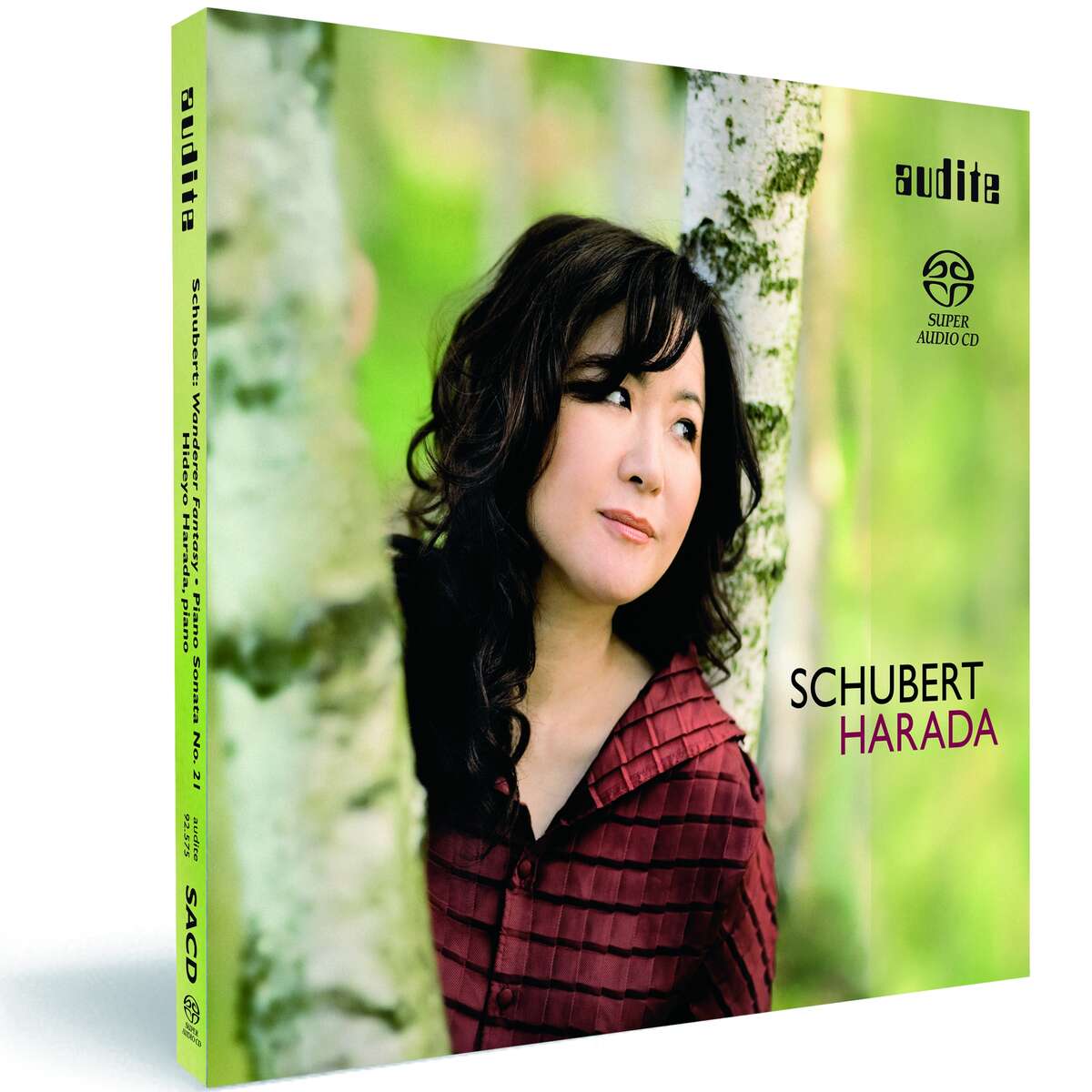
92575 - Franz Schubert: Wanderer Fantasy & Piano Sonata No. 21
aud 92.575
please choose the quality
Two principal works of Schubert’s piano music, two solutions for the great form. They appear as contrary poles: energetic, resolute and boastful in the case of the Wanderer Fantasy whereas the final piano sonata is restrained, elusive and at times faltering. The common elements are in the slow movements. No other Romantic addressed so radically what is brought into focus here: the notion of time. In the Wanderer Fantasy it is reflected as rhythm, as “measured time”. The sonata questions the course of time itself, the elementary medium of life in music. In her interpretation, Hideyo Harada elucidates the contrasts as well as the common undercurrent which forms a link between the works.more
Franz Schubert

"Sie will das Neue, Frische, Unverbrauchte – und scheut das Wagnis nicht. Ein Muss im CD-Regal." (Piano News)


Track List
Details
| Franz Schubert: Wanderer Fantasy & Piano Sonata No. 21 | |
| article number: | 92.575 |
|---|---|
| EAN barcode: | 4022143925756 |
| price group: | ACX |
| release date: | 16. September 2011 |
| total time: | 69 min. |
Bonus Material
Informationen
Following the highly successful releases of works by Grieg, Tchaikovsky / Rachmaninov and Schumann, the Japanese born pianist Hideyo Harada now presents her fourth SACD.
Two main works from Schubert’s piano music, two solutions for the great form, two approaches in composing musical time. From the outside, they appear as contrary poles in Schubert’s pianistic œuvre: energetic, resolute and sometimes boastful in the case of the Wanderer Fantasy, whereas the final piano sonata is restrained, elusive and at times faltering. That, at least, is the impression given by the outer movements. The common elements are in the slow movements. No other Romantic addressed so radically what is brought into focus here: the notion of time. In the Wanderer Fantasy it is reflected as rhythm, as “measured time”: Schubert developed the piece from a central rhythm. The sonata questions the course of time itself, the elementary medium of life in music, by breaking off and starting afresh, roaming and stretching, with an agility which mistrusts itself. The great question marks are in the central, slow pieces. They lead to a central motif in Schubert’s thinking and feelings: the wanderer to whose symbolic character he dedicated an early song.
In her interpretation, Hideyo Harada elucidates the contrasts as well as the common undercurrent which forms a link between the works.
Reviews

www.amazon.de | 3. September 2022 | September 3, 2022 | source: https://www.amaz... Kundenrezension: Spitzen-Aufnahmequalität
Ungewöhnlicher Aufnahmeort (Jesus Christus Kirche Berlin-Dahlem) mit recht langer Nachhallzeit. Trotzdem (oder deswegen?) technisch meine besteMehr lesen
Ungewöhnlicher Aufnahmeort (Jesus Christus Kirche Berlin-Dahlem) mit recht langer Nachhallzeit. Trotzdem (oder deswegen?) technisch meine beste Klavierplatte! Ungeheure Dynamik und Transparenz bis mitten in den Flügel hinein. Sensationell!
Ungewöhnlicher Aufnahmeort (Jesus Christus Kirche Berlin-Dahlem) mit recht langer Nachhallzeit. Trotzdem (oder deswegen?) technisch meine beste

Gramophone | June 2012 | Harriet Smith | June 1, 2012 Wanderer Fantasy from the Schubert Competition winner
A couple of years back I much enjoyed Hideyo Harada's disc ofTchaikovsky and Rachmaninov (4/09). This release proves to be a far more mixed affair,Mehr lesen
A couple of years back I much enjoyed Hideyo Harada's disc ofTchaikovsky and Rachmaninov (4/09). This release proves to be a far more mixed affair, She begins with the Wanderer Fantasy, revelling in the colouristic possibilities of its slow section, and proves more than equal to the work's considerable and frequently Wlpianistic technical demands, The final two sections prove more problematic: in the Presto her phrasing can become fussy, while her lack of a constant tempo is distracting. And, where the final fugue builds unassailably in the finest versions (Brendel and Richter would be my pianists ofchoice), Harada's acquires a dogged feel through overuse of slowings down, breaking up the momentum. So a mixed bag.
But it's in Schubert's final sonata that the real problems occur. It's a work that famously throws out the rulebook: tension, drama and brilliance are all rejected, replaced by writing that induces a kind of hypnotic state in the listener. At least, it does in a first-rate perfonnance, This is what makes Schubert's late music so &agiJe, for it lives or dies by its perfonner. And in order to have that sense of hypnosis, of suspended animation over the vast spans of this work, the pianist has to set up and maintain some kind of steady tempo in this instrunlental Winteneise. Otherwise Schubert the sleepwalker (to coin Brendel's phrase) wanders off into the forest. Harada is, alas, seemingly incapable of holding a speed for more than a bar at a time and her playing sOWlds tentative and lacking in line. She sOWlds as lost as we become during the next 22 minutes of Schubert's huge first movement. Though the Scherzo is not without moments of imaginative touch, it can't erase the memory of what has gone before. Urtless you have a strong masochistic sa-eal
But it's in Schubert's final sonata that the real problems occur. It's a work that famously throws out the rulebook: tension, drama and brilliance are all rejected, replaced by writing that induces a kind of hypnotic state in the listener. At least, it does in a first-rate perfonnance, This is what makes Schubert's late music so &agiJe, for it lives or dies by its perfonner. And in order to have that sense of hypnosis, of suspended animation over the vast spans of this work, the pianist has to set up and maintain some kind of steady tempo in this instrunlental Winteneise. Otherwise Schubert the sleepwalker (to coin Brendel's phrase) wanders off into the forest. Harada is, alas, seemingly incapable of holding a speed for more than a bar at a time and her playing sOWlds tentative and lacking in line. She sOWlds as lost as we become during the next 22 minutes of Schubert's huge first movement. Though the Scherzo is not without moments of imaginative touch, it can't erase the memory of what has gone before. Urtless you have a strong masochistic sa-eal
A couple of years back I much enjoyed Hideyo Harada's disc ofTchaikovsky and Rachmaninov (4/09). This release proves to be a far more mixed affair,

www.opusklassiek.nl | maart 2012 | Aarnout Coster | March 1, 2012
Voor wie Schuberts pianomuziek wil genieten met een grote, sonore klank, isMehr lesen
Aus urheberrechtlichen Gründen dürfen wir ihnen diese Rezension leider nicht zeigen!
Voor wie Schuberts pianomuziek wil genieten met een grote, sonore klank, is

Pizzicato | N° 218 - 12/2011 | GW | December 1, 2011 Erforschte Innenwelt
Soll man von einer Überraschung reden oder doch eher von der Bestätigung eines außergewöhnlichen Talentes? Jedenfalls hat mich diesesMehr lesen
Soll man von einer Überraschung reden oder doch eher von der Bestätigung eines außergewöhnlichen Talentes? Jedenfalls hat mich dieses Schubert-Programm der japanischen Pianistin Hideyo Harada weit stärker berührt als ganze Anzahl Einspielungen mit bekannteren Namen. Dabei hat sie bereits seit längerem durch eine ganze Reihe von gewonnenen Wettbewerben und Auszeichnungen auf sich aufmerksam gemacht. Und so lässt auch diese Schubert-Einspielung aufhorchen. Nicht nur durch ihre hervorragende Aufnahmequalität im Surround-Verfahren, das dem Klavier die ganze Natürlichkeit seines Klanges belässt, sondern vor allem durch die Schönheit und Natürlichkeit der Darbietung, die tief in die Innenwelt der beiden hier vorliegenden Kompositionen eindringt.
Die Fantasie C-Dur D. 760, die so genannte 'Wandererfantasie', die oft dazu dient, pianistische Virtuosität hervorzukehren, hat zwar auch hier alles an virtuoser Spielkunst, der es bedarf, aber neben einer erfreulich energischen Beherztheit geht das Spiel der Pianistin sehr wohl in eine gedankliche Tiefe, wie man sie nur selten erlebt. Harada nimmt sich Zeit, in die Musik hineinzuhören und Schuberts reiche Gemütswelt bloß zu legen . Selten hat man das wunderschöne 'Adagio' so ergreifend gespielt gehört. Noch tiefer dringt die Pianistin in der letzten Klaviersonate B-Dur ins Schubertsche Geheimnis ein. Auch diese ist eher bedächtig gespielt (46'10: ein Zeitmaß wie bei Svjatoslav Richter), doch erscheint sie nicht 'langsam', sondern nachdenklich, in sich gekehrt, sogar etwas verträumt, besonders in dem sehr differenziert gespielten, die Themen und Motive klar voneinander absetzenden Einleitungssatz 'Molto moderato'. Noch besinnlicher, ja verinnerlichter ist das herrliche 'Andante sostenuto', das die Dimensionen des Tragischen bei Schubert mit ergreifender Verinnerlichung und Intensität zum Klingen bringt. So hat Hideyo Harada uns eine Einspielung geschenkt, die mit den ganz berühmten gleichgesetzt werden kann.
Die Fantasie C-Dur D. 760, die so genannte 'Wandererfantasie', die oft dazu dient, pianistische Virtuosität hervorzukehren, hat zwar auch hier alles an virtuoser Spielkunst, der es bedarf, aber neben einer erfreulich energischen Beherztheit geht das Spiel der Pianistin sehr wohl in eine gedankliche Tiefe, wie man sie nur selten erlebt. Harada nimmt sich Zeit, in die Musik hineinzuhören und Schuberts reiche Gemütswelt bloß zu legen . Selten hat man das wunderschöne 'Adagio' so ergreifend gespielt gehört. Noch tiefer dringt die Pianistin in der letzten Klaviersonate B-Dur ins Schubertsche Geheimnis ein. Auch diese ist eher bedächtig gespielt (46'10: ein Zeitmaß wie bei Svjatoslav Richter), doch erscheint sie nicht 'langsam', sondern nachdenklich, in sich gekehrt, sogar etwas verträumt, besonders in dem sehr differenziert gespielten, die Themen und Motive klar voneinander absetzenden Einleitungssatz 'Molto moderato'. Noch besinnlicher, ja verinnerlichter ist das herrliche 'Andante sostenuto', das die Dimensionen des Tragischen bei Schubert mit ergreifender Verinnerlichung und Intensität zum Klingen bringt. So hat Hideyo Harada uns eine Einspielung geschenkt, die mit den ganz berühmten gleichgesetzt werden kann.
Soll man von einer Überraschung reden oder doch eher von der Bestätigung eines außergewöhnlichen Talentes? Jedenfalls hat mich dieses

www.ResMusica.com | 28 novembre 2011 | Jean-Luc Caron | November 28, 2011 Une lecture tempérée mais harmonieuse de Schubert
Tant de fois jouées en concert et tant de fois enregistrées, ces deuxMehr lesen
Aus urheberrechtlichen Gründen dürfen wir ihnen diese Rezension leider nicht zeigen!
Tant de fois jouées en concert et tant de fois enregistrées, ces deux

Fono Forum | November 2011 | Frank Siebert | November 1, 2011 Schiere Schönheit
Hideyo Harada zählt zu jenen immer seltener anzutreffenden Künstlern, die sich bei ihren Einspielungen offensichtlich sehr viel Zeit nehmen, umMehr lesen
Hideyo Harada zählt zu jenen immer seltener anzutreffenden Künstlern, die sich bei ihren Einspielungen offensichtlich sehr viel Zeit nehmen, um Interpretationen von enormem musikalischen Feinschliff und größter geistiger Durchdringung vorzulegen. Nach den subtilen Miniaturen von Tschaikowskys "Jahreszeiten" überraschte die Künstlerin mit einer emphatischen Wiedergabe der C-Dur-Fantasie Schumanns und widmet sich nun zwei Werken Schuberts.
Gegen die Konkurrenz weiß sich die Künstlerin schon deshalb zu behaupten, da sie ganz eigene Akzente setzt. Zunächst ist es die schiere Schönheit ihres Spiels, das sowohl die "Wandererfantasie" als auch die Sonate in eine andere Sphäre zu transzendieren scheint. Die Rundung des Tons, die atmende Phrasierung, der klare architektonische Aufbau, das feine Gespür für Steigerungen, die konstante Wachheit: All dies fügt sich zu überzeugenden Darstellungen, die auch durch die Aufnahmetechnik und den brillanten Flügel begünstigt werden.
Die Fantasie eröffnet Harada mit echtem dramatischen Aplomb, hütet sich aber davor, die mächtigen Klanggesten zur Kraftdemonstration zu missbrauchen. Im Adagio gelingen ihr wahre Wunder an Darstellungsintensität, um die Sehnsuchtsenergien spürbar werden zu lassen. Und auch in der Sonate sind es die vielen seelisch erfüllten Momente ihres Spiels, die dem Werk über seine Schmerzlichkeit hinaus ein wärmendes Licht mitfühlender Menschlichkeit verleihen.
Gegen die Konkurrenz weiß sich die Künstlerin schon deshalb zu behaupten, da sie ganz eigene Akzente setzt. Zunächst ist es die schiere Schönheit ihres Spiels, das sowohl die "Wandererfantasie" als auch die Sonate in eine andere Sphäre zu transzendieren scheint. Die Rundung des Tons, die atmende Phrasierung, der klare architektonische Aufbau, das feine Gespür für Steigerungen, die konstante Wachheit: All dies fügt sich zu überzeugenden Darstellungen, die auch durch die Aufnahmetechnik und den brillanten Flügel begünstigt werden.
Die Fantasie eröffnet Harada mit echtem dramatischen Aplomb, hütet sich aber davor, die mächtigen Klanggesten zur Kraftdemonstration zu missbrauchen. Im Adagio gelingen ihr wahre Wunder an Darstellungsintensität, um die Sehnsuchtsenergien spürbar werden zu lassen. Und auch in der Sonate sind es die vielen seelisch erfüllten Momente ihres Spiels, die dem Werk über seine Schmerzlichkeit hinaus ein wärmendes Licht mitfühlender Menschlichkeit verleihen.
Hideyo Harada zählt zu jenen immer seltener anzutreffenden Künstlern, die sich bei ihren Einspielungen offensichtlich sehr viel Zeit nehmen, um

Piano News | 6/2011 (November / Dezember) | Rafael Sala | November 1, 2011
Eine CD, die aufhorchen lässt und in jeder Hinsicht eigenwillig ist! DieMehr lesen
Aus urheberrechtlichen Gründen dürfen wir ihnen diese Rezension leider nicht zeigen!
Eine CD, die aufhorchen lässt und in jeder Hinsicht eigenwillig ist! Die

www.SA-CD.net | October 19, 2011 | Adrian Cue | October 19, 2011
This is a delight. Hideyo Harada gives us a performance of both theMehr lesen
Aus urheberrechtlichen Gründen dürfen wir ihnen diese Rezension leider nicht zeigen!
This is a delight. Hideyo Harada gives us a performance of both the

www.myclassicalnotes.com | Sunday, 10.16.11 | October 16, 2011
Japanese-born pianist Hideyo Harada presents her fourth SACD with music byMehr lesen
Aus urheberrechtlichen Gründen dürfen wir ihnen diese Rezension leider nicht zeigen!
Japanese-born pianist Hideyo Harada presents her fourth SACD with music by

Gesellschaft Freunde der Künste
| 05.10.2011 | October 5, 2011
Energisch, resolut, auftrumpfend
Musik Klassik: die japanische Pianistin Hideyo Harada präsentiert ihr neues Album – Franz Schubert Fantasie C-Dur D 760 'Wanderer-Fantasie' und Sonate Nr. 21 B-dur D 960
Nach den äußerst erfolgreichen Veröffentlichungen der Werke von Grieg, Tschaikowsky/Rachmaninow und Schumann präsentiert die japanische PianistinMehr lesen
Nach den äußerst erfolgreichen Veröffentlichungen der Werke von Grieg, Tschaikowsky/Rachmaninow und Schumann präsentiert die japanische Pianistin Hideyo Harada nun ihre vierte SACD. Zwei Hauptwerke in Schuberts Klaviermusik, zwei Lösungen der großen Form, zwei Arten musikalische Zeit zu komponieren. In ihrem äußeren Auftritt wirken sie wie die entgegengesetzten Pole in Schuberts Klavierschaffen: energisch, resolut, auftrumpfend bisweilen die Wandererfantasie; verhalten, verfließend, stockend in der Zeit dagegen die letzte Klaviersonate. So wirken zumindest die Ecksätze der Werke. Das Verbindende liegt in den langsamen Sätzen. In ihnen konzentriert sich, was kein anderer Romantiker so radikal thematisierte: das Verhältnis zur Zeit.
Die Wandererfantasie reflektiert sie als Rhythmus, als „gemessene Zeit", Schubert ließ sie aus einem zentralen Rhythmus entstehern Die Sonate befragt den Lauf der Zeit selbst, das elementare Lebensmedium der Musik, durch Abbrüche und Neuansätze, durch Schweifen und Dehnen, durch Behändigkeit, die sich selbst misstraut.
Die großen Fragezeichen stehen in den zentralen, langsamen Stücken. Sie führen zu einem zentralen Motiv in Schuberts Denken und Empfinden: dem Wanderer, dessen Symbolgestalt er ein frühes Lied widmete. Hidevo Harada verdeutlicht in ihrer Interpretation die Gegensätze und den gemeinsamen Unterstrom, der die Werke verbindet.
Die Wandererfantasie reflektiert sie als Rhythmus, als „gemessene Zeit", Schubert ließ sie aus einem zentralen Rhythmus entstehern Die Sonate befragt den Lauf der Zeit selbst, das elementare Lebensmedium der Musik, durch Abbrüche und Neuansätze, durch Schweifen und Dehnen, durch Behändigkeit, die sich selbst misstraut.
Die großen Fragezeichen stehen in den zentralen, langsamen Stücken. Sie führen zu einem zentralen Motiv in Schuberts Denken und Empfinden: dem Wanderer, dessen Symbolgestalt er ein frühes Lied widmete. Hidevo Harada verdeutlicht in ihrer Interpretation die Gegensätze und den gemeinsamen Unterstrom, der die Werke verbindet.
Nach den äußerst erfolgreichen Veröffentlichungen der Werke von Grieg, Tschaikowsky/Rachmaninow und Schumann präsentiert die japanische Pianistin

www.allmusic.com | 01.10.2011 | Blair Sanderson | October 1, 2011 Hideyo Harada plays Schubert
Thanks to the hyper-realistic quality of Audite's super audio recording,Mehr lesen
Aus urheberrechtlichen Gründen dürfen wir ihnen diese Rezension leider nicht zeigen!
Thanks to the hyper-realistic quality of Audite's super audio recording,

??? | ?
japanische Rezension siehe PDFMehr lesen
japanische Rezension siehe PDF
japanische Rezension siehe PDF